
How long does an e-rickshaw batteryactually last? Count cycles, then divide by your working days
The short answer: a lead-acid e-rickshaw set is rated 300–500 full cycles, a LiFePO4 pack 3,500 cycles at 1C to ≥80% SOH. On one cycle a day that is roughly 10–17 months against 7–9 years; on 1.5 cycles a day, 7–11 months against 6–8 years.
verifiedEvery figure here comes from pages already published on this site — the cycle-life whitepaper, the 72V page and the charger guide — so you can re-run the conversion yourself.
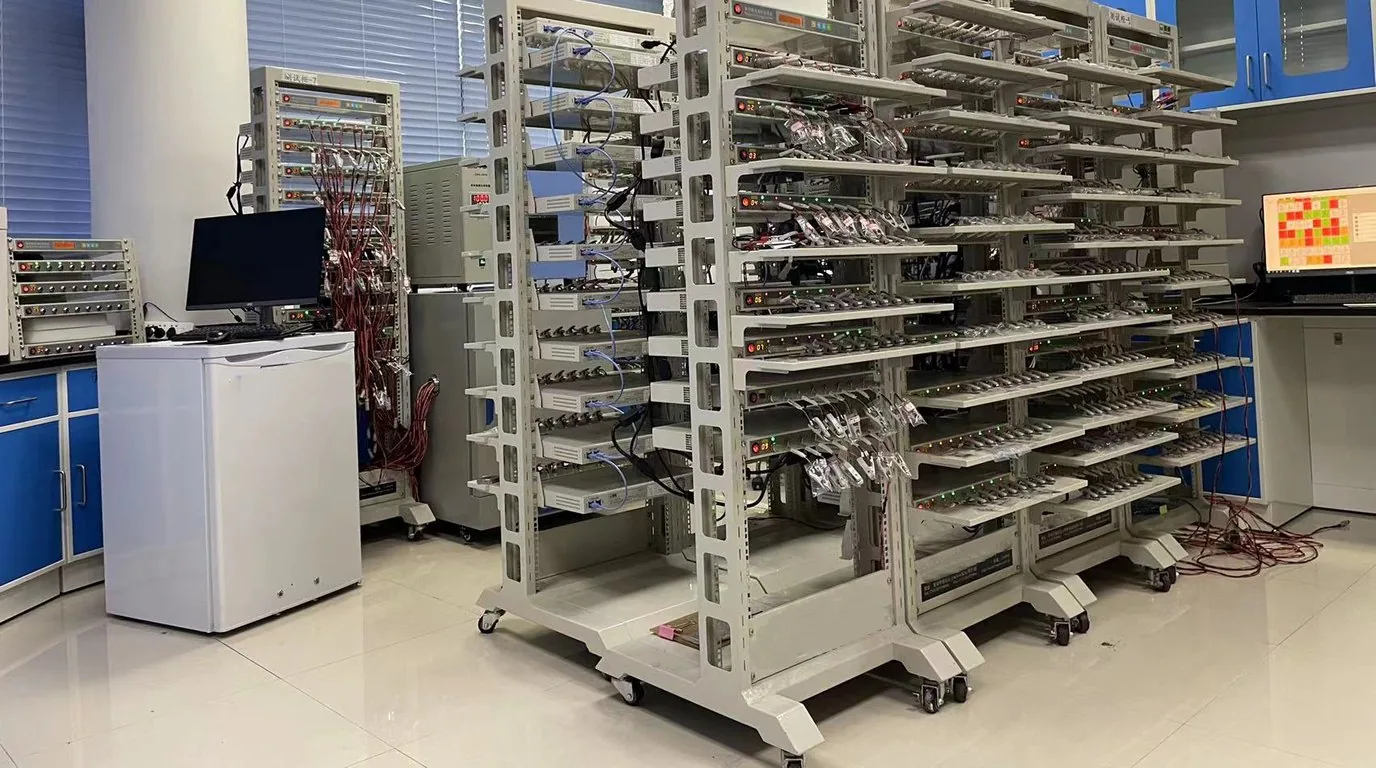
How long does an e-rickshaw pack last? Five questions that settle it
How long does an e-rickshaw battery actually last?
Why is pack life rated in cycles rather than in years?
How many cycles does your route put on the pack each year?
What shortens the pack’s life in daily operation?
How do you read remaining life before the vehicle strands you?
Is the pack actually finished? Four checks before you replace it
Before a fleet writes off a pack, four readings settle it: state of health against nameplate, cell spread under load, the charger against the string count, and one logged shift. Each one separates a dead pack from a charger, harness or single-cell fault that costs far less to fix.
- 1
Read state of health, not the calendar
Pull a capacity report from the BMS or run a 1C load test. Below 80% of nameplate the pack is at the retirement line; above it the fault is usually the charger or one lagging cell.
Test: measured capacity at 1C vs nameplate - 2
Measure the cell spread under load
A static delta over 30 mV means the balancing circuit has stopped working. A consistent pack ships with cell spread ΔV ≤ 3 mV and resistance spread ΔIR ≤ 0.5 mΩ — a wide spread kills a pack early while the label still says 3,500 cycles.
Factory consistency ΔV ≤ 3 mV · ΔIR ≤ 0.5 mΩ - 3
Check the charger against the string count
The unit must be CC-CV and matched to the series count. A lead-acid constant-voltage charger carries an equalisation stage above the LiFePO4 saturation voltage, and keeping it is the largest single cause of premature failure we see.
16S charges to 58.4V · 24S to 87.6V - 4
Log one shift before deciding
Record one normal shift: charging start and finish, distance and payload. If the pack finishes the route but charging time has grown, the fault is the charger or a connection; if it fails at the same load, the pack is the answer.
Charging start and finish · distance · payload
How far apart are lead-acid and LiFePO4 on life?
The left column is the typical basis of the lead-acid sets our packs replace; the right column is the rating of the LiFePO4 packs we build. The middle rows are arithmetic — rated cycles divided by cycles per day — so your route moves those rows, never the first.
| Basis | Lead-acid set | LiFePO4 pack (ours) |
|---|---|---|
| Rated cycles to 80% capacity | 300 – 500 | 3,500 at 1C charge / 1C discharge |
| Service at 1 cycle a day | About 10 – 17 months | About 7 – 9 years |
| Service at 1.5 cycles a day | About 7 – 11 months | 6 – 8 years |
| Usable depth of discharge | 50 – 60% | 88 – 90% recommended |
| Pack weight at 72V 150Ah | About 240 kg | About 81 kg |
| At the end of rated life | Replaced as a set | 80% SOH, second-life option |
Cycle counts are published ratings — see the cycle-life and SOH whitepaper and cost per kilometre; weight from the 72V page.
Aviso sobre especificações:Os valores acima são valores de referência de engenharia. Eles podem diferir de acordo com o lote de produção, configuração e ciclo de trabalho real, e as porcentagens de vida útil, eficiência, disponibilidade e cobertura são estimativas de engenharia e referências de bancada. Contate-nos para obter a folha de especificações detalhada.
How much pack life does cold — or heat — actually take?
Low temperature takes capacity, not structure
At −20℃ our packs retain ≥85% of rated capacity against about 40% for a conventional pack; the BMS cuts low-temperature charging inside 10 ms and the PTC layer, where fitted, warms cells at 1.5℃/min. What damages a pack is charging it hard while cold — see the extreme-cold guide.
Heat is the quiet accelerator
The platform is rated −20℃ to 65℃, and outside that band the BMS derates on cell temperature. In hot climates we cap charging at 0.5C even though the cells accept 1C — the cheapest way to keep the 3,500-cycle rating intact over a five-year term.
Which questions about battery life do buyers ask most?
Does charging after every trip make the battery last longer?expand_more
Is the 5-year warranty a calendar promise?expand_more
Can I keep the charger that came with the lead-acid vehicle?expand_more
What damages a pack fastest in a hot country?expand_more
What happens after the pack drops to 80% state of health?expand_more
Send the route data and we will size on cycles, not on a year figure
Give us the destination port, motor rating, daily distance and payload. We convert that into cycles per year, check the result against the 3,500-cycle rating and the five-year term, and return FOB / CIF pricing with the shipping document list for your market.
- Life-based sizing and pricing within 24 hours on working days
- Route data and market-access documents are strictly confidential; NDA available first
Aviso sobre especificações:Os valores acima são valores de referência de engenharia. Eles podem diferir de acordo com o lote de produção, configuração e ciclo de trabalho real, e as porcentagens de vida útil, eficiência, disponibilidade e cobertura são estimativas de engenharia e referências de bancada. Contate-nos para obter a folha de especificações detalhada.