
OEM lithium battery customisation:every dimension, from voltage platform to nameplate
Customisation is not about changing everything — it is about changing what still mass-produces reliably. The table below lists every customisable dimension, the range it can cover, and what we need from you. Three things are never customised downwards: cell grade, enclosure protection rating and BMS protection logic.
verifiedSamples in 3–5 days; production 15–25 days, about 30 days for custom items. The signed quotation and the specification sheet shipped with your container govern.
Four baselines to fix before customisation starts
Specification notice:The figures above are engineering reference values. They may differ with production batch, configuration and actual duty cycle, and the percentages for life, efficiency, availability and coverage are engineering estimates and bench references. Contact us for the detailed specification sheet.
Customisable dimensions and the range each one covers
Seven customisable dimensions, with the input we need from you before quoting. Three things are not offered as downgrades: cell grade (Tier-1 A grade only, no second-life or salvaged cells), enclosure protection rating, and BMS protection logic.
| Dimension | Available range | What we need from you |
|---|---|---|
| Voltage platform | 48V (16S LFP) / 60V / 72V (24S LFP, 76.8V nominal) | Motor rating, controller voltage rating and current limit |
| Capacity | 40 – 200Ah, stepped against enclosure size and scheduling | Daily payload, daily distance, target range and gradients |
| Enclosure form and size | Steel / aluminium / plastic; shaped, handled and quick-release swap bodies | Battery box dimensions, mounting points and ground clearance |
| BMS protocol and host software | CAN 2.0B (250k / 500k bps), RS485 Modbus-RTU, J1939; host software and phone app optional | Vehicle VCU / cluster brand and protocol documents if available |
| Connectors and harness | Aviation plugs, Anderson, IEC-style and others; cable length and pin-out to order | Existing connector model and vehicle harness routing |
| Labels and packaging | Barcodes / QR and engraved serial numbers; paper card, blister, shrink-wrap, bulk | Destination labelling rules and required pack format |
| Nameplate printing | Brand, model, capacity, batch and warnings, multi-language | Brand logo files and language list |
“Available” means the range can be engineered once cell layout, thermal behaviour and protection rating are verified together; the formal quotation governs. Not customisable downwards: cell grade, enclosure protection rating and BMS protection logic.
Specification notice:The figures above are engineering reference values. They may differ with production batch, configuration and actual duty cycle, and the percentages for life, efficiency, availability and coverage are engineering estimates and bench references. Contact us for the detailed specification sheet.
Private label production and packaging formats
Own-brand and private-label production run in parallel; packaging follows your retail or fleet delivery requirement.
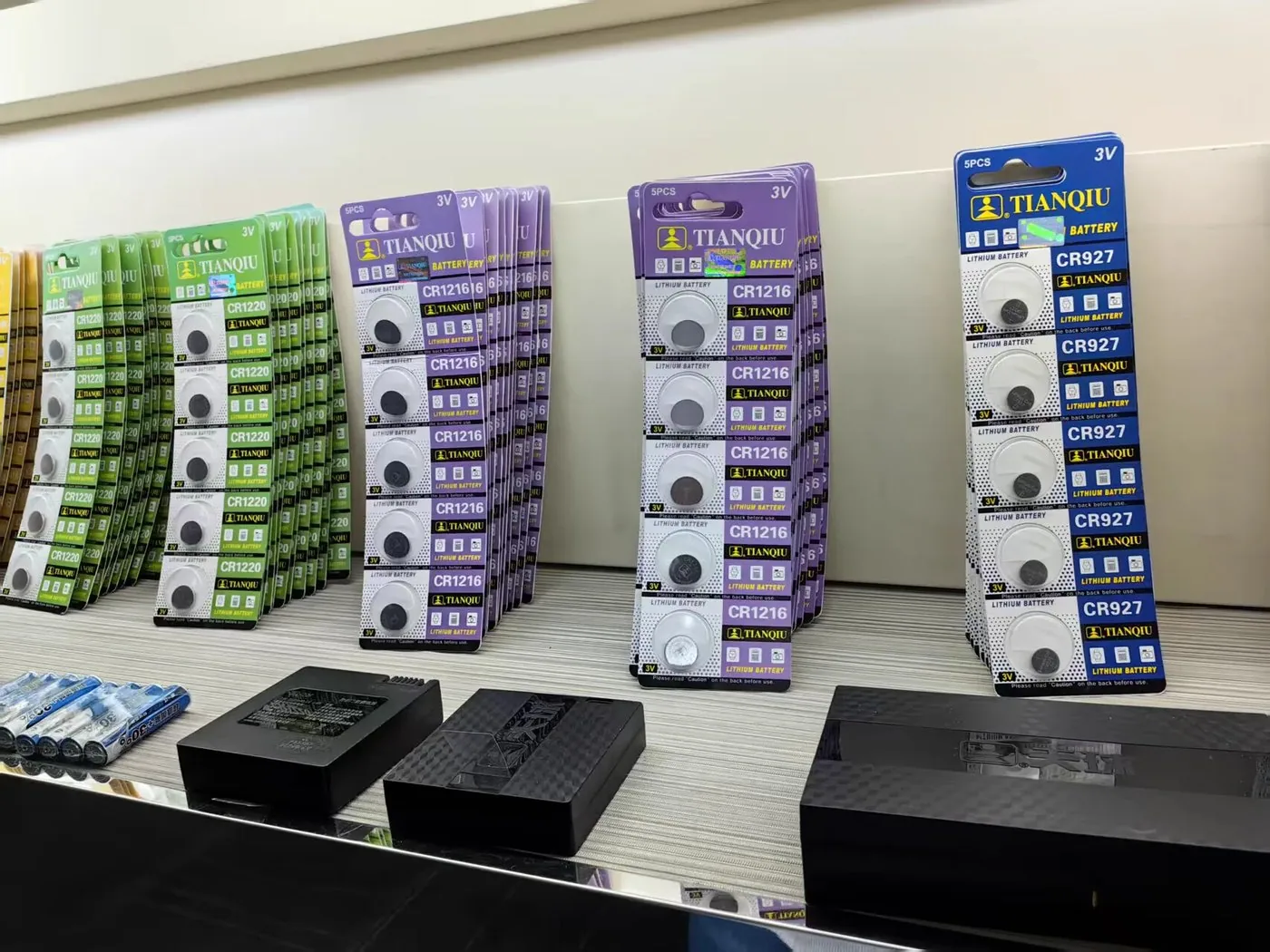
Alongside its own TIANQIU / TMMQ brands, the company has long run private-label production covering the full chain from cell and packaging design through finished-goods delivery. Packaging capability spans paper card, blister, child-safe, promotional, shrink-wrap and bulk formats.
- Two brand models: use the TIANQIU / TMMQ brand, or produce under your own brand including packaging design and finished-goods delivery.
- Packaging formats: paper card, blister, child-safe, promotional, shrink-wrap and bulk — combined to suit a retail channel or a fleet delivery.
- Pack shipping format: motive packs ship in UN-standard dangerous-goods packaging on pallets, with a barcoded packing list in the container so each carton can be checked on arrival.
- Order quantity and scheduling: packs ship mainly by container (about 180 sets per 20GP, 320+ per 40HQ); small trial batches depend on model and production schedule.
From sample to mass production in six steps
Every step names its output and its lead time, so the duty cycle is proven on a sample rather than corrected after tooling.
- 01assignment
Requirement review
Send the vehicle, motor rating, payload, daily distance, destination port and market-access requirements; we confirm feasibility and the structural envelope.
Confirmed within 1 working day - 02design_services
Selection advice
We work back from the duty cycle to voltage and capacity, then give pack dimensions, weight and mounting so the battery box can be checked first.
Issued with the requirement review - 03precision_manufacturing
Sampling
A sample pack is built to the agreed design, with BMS parameters and communication protocol pre-loaded, ready to fit to the vehicle.
3–5 days - 04monitor_heart
Duty-cycle validation
On-vehicle testing, with CAN frames or CSV logs exported on request, to confirm cell spread, temperature rise and range against target.
To your road-test schedule - 05factory
Mass production
Once structure, BMS and protocol are frozen, production starts; finished goods receive 100% inspection with end-to-end batch-code traceability.
15–25 days (about 30 for custom) - 06directions_boat
Shipment
UN38.3, MSDS and the dangerous-goods packing certificate ship with the container, with slots booked to your destination port and cartons checked by barcode list.
Scheduled to your sailing
How far the protocol and host software can be changed
The BMS is not a black box: CAN frame definitions, Modbus registers and the host interface can all be opened or customised per project.
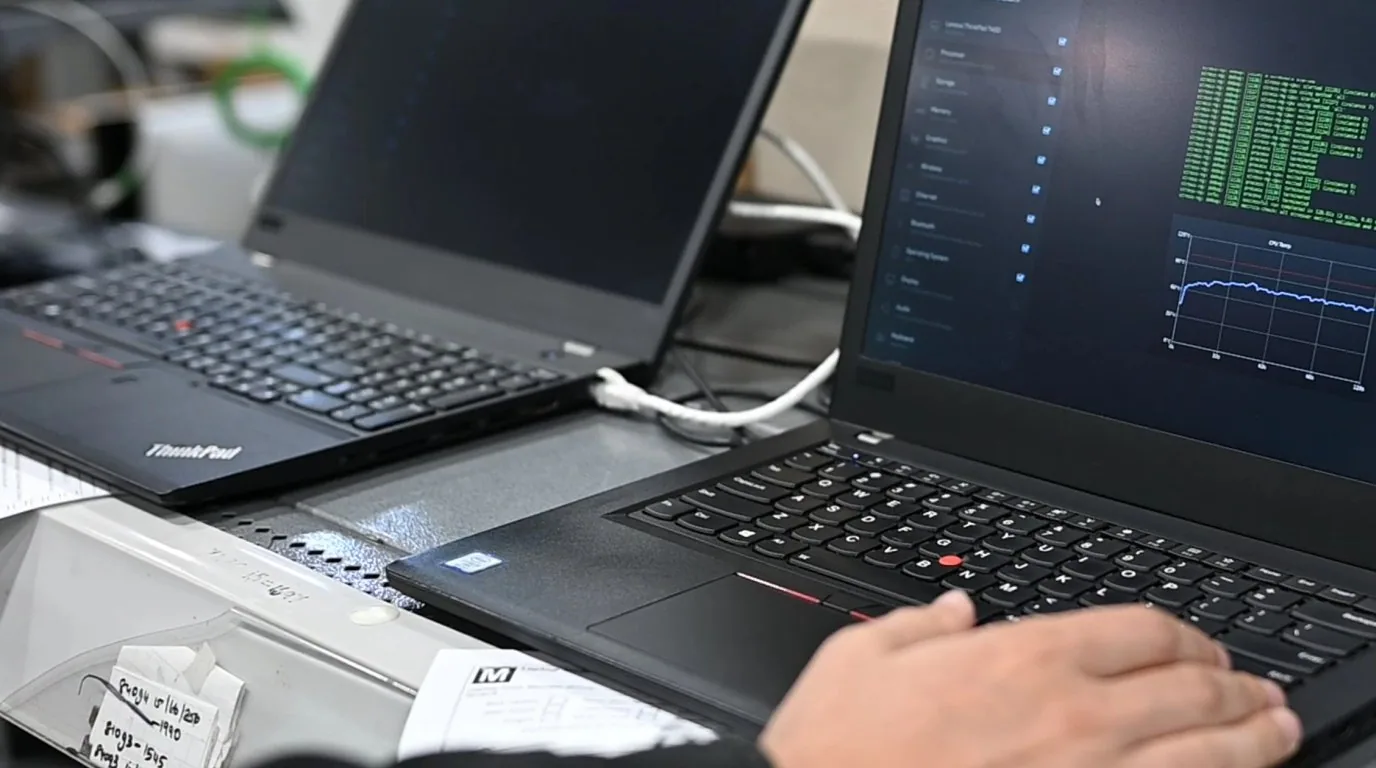
Packs ship with CAN / RS485 communication as standard, together with protocol definitions and development material. Where a vehicle cluster fails to show charge, jumps in value, or cannot be commissioned on the bus, our engineers support bilingual remote joint debugging.
- CAN 2.0B extended frame: 29-bit identifier, 250k / 500k bps, supplied with a Vector CANoe .DBC database and the protocol definition specification so the cluster can parse it directly.
- RS485 / Modbus-RTU: the full register map is open, with function codes 0x03 / 0x06 / 0x10 and a complete CRC16 checksum library plus C / Python debug examples.
- Host software and phone app: the Windows x64 configuration tool reads and writes protection thresholds, calibrates cell voltage spread, exports DTC logs and performs one-click OTA updates; OEM-branded builds and dedicated installers are available.
- Private protocol lead time: with an existing protocol matrix, test firmware goes out in about 24 hours. For a fully private vehicle VCU protocol, once the requirements document and frame cycle definitions arrive, the software team typically completes compilation and HIL bench validation and delivers the firmware package within 3–5 working days.
- An NDA can be signed before vehicle parameters, CAN frames and controller protocol documents are exchanged; the material is used only for this project’s commissioning and is never disclosed to third parties
- Your brand, packaging design and commercial information stay strictly confidential and never appear in a public case study
- Ownership of tooling and structural designs is agreed in writing at quotation stage and governed by the contract
- Use and distribution scope of custom firmware and OEM host-software installers is agreed per project
Customisation and contract manufacturing questions
What is the minimum order quantity?expand_more
How long does a sample take, and what does it cost?expand_more
Can you produce under our own brand?expand_more
Can the communication protocol be changed?expand_more
Who owns the tooling and the structural design?expand_more
Can you supply the battery without the enclosure?expand_more
What is the production lead time for a custom build?expand_more
What certification does a custom pack need to ship?expand_more
Three things to confirm before customising
Own production lines and QC
Photographs of the lines, workshops and test stations, plus how to book a factory audit.
Open the manufacturer pagearrow_forwardSourcing from a China supplier
Telling a factory from a trader, who issues each export document, and how loading and ports are arranged.
Open the supplier pagearrow_forwardBMS host software and protocol centre
The complete guide to Vector .DBC files, Modbus-RTU register maps and the host toolchain.
Open the protocol centrearrow_forwardSend your customisation brief and get a firm quotation
Tell us the vehicle, motor rating, payload, daily distance, target brand and destination port. We will recommend voltage and capacity, issue pack dimensions and structure, and model FOB / CIF pricing and the delivery schedule.
- Selection advice and pricing within 24 hours on working days
- Sample packs available to prove the duty cycle before committing to a container
- Drawings, protocol documents and brand material stay confidential; NDA available first
Specification notice:The figures above are engineering reference values. They may differ with production batch, configuration and actual duty cycle, and the percentages for life, efficiency, availability and coverage are engineering estimates and bench references. Contact us for the detailed specification sheet.
Drawings, protocol documents and brand material you submit are used only for this project. An NDA can be signed first.