
Tuk tuk battery packs:sized per market for Sri Lanka, India, Kenya and Tanzania
The tuk-tuk is the most common commercial passenger three-wheeler in South Asia and East Africa (also called three-wheeler or auto-rickshaw): petrol-to-electric conversions across Sri Lanka’s 1.05 million existing units, Delhi’s central charging hubs, Nairobi’s undulating roads at 1,795 m altitude, and the continuous climb from Dar es Salaam port to the markets. The duty cycles differ far more than the vehicles do. This page gives the recommended configuration, market access, delivery route and relative price tier per country, and keeps the petrol-to-electric and lead-acid-to-lithium routes separate.
verifiedDuty-cycle and range figures are typical fleet averages, not nameplate claims. Market access follows the regulations in force in each destination country and we supply documents to the destination port’s requirements; the specification sheet shipped with your container governs.
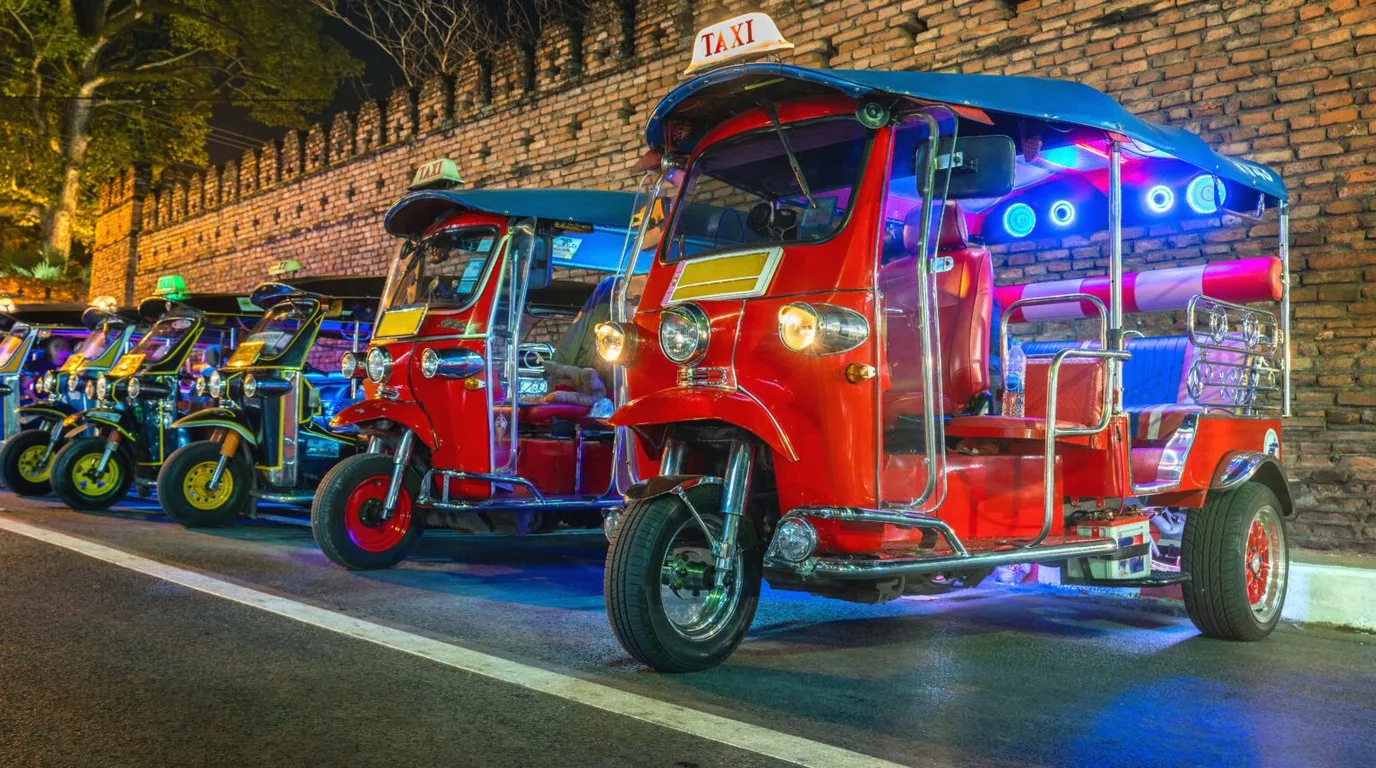
All called tuk-tuk, all asking for something different
Selection follows the duty cycle, not the flag: Colombo is about conversion and wide-tolerance grid charging, Delhi about certification and central charging, Nairobi about gradients, Dar es Salaam about port climbs in humid heat.
Specification notice:The figures above are engineering reference values. They may differ with production batch, configuration and actual duty cycle, and the percentages for life, efficiency, availability and coverage are engineering estimates and bench references. Contact us for the detailed specification sheet.
Country-by-country duty table: recommended configuration and market access
Every voltage and capacity step is set by the local duty cycle, not by a generic shelf configuration. The access column lists only items the fact base covers; for any other market, the regulations in force in the destination country apply.
| Market / city | Vehicle duty | Recommended voltage / capacity | Market access | Delivery and sailing |
|---|---|---|---|---|
| Sri Lanka · Colombo | Mainly tuk-tuk passenger taxi duty, high share of petrol-to-electric conversion, about 90 km a day | 60V 100Ah / 72V 120Ah | SLS 1656 / DMT pre-approval | Direct to Colombo, 12 – 16 days |
| India · Delhi / Mumbai | E-rickshaw and auto-rickshaw passenger duty from central charging hubs, about 120 km a day | 48V 100Ah / 105Ah | AIS-156 Phase 2 | Direct to Nhava Sheva / Chennai |
| Kenya · Nairobi / Mombasa | Tuk-tuk passenger duty: undulating roads at 1,795 m in Nairobi; salt-laden coastal air in Mombasa (about 88% humidity) | 60V 100Ah / 72V 120Ah | KEBS PVoC pre-shipment inspection | Mombasa in 18 – 22 days, then 8 hours by SGR rail to Nairobi |
| Tanzania · Dar es Salaam | Tuk-tuk passenger duty plus 1–1.2 tonne heavy cargo tricycles; continuous climb from the port, humidity above 85% | 60V 120Ah; 72V 160 – 200Ah for cargo | TBS PVoC (CoC uploaded to TANCIS) | Dar es Salaam in 16 – 20 days, 14 – 21 days free demurrage |
Access and sailing times follow current arrangements in each market and we ship the document set the destination port requires — the transport three-piece is fixed: UN38.3, MSDS and a dangerous-goods packing certificate (Class 9). For markets not listed here, the regulations in force in the destination country apply: we do not promise standard numbers we cannot substantiate.
Specification notice:The figures above are engineering reference values. They may differ with production batch, configuration and actual duty cycle, and the percentages for life, efficiency, availability and coverage are engineering estimates and bench references. Contact us for the detailed specification sheet.
Relative price tiers by country (no fixed figures)
We publish no amounts: sailing distance, transit time, local access documents, inspection method and knocked-down form all move the final number. The table shows the relative relationship between countries and the main price variables; firm pricing is modelled from four parameters.
| Market | Relative price tier (not an amount) | Main price variables | Parameters required for a quote |
|---|---|---|---|
| Sri Lanka | Baseline tier | Colombo sailing distance and transit time, SLS 1656 / DMT document support, optional 140–280V wide-input charger | Destination port · payload · daily distance · motor rating |
| India | Baseline tier (largest 48V fleet) | AIS-156 Phase 2 documentation basis, bonded-port customs document pre-check, charger configuration for central charging hubs | Destination port · payload · daily distance · motor rating |
| Kenya | One tier above baseline (longer sailing) | CIF Mombasa, KEBS PVoC pre-shipment inspection, SGR transfer to Nairobi, optional PAYGO communication module | Destination port · payload · daily distance · motor rating |
| Tanzania | One tier above baseline | TBS PVoC / CoC documents, Dar es Salaam demurrage window, complete-unit against CKD / SKD knocked-down form | Destination port · payload · daily distance · motor rating |
Pricing is modelled from destination port, payload, daily distance and motor rating as an FOB / CIF quotation, with a Form E certificate of origin available; booking is made locally through Yantian / Shekou in Shenzhen or Nansha in Guangzhou, at about 180 packs per 20GP and more than 320 per 40HQ. The tiers above compare cost between countries — the formal quotation governs every amount.
Specification notice:The figures above are engineering reference values. They may differ with production batch, configuration and actual duty cycle, and the percentages for life, efficiency, availability and coverage are engineering estimates and bench references. Contact us for the detailed specification sheet.
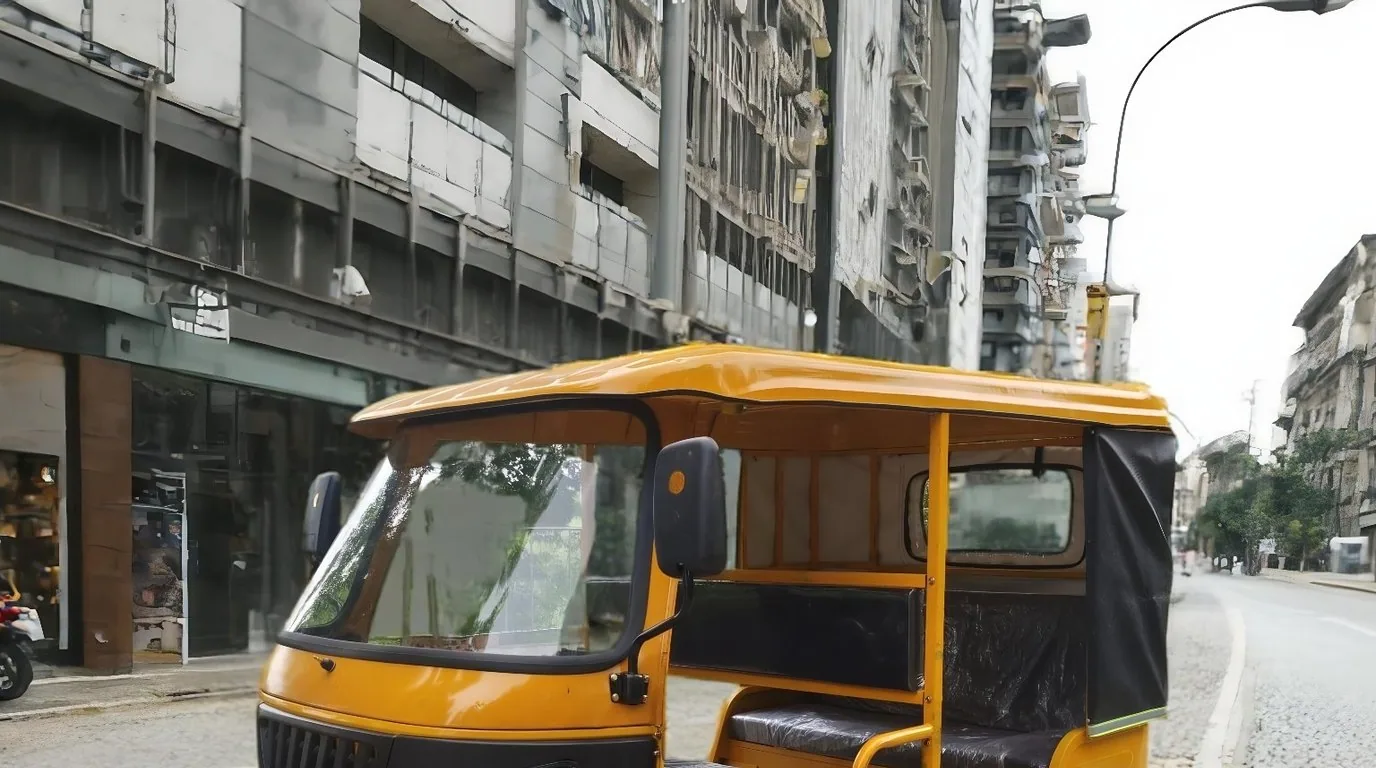
Four local duty cycles: why sizing is calculated per city
Same tuk-tuk: Colombo is short-distance high-frequency conversion work, Delhi is certification and central charging, Nairobi is altitude and gradients, Dar es Salaam is port haulage in humid heat. Laid out side by side, it becomes obvious where the specification has to be raised.
- Colombo · conversion work on a volatile grid: mostly existing petrol vehicles, fitted in 35–45 minutes without welding; grid voltage swings, so the charger needs 140V–280V wide input with transient suppression.
- Delhi · certification and central charging: 48–50°C in summer and 20–30cm of monsoon standing water, with AIS-156 Phase 2 as a hard gate; central hubs often run 30A–40A fast charging, which needs thermal protection logic against midday heat build-up.
- Nairobi / Mombasa · altitude and salt: Nairobi sits at 1,795 m with a maximum loaded gradient of 22%, so a 3C short-term peak must hold without voltage sag; Mombasa’s coastal humidity of about 88% calls for corrosion-resistant enclosure treatment.
- Dar es Salaam · heavy load in humid heat: continuous climbing from the port to the markets, with cargo tricycles rated 1–1.2 tonnes; humidity above 85% and 40°C+ surface temperatures load both sealing and heat rejection at once.
Factory lead-acid vs LiFePO4 on a tuk-tuk: four direct comparisons
The comparison is drawn at the same nominal capacity, 72V 150Ah (factory lead-acid 6×12V 150Ah against a 24S LiFePO4 pack). The 48V / 51.2V 100–105Ah steps common in South Asia are lighter on both sides — but lead-acid degrades faster in heat and humidity.
Factory lead-acid 6×12V 150Ah
About 72V 150Ah nominal- cancelAssembled weight≈ 240 kgSix 12V blocks stacked, taken straight out of passengers or payload
- cancelUsable capacityDischarged to only 50–60% to protect life: roughly 80–90Ah usable from a 150Ah label
- cancelCycle life300 – 500 cyclesHeat and humidity across South Asia and East Africa accelerate water loss and grid corrosion — often under 300
- cancelCharging per shiftA midday top-up is mandatory on heavy duty, twice on some routes
- cancelPaybackThere is no crossover: continuous replacement and repair, getting more expensive the longer you run
72V 150Ah LiFePO4
Same nominal capacity · 24S LFP · Tier-1 A-grade cells- check_circleAssembled weight≈ 81 kgAbout 160 kg lighter, convertible into passengers or range
- check_circleUsable capacity88–90% DoD recommendedUsable capacity close to the label; quotes are issued on net capacity
- check_circleCycle life3,500 cycles1C charge/discharge to ≥80% SOH, 5-year / 3,500-cycle warranty
- check_circleCharging per shiftOne pack covers the daySized to the local daily distance and gradients, cutting midday top-ups
- check_circlePayback6 – 8 monthsA full petrol-to-electric kit is quoted at 4.5–6 months; modelled on local tariff and daily distance
Two routes: petrol-to-electric, or lead-acid to lithium
The condition of the existing vehicle decides the route: petrol tuk-tuks go through conversion, already-electric vehicles carrying lead-acid go through a battery swap. The checklists differ, and quoting them as one job always goes wrong.
- 01build
Route A · Conversion: check the chassis and the bay first
Confirm the original chassis type (Bajaj RE / TVS King / Piaggio Ape class), the rear axle ratio and the usable battery bay, then fix voltage and capacity. The fit is in-position and drill-free with pre-terminated harness, taking 35–45 minutes per vehicle, with no need to restructure the workshop.
Fits Bajaj RE / TVS King / Piaggio Ape class chassis - 02handyman
Route A · Conversion: kit selection and local rollout
The kit covers motor, controller, battery pack, charger, dedicated mounting brackets and harness. The published payback figure for a full conversion is 4.5–6 months (120 km a day taxi duty); rollout depends on local fitting capacity, and we supply the complete installation drawings and tooling list.
Payback 4.5 – 6 months - 03battery_swap
Route B · Lead-acid to lithium: direct swap at the same voltage
Confirm the original voltage platform and series count, then select the lithium pack at the same voltage. The lithium pack is far smaller and lighter than the lead-acid set, so locating brackets are fitted inside the original bay; the roughly 160 kg saved (same nominal 72V 150Ah basis) returns directly as passenger capacity.
Locating brackets inside the original bay - 04electrical_services
Route B · Lead-acid to lithium: controller, charger and market access
The charger must be replaced with a CC-CV unit matched to the series count (140–280V wide input in volatile-grid markets), and the controller checked for current limit and MOSFET rating at full-charge voltage. Confirm market access at the same time: Sri Lanka SLS 1656, India AIS-156 Phase 2, Kenya PVoC / KEBS, Tanzania TBS PVoC.
New charger · controller check · access confirmed first
The eight questions tuk-tuk battery buyers ask first
What does a tuk-tuk battery cost?expand_more
How do we buy and take delivery in Kenya and Sri Lanka?expand_more
Will one pack last a full day?expand_more
Can a petrol tuk-tuk be converted to electric?expand_more
What certification does each market need?expand_more
How long does delivery take?expand_more
My vehicle runs lead-acid — can I convert it directly to lithium?expand_more
Does pack weight cost me passengers — and can it be swappable?expand_more
Go to the market desk for your destination
Sri Lanka market desk
Colombo conversion work, SLS 1656 / DMT access, 140–280V grid tolerance and direct sailings into Colombo in 12–16 days.
Open the Sri Lanka deskarrow_forwardKenya market desk
KEBS PVoC pre-shipment inspection, Mombasa clearance and the SGR transfer to Nairobi, plus the M-Pesa PAYGO instalment model.
Open the Kenya deskarrow_forwardTanzania market desk
TBS PVoC / CoC, direct arrivals at Dar es Salaam in 16–20 days with 14–21 days free demurrage, and CKD / SKD knocked-down supply.
Open the Tanzania deskarrow_forwardGet tuk-tuk sizing and pricing against your market and route
Send the destination port, payload (or passenger count), daily distance and motor rating. We will size the 48V / 60V / 72V pack and return FOB / CIF pricing, container allocation and sailing schedule, with the shipping document list and the destination market-access basis attached.
- Sizing advice and pricing within 24 hours on working days
- Sample packs from two units to prove the local duty cycle before committing to a container
- Fleet size, routes and market-access documents are strictly confidential; NDA available first
Specification notice:The figures above are engineering reference values. They may differ with production batch, configuration and actual duty cycle, and the percentages for life, efficiency, availability and coverage are engineering estimates and bench references. Contact us for the detailed specification sheet.