
48V lithium battery packs:the workhorse voltage for rickshaws and lead-acid drop-ins
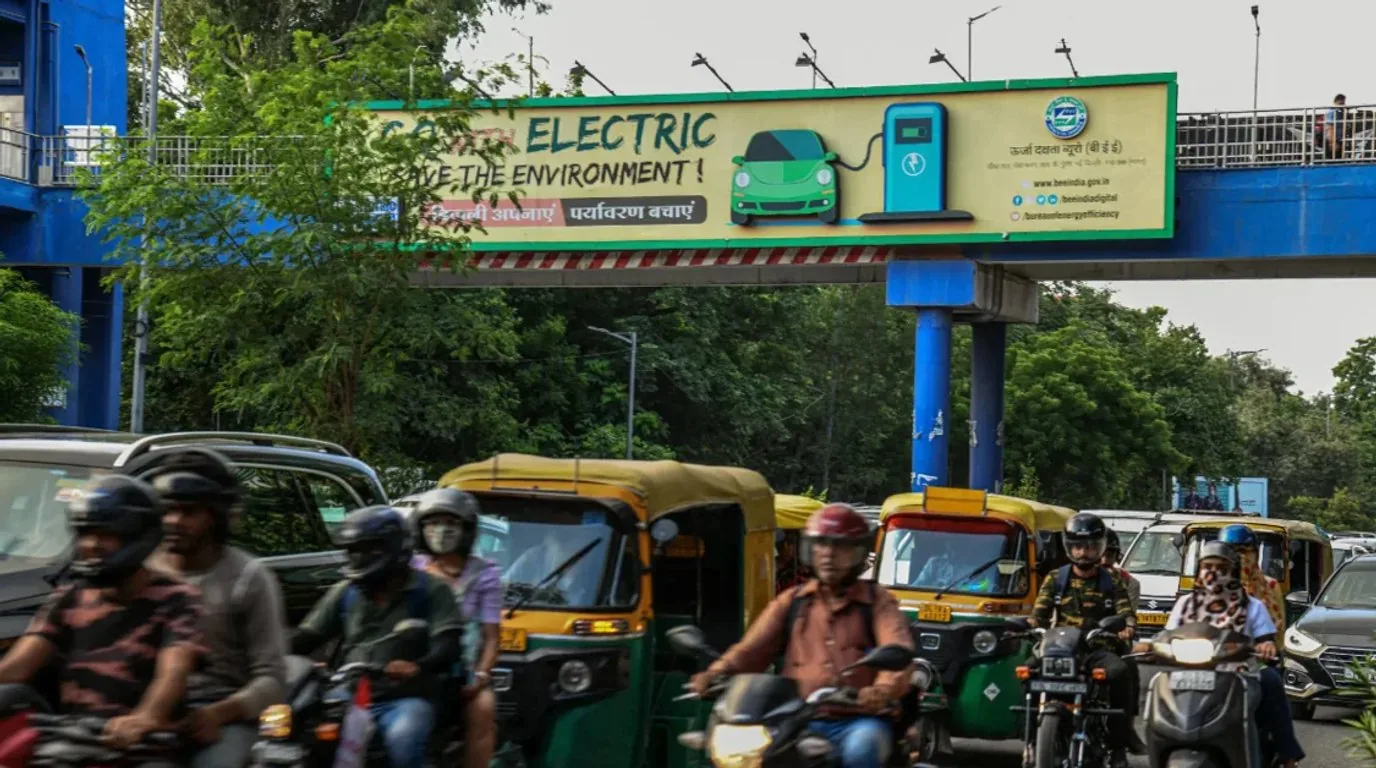
48V (51.2V, 16S LiFePO4) covers more passenger three-wheeler and light-duty vehicles than any other step, and it is the voltage most lead-acid conversions settle on: four 12V blocks in series reach roughly 56–58V at full charge, which lines up closely with the 58.4V full charge of a 16S LiFePO4 pack. Because the pack stays below 60V, the whole vehicle sits in the safety extra-low voltage class and controller and instrument selection becomes far less constrained. This page sets out the full 100Ah–200Ah matrix, the vehicle fit limits, the 4×12V lead-acid comparison and the selection questions we answer most often.
verifiedFigures are typical values at 25°C under standard conditions; the signed specification sheet that ships with your container governs.
What the 48V platform delivers
Specification notice:The figures above are engineering reference values. They may differ with production batch, configuration and actual duty cycle, and the percentages for life, efficiency, availability and coverage are engineering estimates and bench references. Contact us for the detailed specification sheet.
48V (51.2V, 16S LiFePO4) capacity matrix by duty cycle
Energy is computed at 51.2V nominal. Weight is the assembled pack including steel enclosure, BMS and harness, at roughly 7 kg/kWh (±5%). Choose by daily range and payload — not by picking the largest pack.
| Capacity | Nominal energy | Pack weight (typical) | Duty cycle | Target range | Pack model |
|---|---|---|---|---|---|
| 51.2V 100Ah | ≈ 5.12 kWh | ≈ 36 kg | Passenger rickshaw taxi (India / Bangladesh), 4–5 passengers | 100 – 120 km | VT-48100-AIS156-MAX |
| 51.2V 105Ah | ≈ 5.38 kWh | ≈ 38 kg | Resort golf carts and site shuttles (long standby) | 80 – 100 km | VT-48105-GC-CANBUS |
| 51.2V 120Ah | ≈ 6.14 kWh | ≈ 43 kg | Standard passenger shifts, light last-mile delivery | 110 – 130 km | VT-48120-PASSENGER |
| 51.2V 150Ah | ≈ 7.68 kWh | ≈ 54 kg | Long passenger shifts, loaded conversions on flat routes | 120 – 140 km | VT-48150-LONG-RANGE |
| 51.2V 180Ah | ≈ 9.22 kWh | ≈ 65 kg | Long-haul passenger duty above 140 km per day | 135 – 155 km | VT-48180-LONG-HAUL |
| 51.2V 200Ah | ≈ 10.24 kWh | ≈ 72 kg | Very long shifts or standby shuttles, needs a large bay | 150 – 170 km | VT-48200-MAX |
Range is converted from typical averages at typical loaded duty, 35°C ambient and paved to lightly unpaved surfaces: 55–68 Wh/km for passenger rickshaws, 50–65 Wh/km for golf carts and site shuttles. Payload, gradient, tyre pressure and riding style all move the result.
Specification notice:The figures above are engineering reference values. They may differ with production batch, configuration and actual duty cycle, and the percentages for life, efficiency, availability and coverage are engineering estimates and bench references. Contact us for the detailed specification sheet.
Which vehicles belong on 48V — and which do not
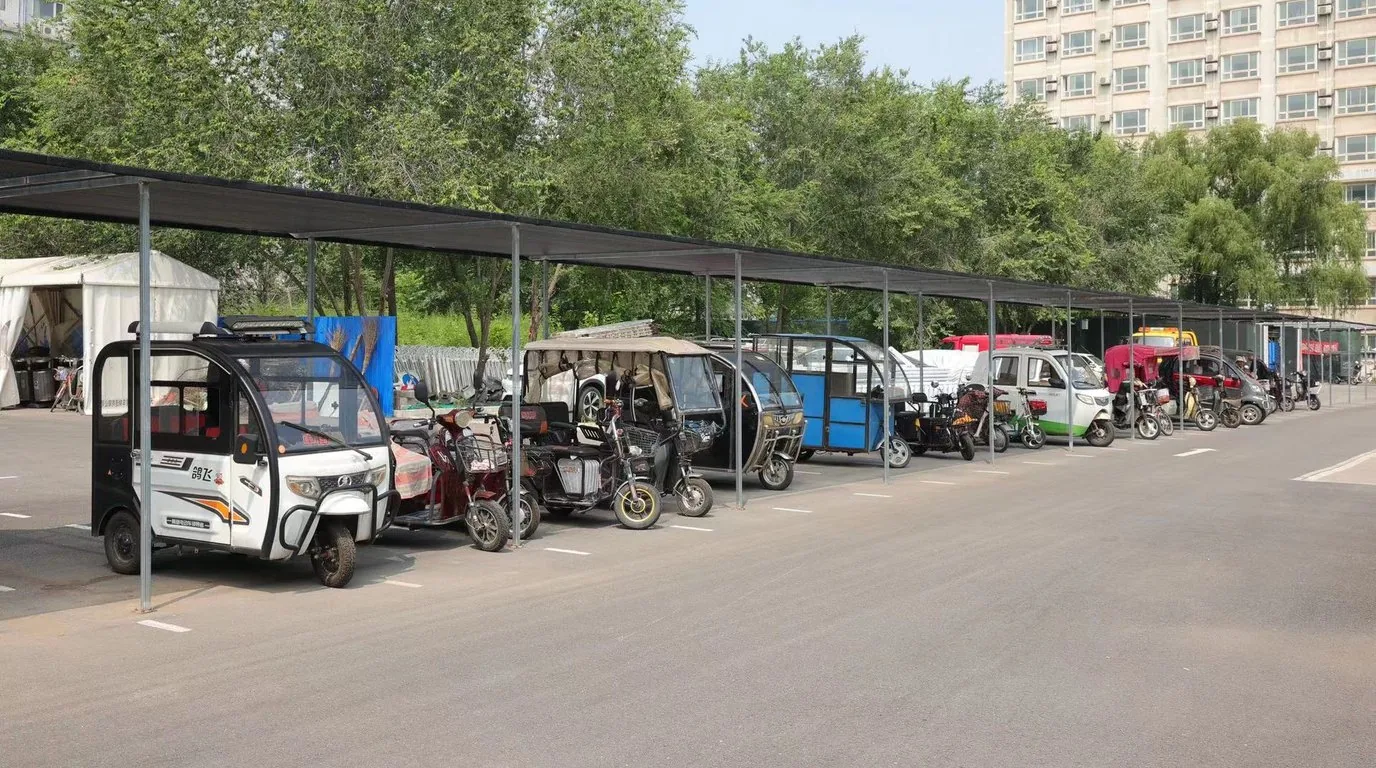
48V is not the cheap tier; it is the tier where enough is optimal. It uses the shortest string, the most relaxed controller and harness selection, and the lowest weight and cost — at the price of the highest bus current at any given power. Voltage should follow motor rating, daily payload and gradients, not the impression that a bigger number always pulls harder.
- Choose 48V for passenger rickshaws carrying 4–5 people over about 120 km a day, for resort golf carts and site shuttles, for light last-mile delivery, and for frames that already carry four 12V lead-acid blocks.
- Choose 60V for two-wheeler delivery and swap fleets, and for passenger rickshaws that need 40–50 km/h economical cruising.
- Choose 72V above 3000W of motor rating, above 500 kg of daily payload, on routes with long gradients, or above 90 km a day with cargo.
- Do not choose 48V for loaded climbing duty that draws more than 60A continuously — at 3000W output a 48V bus carries about 62.5A and needs ≥16–25 mm² main cable. Older controllers rated below 75V, or frames that cannot take a large pack, are also poor candidates.
- Controller MOSFET rating at 75V or above, and a current limit that covers the loaded pull-away peak (16S transients typically run 120–160A)
- Main harness cross-section: ≥16–25 mm² on 48V, because line loss and heating both run higher than on 60V or 72V
- Battery bay load rating and dimensions: a 48V 100Ah pack weighs about 36 kg, so check the bay floor before choosing capacity
- Charger: a 58.4V CC-CV unit is mandatory — never continue with a lead-acid constant-voltage or float charger
Both are labelled 48V — where lead-acid and LiFePO4 diverge
Factory lead-acid 4×12V 150Ah
About 48V 150Ah nominal- cancelAssembled weight≈ 160 kgFour 12V blocks stacked
- cancelUsable capacityDischarged to only 50–60% to protect life: roughly 75–90Ah usable from a 150Ah label
- cancelCycle life300 – 500 cyclesOften under 300 under deep discharge
- cancelCharging per shiftPassenger duty usually needs a midday top-up
- cancelCold weatherUsable capacity falls away below 0°C
48V (51.2V) 150Ah LiFePO4
Same nominal capacity · 16S LFP- check_circleAssembled weight≈ 54 kgAbout 105 kg lighter than lead-acid
- check_circleUsable capacity88–90% DoD recommendedAbout 6.8 kWh usable, roughly 1.7x the usable energy of the 150Ah lead-acid pack
- check_circleCycle life3,500 cycles1C charge/discharge to ≥80% SOH
- check_circleCharging per shiftOne pack covers the daySized at 120–140 km passenger duty
- check_circleCold weatherDischarges at −20°C; charging is current-limited by policy
48V lithium battery questions we get every week
How far will one 48V battery take me?expand_more
How long does a 48V pack take to charge?expand_more
My vehicle runs four 12V lead-acid blocks — do I need a new controller?expand_more
Can South Africa and Australia use the same battery and charger? What about voltage and plugs?expand_more
What kind of vehicle needs a 48V 200Ah pack?expand_more
What does a 48V lithium battery cost?expand_more
Which vehicles should not run 48V?expand_more
What documents does a 48V pack need to ship?expand_more
Three things to check once 48V is fixed
Compare the 60V / 72V platforms
What the 60V label really means in cell count, and the bus current and copper loss at the same 3000W output.
See the 60V platformarrow_forwardThe 72V heavy-duty platform
Capacity matrix and lead-acid comparison for payloads above 500 kg, long gradients and 90 km plus days.
See the 72V platformarrow_forwardLead-acid to lithium replacement
The range gain at equal capacity, plus the controller and charger compatibility checklist.
See replacement optionsarrow_forwardGet a firm 48V quotation against your duty cycle
Send the destination port, payload, daily distance and motor rating. We will size the pack, return FOB / CIF pricing and container allocation, and attach the shipping document list.
- Selection advice and pricing within 24 hours on working days
- Sample packs available to prove the duty cycle before committing to a container (three-wheeler motive packs: 20GP about 180 sets, 40HQ 320+)
- Vehicle parameters and market-access documents are strictly confidential; NDA available first
Specification notice:The figures above are engineering reference values. They may differ with production batch, configuration and actual duty cycle, and the percentages for life, efficiency, availability and coverage are engineering estimates and bench references. Contact us for the detailed specification sheet.