
3,500-cycle multi-channel charge/discharge cabinets
Computerised high-precision charge/discharge cabinets run 7×24 at full load, with every cell’s fade curve written to disk in real time.
TEST 01 / cycle control matrixThis confronts the biggest pain point for overseas buyers and fleet operators: every nameplate claims 3,000 cycles, so why does a pack bulge and fade within a year of service? We expose how graded, dismantled cells are mislabelled and publish the real fade curve from 3,500 cycles at 1C/1C (SOH ≥ 80%) — hard test data for a fleet capital decision.
verifiedCycle-life figures are stated against the 100% DoD / 1C profile above; the test conditions are reproducible on any standard cycle tester.
Specification notice:Reference values only — batch and duty-cycle variation applies. Contact us for detailed specifications.
SOH retention trajectory at 100% DoD and 1C/1C: workshop-refurbished packs fall off a cliff at 300 cycles, while automotive A-grade cells are still above the 80% SOH end line at 3,500.
Specification notice:The figures above are engineering reference values. They may differ with production batch, configuration and actual duty cycle, and the percentages for life, efficiency, availability and coverage are engineering estimates and bench references. Contact us for the detailed specification sheet.
No static theory on paper. Accredited environmental chambers, full-channel micro-ohm resistance analysis and three years of real fleet road data are cross-validated against each other.
Computerised high-precision charge/discharge cabinets run 7×24 at full load, with every cell’s fade curve written to disk in real time.
TEST 01 / cycle control matrixInside a 45℃ environmental chamber, continuous 2C high-rate pulse discharge measures the stability of the electrode SEI layer and validates the accelerated physical fade model at high rate and high temperature.
TEST 02 / thermal load limitLaser cold welding of tabs at 0.05mΩ ultra-low resistance, with 100% impedance inspection before dispatch, eliminating cold-joint heating and the weakest-cell bottleneck under heavy current on rough roads.
TEST 03 / process consistencyThirty-six months of field data returned from 50 high-frequency passenger three-wheelers in the Philippines and Kenya, with road fade tracking the bench curve.
TEST 04 / cross-border road validationThe export market price trap: a refurbished pack looks close on initial rated capacity, then collapses irreversibly after 300 cycles.
| Service-life dimension | TIANQIU automotive A-grade new cells | Low-cost graded / refurbished cells | Workshop lead-acid replacement pack |
|---|---|---|---|
| Rated test condition | 100% DoD deep discharge, strictly calibrated at 1C charge / 1C discharge | Mislabelled 80% DoD, padded with a 0.2C slow light-load test | No accredited laboratory calibration at all; false nameplate data from the factory |
| True cycle life (to 80% SOH) | 3,500 – 4,000 cycles (6–8 years of service) | 300 – 600 cycles (capacity halves within 6–12 months of operation) | 400 – 800 cycles (fails through plate sulphation and gassing) |
| Outgoing cell resistance consistency | 100% inspected, resistance range ≤ 0.5 mΩ, no drift after 2,000 cycles | Resistance range of 5 – 15 mΩ; cells drift further apart the longer they run | Old batteries mixed at random; intra-pack voltage spread degrades quickly |
| Resistance to 45℃ fade | Capacity retention ≥ 75% after 3,000 high-temperature cycles | Bulging, venting and lithium plating appear after 200 thermal cycles | Severe water loss, easily leading to irreversible thermal runaway and softening |
| BMS balancing capability | 1.5A active bidirectional energy-transfer balancing removes the weak cell | Only a 35mA inefficient passive resistive-heat balancer | A basic analogue protection board, or no balancing circuit at all |
| Downtime cost of a single failing pack | Zero mid-shift breakdowns; 99.2% annual fleet availability | Frequent repairs and cell swaps every six months; fleet availability of only 70% | Quarterly deep maintenance and watering; customer service commitments suffer |
| Blended battery depreciation per km | $0.012 / km (very low total cost of ownership) | $0.038 / km (silent losses from frequent repurchase) | $0.032 / km (high labour and replacement costs) |
The full per-kilometre and total-cost-of-ownership model is in the fleet TCO guide.
Specification notice:The figures above are engineering reference values. They may differ with production batch, configuration and actual duty cycle, and the percentages for life, efficiency, availability and coverage are engineering estimates and bench references. Contact us for the detailed specification sheet.
The same cells operated under different policies can differ by more than 40% in actual service life. All four rules below have been validated in cross-border fleet trials.
LiFePO4 experiences maximum lattice stress at both extremes of state of charge. Holding back 10% shallow reserve through fleet management lifts single-cell cycle life from 3,500 to beyond 5,000 cycles, cutting cost by as much as 35%.
Service life 3,500 → 5,000+ cyclesTraditional workshops use 30mA slow heat-dissipating balancing, which cannot contain the voltage spread caused by heavy loaded climbs. TIANQIU 1.5A active lossless charge transfer realigns cells throughout charge and discharge, so one lagging cell never scraps the whole pack.
1.5A active bidirectional transferForcing 1C fast charge above 45℃ accelerates decomposition and rupture of the anode SEI layer. The firmware carries adaptive thermal limits: stepped derating to 0.5C above 45℃, and hardware cut-off with cooling at 55℃, avoiding high-temperature capacity loss.
Derate at 45℃ / hardware cut-off at 55℃Off-brand constant-voltage chargers hold too high a float voltage at the end of charge and break down electrolyte additives. Use a high-frequency pulse charger supporting CAN/RS485 comms that tapers smoothly as cells approach 3.65V, protecting the olivine cathode structure.
CC-CV + CAN/RS485 handshakeCycle life is only one variable in a capital decision. The material below connects the published data to total cost of ownership, capacity sizing and vehicle platform selection.

Convert purchase price, cycle life, fleet availability and residual value recovery (20–25% of original) into a cost per kilometre, and see how cheap packs bleed money quietly.
Open the TCO guidearrow_forward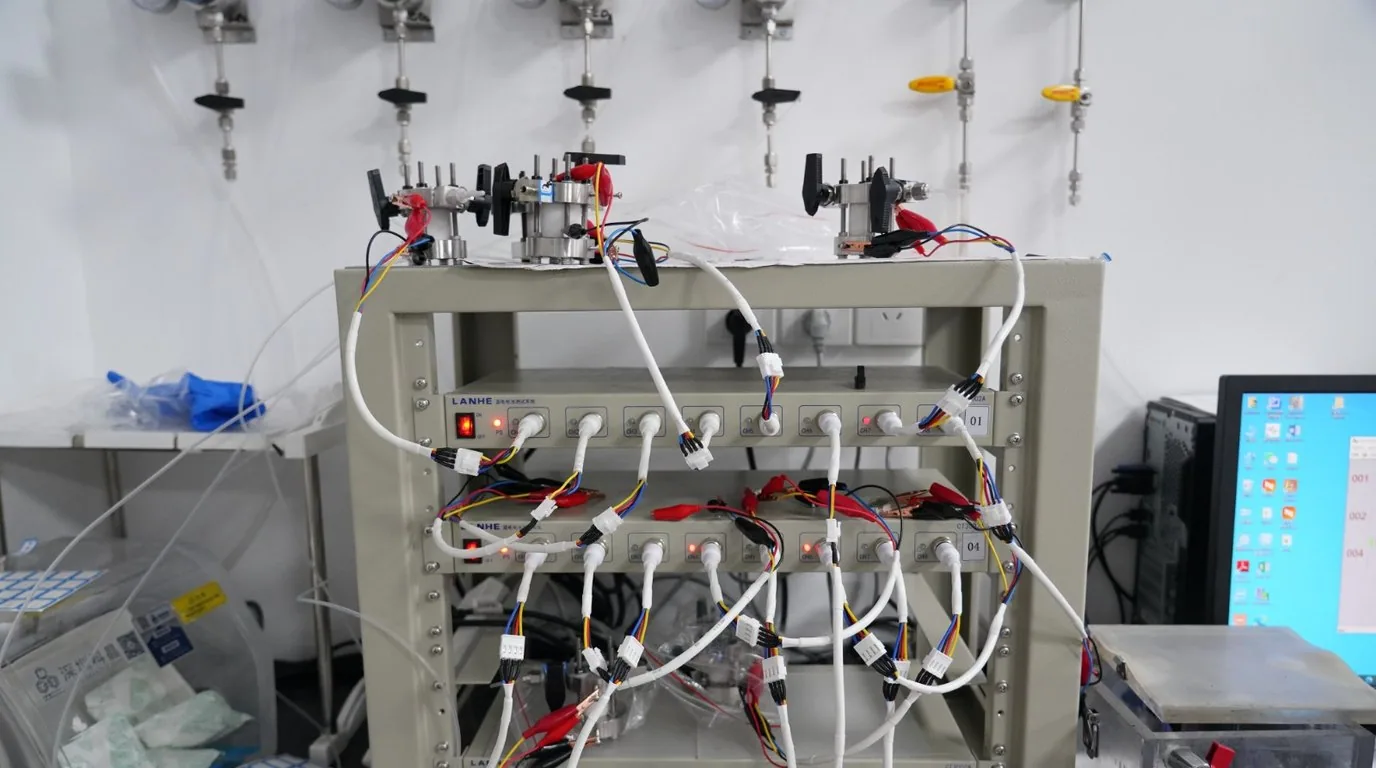
Identify cell grade on the spot from the amp-hour capacity of a 100Ah cell, its AC internal resistance (about 0.35mΩ for new A-grade) and the open-circuit spread after 24 hours at rest.
Open the capacity guidearrow_forwardHauling 800–1,500kg puts far greater demands on cycle life and thermal headroom, with 160A rated and 250A surge discharge calibration to match.
See the cargo platformarrow_forwardBuilt for Bajaj RE, Piaggio and Keke Napep conversions, calibrated for service life and availability across a 14-hour loaded working day.
See the passenger platformarrow_forwardSubmit your company details and we will push the 48-page cycle-life whitepaper PDF to you by encrypted corporate email; a factory visit to see the running batches on the ageing cabinets can be booked as well.
Specification notice:The figures above are engineering reference values. They may differ with production batch, configuration and actual duty cycle, and the percentages for life, efficiency, availability and coverage are engineering estimates and bench references. Contact us for the detailed specification sheet.
The company details you submit are used only to deliver this data pack and support the technical follow-up. They are stored encrypted and never passed to third parties.