
High-rate LiFePO4 motive power for heavy-duty cargo tricycles(60V / 72V extreme edition)
Hauling 800–1,500kg up continuous gradients, how do you get a fully loaded pull-away that never trips and cells that never swell for three years? Built for agricultural and construction materials, inter-town heavy logistics and unpaved site roads, TIANQIU uses genuine automotive-grade 3C high-rate prismatic aluminium-shell LiFePO4 cells with a thickened cold-rolled steel armour shell and a 300A surge-protected BMS behind 1200W–3000W high-torque motors.
verifiedGenuine high-amperage silver-plated Anderson terminals · 10,000 insertion cycles · temperature rise held below 25K
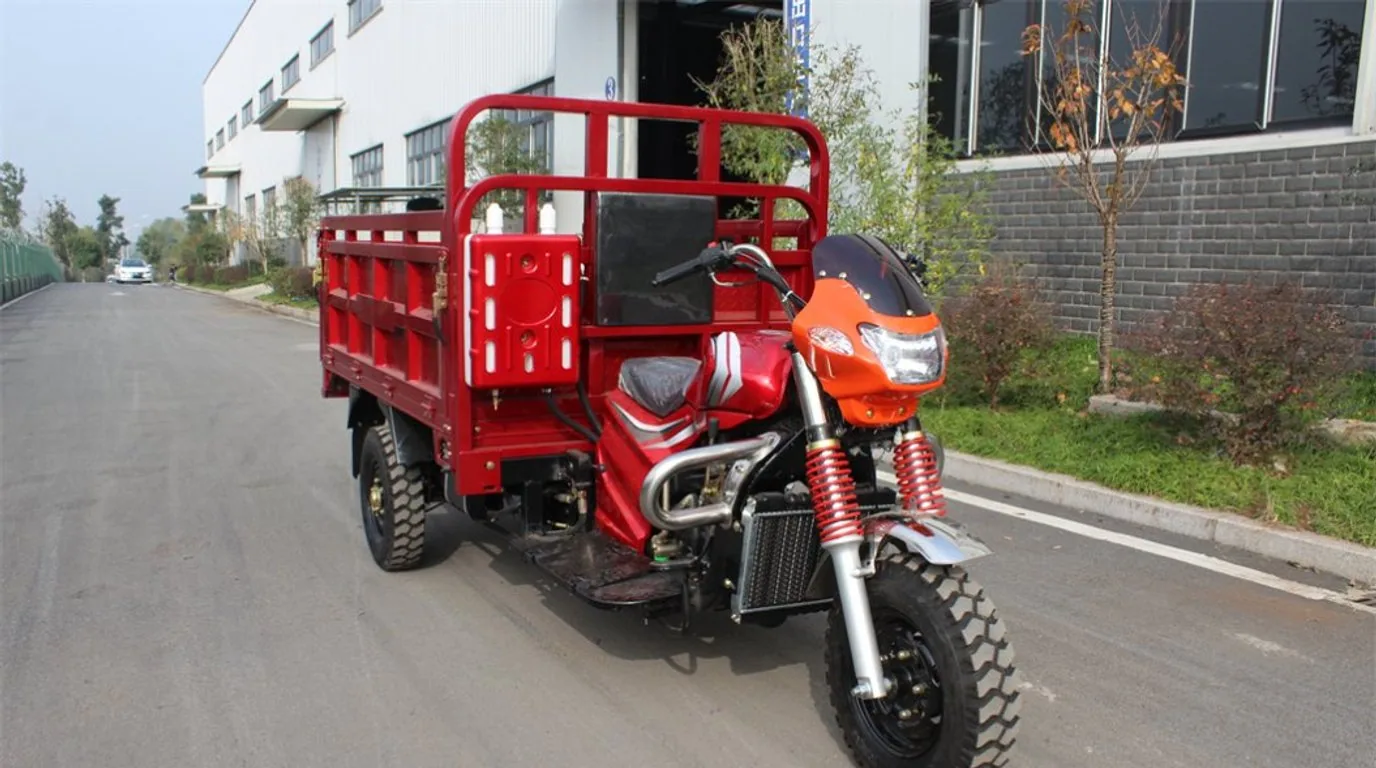
1,200kg of real aggregate, starting on a 15° ramp with no cut-out
Continuous climbing raised temperature by only 8.4°C. A working cargo tricycle faces six to ten extreme-load trips a day, transient stall torque on potholed mud, and tropical heat — the powertrain has to survive all of it.
Specification notice:The figures above are engineering reference values. They may differ with production batch, configuration and actual duty cycle, and the percentages for life, efficiency, availability and coverage are engineering estimates and bench references. Contact us for the detailed specification sheet.
Heavy-duty duty-cycle panorama and power load spectrum
Three payload bands, each matched to its own motor power, inrush current and standard battery specification rather than one parameter set stretched across every heavy-duty scenario.
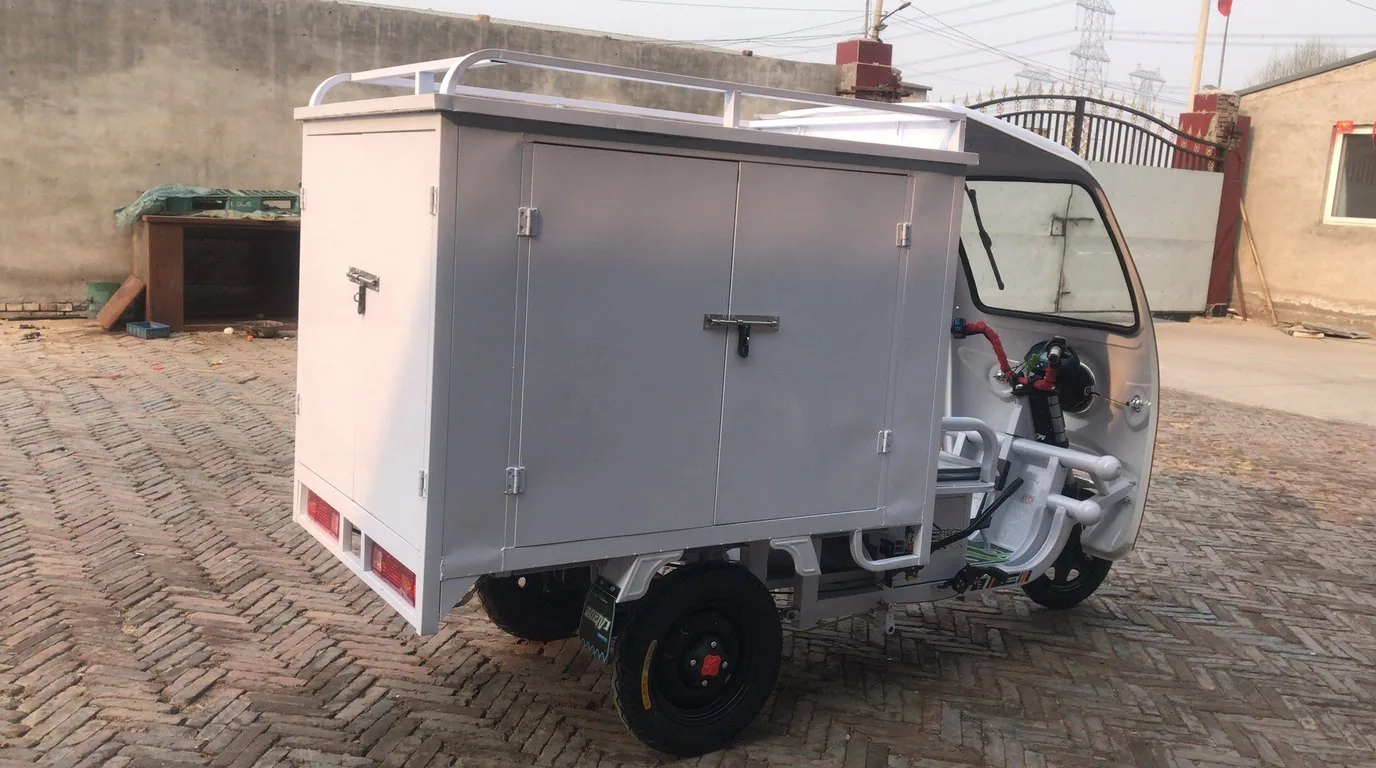
300kg - 600kg standard haul
Suits express freight, fresh produce and supermarket wholesale, and light component transfer. Eight to twelve round trips a day with frequent stops at 30–40km/h average.
Lead-acid replacement saves 65kg, lifting daily range by 40%.
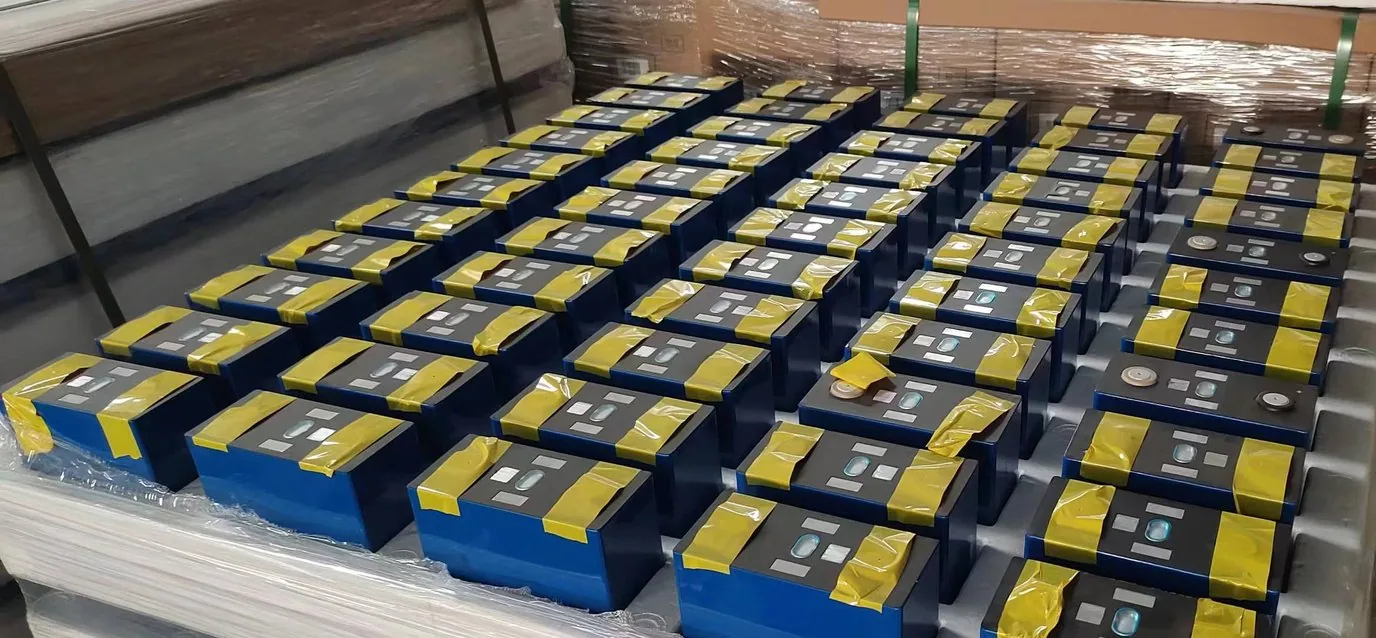
600kg - 1000kg heavy haul
Suits bulk agricultural grain and oil, steel primary processing transfer and long inter-town logistics. Six to eight fully loaded trips a day over unpaved earth roads and gentle gradients.
Stable output on a continuous 12° climb, with BMS transient tolerance to 85°C flame-retardant.
1000kg - 1500kg extreme overload
Suits cement and brick, quarry aggregate yards and mine short-haul. Low-speed high-torque operation facing mud-pit stalls and 15° steep ramps demands very high over-current capability.
Twin-pack parallel expansion to 20kWh+, with unlimited current on continuous heavy climbs.
Payload × gradient → recommended configuration matrix
For vehicle assembly plants and regional converters, this matrix matches nominal motor power, gear reduction ratio and real road gradient to the correct voltage platform and cell discharge rate.
| Payload band | Recommended rated voltage | Standard capacity (Ah) | Transient over-current threshold | Typical gradient | Typical loaded range | Recommended connector and mounting |
|---|---|---|---|---|---|---|
| 300 - 500 kg | 60V (16S) | 60Ah / 80Ah | 100A (60A continuous) | ≤ 8° gentle slope | 65 - 80 km | Anderson SB50 / standard under-seat bay |
| 500 - 800 kg | 60V / 72V | 105Ah | 160A (80A continuous) | ≤ 12° ramp | 70 - 95 km | Anderson SB120 / reinforced suspension cradle |
| 800 - 1,200 kg | 72V (24S) | 130Ah / 160Ah | 200A (100A continuous) | ≤ 15° steep ramp | 80 - 110 km | Anderson SB175 / side-mount locking frame |
| 1,200 - 1,500 kg | 72V (24S) armoured | 160Ah / 200Ah | 250A (10s) / 120A continuous | ≤ 18° extreme gradient | 60 - 85 km | Anderson SB350 / twin-pack parallel quick swap |
Range figures assume flat and mixed-gradient routes; an intelligent thermal-derating algorithm applies in extreme cold or peak tropical heat.
Specification notice:The figures above are engineering reference values. They may differ with production batch, configuration and actual duty cycle, and the percentages for life, efficiency, availability and coverage are engineering estimates and bench references. Contact us for the detailed specification sheet.
Why cargo duty demands motive-grade cells rather than storage grade
Much of the cheap conversion lithium on the market uses home-storage (ESS) or second-life cells. Unable to survive the 200A transient inrush of a heavy motor start or the constant violent vibration of unpaved roads, these packs show cliff-edge capacity loss or a melted protection board within three to six months.
| Engineering metric | TIANQIU motive-grade cells | Low-grade storage cells | Engineering score |
|---|---|---|---|
| Inrush current handling | 3C–4C instant response | 0.5C–1C only; voltage collapse and cut-off under load | 92/100 power reserve |
| Three-axis road vibration (50G mechanical shock) | Full cold-rolled steel armour + flame-retardant potted fixing | Simple PVC film wrapping (tabs snap and desolder, shell abrasion arcs) | 96/100 ruggedness index |
| Continuous high-power climb thermal margin | Thermal silicone pad + aluminium-shell cells for even temperature | Polymer storage pouch (heat stacks in the sealed stack, cells swell) | 88/100 thermal evenness |
Specification notice:The figures above are engineering reference values. They may differ with production batch, configuration and actual duty cycle, and the percentages for life, efficiency, availability and coverage are engineering estimates and bench references. Contact us for the detailed specification sheet.
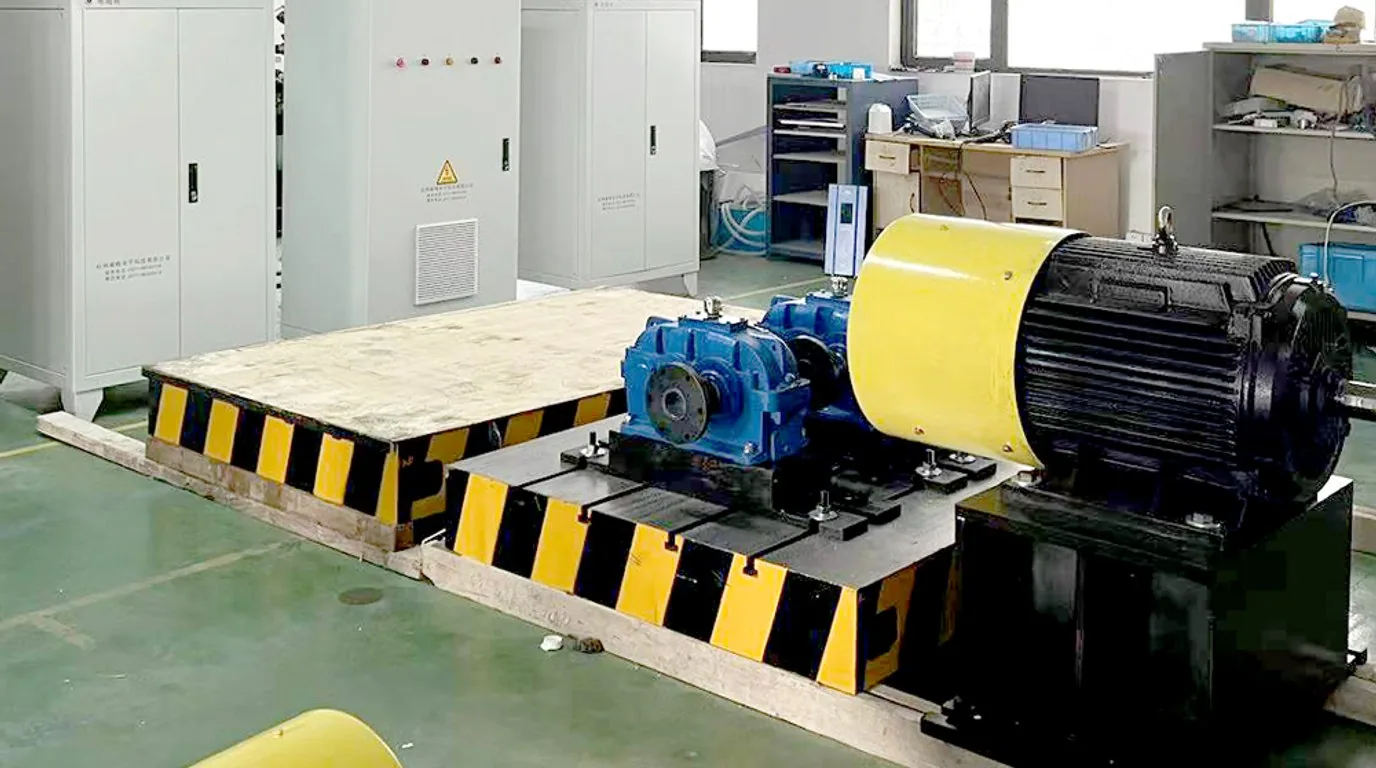
Dyno extreme-load thermal imaging: 55°C environmental chamber
A 1,500kg load was run for 40 minutes of continuous climbing at 45°C ambient. Cell temperature spread stayed locked inside ≤3.5°C, eliminating the local hot spots that trigger cascading thermal runaway.
- Construction materials, steep loaded start: 1,200kg of broken brick and sandbags pulled away on a continuous 15° ramp. Motor start peak inrush reached 218A while TIANQIU mote-power cell terminal voltage drop stayed within 2.1V, avoiding any controller under-voltage cut.
- High-frequency industrial warehousing turnover: 14 hours a day with two to three consecutive charge-discharge cycles. Fully aluminium laser-welded cell posts eliminate the heat and erosion failures of conventional threaded contacts under high current and vibration.
- 01. Full laser welding: internal resistance down 45%, no heat accumulation at high current.
- 02. 2.0mm steel shell: zero penetration from heavy impact or chassis scraping.
- 03. Independent vent valve: directional explosion-proof pressure relief, so internal pressure never builds.
Heavy-duty cargo powertrain technical specification
Complete engineering figures covering voltage platform, capacity, continuous and transient discharge, enclosure, thermal management and connectors, supplied with the quotation.
| Engineering metric | Specification / parameter | Engineering note |
|---|---|---|
| Voltage platform | 60V (16S) / 72V (24S) armoured | Matched to 1200W–3000W high-torque motors |
| Nominal capacity | 60Ah / 80Ah / 105Ah / 130Ah / 160Ah / 200Ah | Includes the VT-HD72160C armoured heavy-duty module (72V 160Ah · 11.52 kWh) |
| Continuous discharge current | 60A / 80A / 100A / 120A | Graded from 300kg standard haul up to 1,500kg extreme overload |
| Transient over-current threshold | 100A / 160A / 200A / 250A (10s) | Paired with a 300A surge-protected BMS that rides through a 10-second stall surge |
| Discharge rate | 3C high-rate prismatic aluminium-shell LiFePO4 | Breaks the repeated cell failure that second-life storage cells suffer on low-speed tricycles |
| Enclosure and sealing | 2.0mm thickened cold-rolled steel armour + IP67 dust and water | Passes a three-axis 50G mechanical shock test with no deformation |
| Thermal management | Thermal silicone pad + aluminium-shell cells, spread ≤3.5°C | 55°C chamber simulating a 1,500kg full load over 40 minutes of continuous climbing |
| Operating temperature | Rated full power output at 65°C tropical duty | Bidirectional convective cooling fins raise heat dissipation 2.8×; BMS transient tolerance 85°C flame-retardant |
| Fast charging | 0.5C–1C constant-current; a 72V 105Ah pack charges in about 4 hours on our 25A charger | Optional 50A fast-charge cabinet reaches 90% in 1.8 hours |
| Cycle life | Three years of heavy-duty service without cell swelling | Full laser welding cuts internal resistance by 45%, so high current never accumulates heat |
| Connectors and mounting | Genuine Anderson SB50 / SB120 / SB175 / SB350 silver-plated terminals | 10,000 insertion cycles, temperature rise held below 25K, with mechanical self-cleaning |
Battery bay dimensions can be customised from the chassis opening dimensions (L×W×H) or a 3D STEP model, with a shell design render and matched cable exit direction and mounting ear holes issued within five working days.
Specification notice:The figures above are engineering reference values. They may differ with production batch, configuration and actual duty cycle, and the percentages for life, efficiency, availability and coverage are engineering estimates and bench references. Contact us for the detailed specification sheet.
The three fatal heavy-duty failure modes, and how we design them out
Cargo tricycles fail in three predictable ways — a mid-climb cut-out, a melted and arcing terminal, and a thermal lock-out that will not reset. TIANQIU answers all three at the electrical and structural root.
Failure 1: cut-out mid-climb under full load
Industry norm: an ordinary BMS uses a single static current threshold, so the high current of a loaded climb latches the over-current cut and the vehicle rolls back down the ramp — extremely dangerous.
TIANQIU prevention: a multi-stage stepped over-current algorithm with staged delays allows 1.5× over-current for 60 seconds and a 2.5× surge for 10 seconds, so a climb never trips.
Failure 2: melted, arcing terminals
Industry norm: cheap bolts or ordinary quick-fit plugs raise contact impedance under 100A+ and vibration, softening and melting the terminal until it ignites nearby plastic.
TIANQIU prevention: genuine high-amperage Anderson silver-plated terminals with self-locking mechanical grooves, rated for 10,000 insertions with temperature rise held strictly below 25K.
Failure 3: heat soak and lock-out after sun exposure
Industry norm: in tropical markets such as India and Nigeria, road temperature exceeds 50°C and a sealed battery bay soaks to 70°C, forcing the BMS to cut power with no way to restart.
TIANQIU prevention: an internal cold-rolled steel plate combined with phase-change thermal material (PCM) and bidirectional convective cooling fins raises dissipation 2.8×, holding rated full power output at 65°C.
Heavy-duty cargo tricycle engineering procurement FAQ
Assembly and maintenance questions from vehicle manufacturers, overseas CKD/SKD plants and fleet operators.
Our cargo tricycle chassis has an irregular battery bay. Can TIANQIU build to our bay drawing?expand_more
Why do you insist on genuine high-amperage silver-plated Anderson connectors for cargo tricycles?expand_more
For long range, can two packs be connected in parallel?expand_more
Do the heavy-duty LiFePO4 packs support high-current fast charging? How long for a full charge?expand_more
The unpaved farm roads are extremely rough — can the cells inside work loose?expand_more
Do you hold complete sea-freight dangerous-goods documentation and certification for export?expand_more
Ready to fit an industrial-grade power core to your cargo fleet?
Whether you need 50 pilot packs to prove climb capability or five containers a month on a long-term OEM programme, the TIANQIU engineering team issues a complete electrical matching specification and export clearance plan within 24 hours.
- 50-unit pilot packs: prove climb capability and loaded range before committing to a container schedule.
- Five containers a month, long-term OEM: CKD/SKD assembly support with dedicated shell pressing and laser marking.
Specification notice:The figures above are engineering reference values. They may differ with production batch, configuration and actual duty cycle, and the percentages for life, efficiency, availability and coverage are engineering estimates and bench references. Contact us for the detailed specification sheet.
Chassis dimensions, 3D STEP models and procurement plans you submit stay strictly confidential. A mutual NDA can be signed first.