
Battery safety and thermal-runaway whitepaperhow to eliminate thermal-runaway fires in swap two-wheelers and commercial three-wheelers
For the hot, humid and heavy-load duty cycles of Southeast Asia, Africa and South America, TIANQIU and a national-level motive battery laboratory have deconstructed an industrial five-layer defence: single-cell runaway isolation, 800℃ aerogel physical fire blocking, 15kPa directed pressure relief and microsecond dual hardware cut-off.
verifiedPack fire and burst resistance > 60 minutes · neighbour cell rise +12.4℃ (safety threshold <60℃)
Specification notice:Reference values only — batch and duty-cycle variation applies. Contact us for detailed specifications.
Thermal-runaway test data from the bench
Before any export pack enters mass production it must pass overcharge runaway, full-load high-temperature bench, BMS hardware short-circuit cut-off and high-wading explosion-proof sealing validation.
Specification notice:The figures above are engineering reference values. They may differ with production batch, configuration and actual duty cycle, and the percentages for life, efficiency, availability and coverage are engineering estimates and bench references. Contact us for the detailed specification sheet.
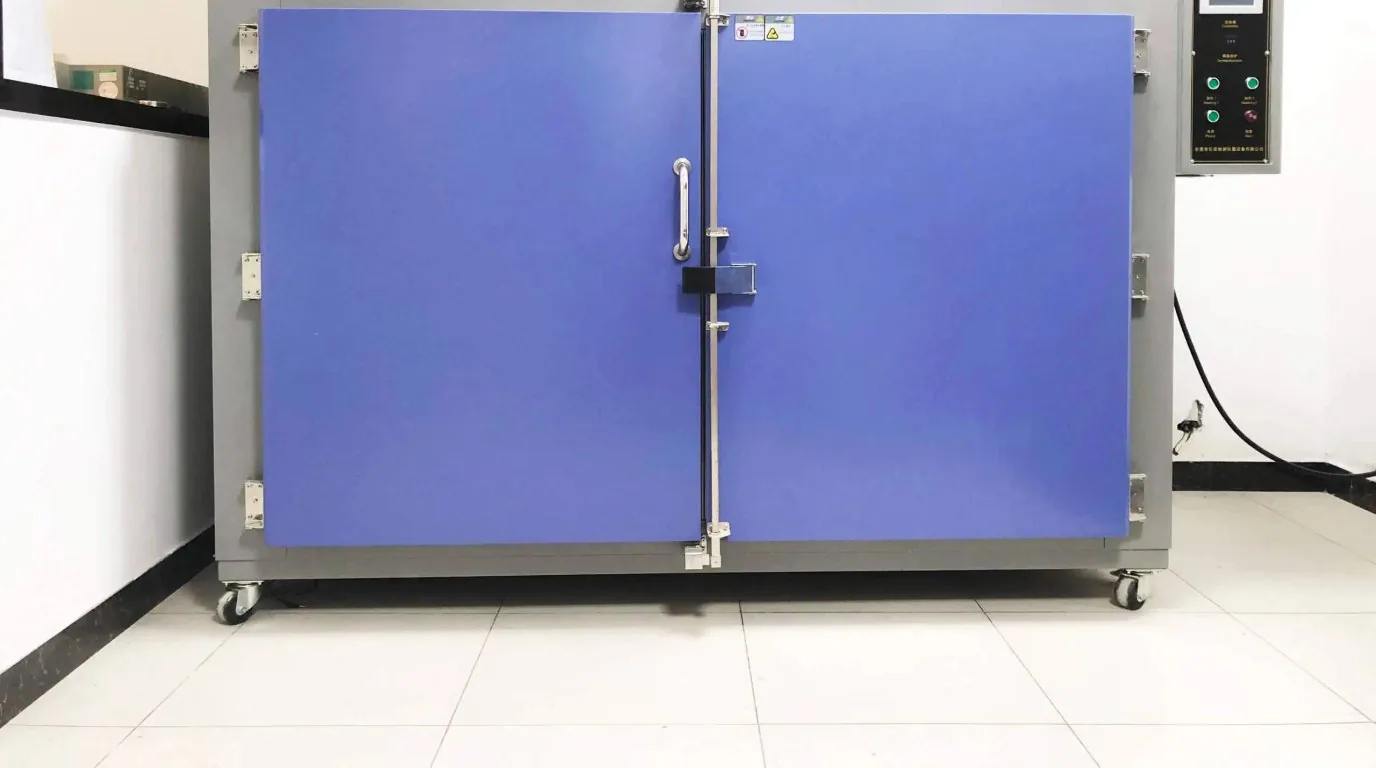
Extreme destructive safety testing, on the record
From overcharge runaway and full-load thermal benches to BMS hardware short-circuit cut-off and high-wading explosion-proof sealing — four extreme tests, all documented and auditable.
- TEST 01 · Runaway ignition blocking: nail penetration and overcharge directed jetting: the explosion-proof relief valve vents the hot combustible gas in a directed jet within milliseconds while the aerogel fully blocks open flame; the neighbouring cell rises only 12.4℃.
- TEST 02 · Full-load dynamometer thermal imaging (55℃ hot soak, full load): continuous 2C high-rate discharge with four independent high-precision NTC channels on watch holds the maximum cell-to-cell spread inside the cavity to ≤ 3℃.
- TEST 03 · BMS hardware dual cut-off: millisecond short-circuit and overcharge lock-out: an automotive-grade high-voltage parallel MOSFET matrix cuts the circuit in 2.5ms when an external load dead-shorts at 1200A.
- TEST 04 · Impact, burst resistance and IP67 deep wading: a 1.5mm thickened cold-rolled steel enclosure holds its shape against 25kN compression, and after one hour submerged in 300mm of storm water insulation resistance stays above 100MΩ. UN38.3 vibration and crush testing passed.
The five-layer pyramid of passive and active safety
From intrinsic cell chemistry, through physical thermal-isolation media, to algorithmic control and clean fire suppression — chain-reaction runaway is designed out at every level.
- L1 · Intrinsic safetyscience
Automotive A-grade lithium iron phosphate (LiFePO4)
The olivine crystal structure is extremely stable with a thermal decomposition temperature above 700℃, and it releases no oxygen to feed combustion — fire is blocked at the molecular level.
Benchmark: NCM decomposes at just 210℃ — LFP resists 3× higher - L2 · Physical isolationlayers
800℃ silica ceramic aerogel
A 1.2mm aerospace-grade aerogel composite mat is filled between every cell, with a thermal conductivity of only 0.018 W/(m·K), breaking the domino effect.
Blocks 800℃ for more than 60 minutes - L3 · Pressure reliefcyclone
IP67 bidirectional explosion-proof breather
An ePTFE micro-porous membrane equalises internal and external pressure and prevents condensation; when cavity pressure reaches 15kPa the valve bursts open to vent in a directed path, ruling out physical rupture.
< 20ms directed discharge out of the enclosure - L4 · Dynamic monitoringdeveloper_board
Automotive multi-point temperature-sampling BMS
Terminal posts and cell centres are sampled independently, with an adaptive dynamic derating and current-limiting algorithm; a rise rate above 1℃/s immediately triggers warning and stepped current locking.
Hardware response 2.5ms MOS bidirectional cut-off - L5 · Active suppressionfire_extinguisher
Perfluorohexanone suppression capsule (optional)
A miniature heat-activated perfluorohexanone release capsule sits inside the module; on abnormal internal heat it vaporises and suppresses the event within seconds through combined chemical cooling and free-radical isolation, leaving no residue.
Agent: perfluorohexanone (FK-5-1-12), environmentally safe and insulating
Genuine automotive-grade pack vs trader-assembled pack: six critical safety metrics
Much of the low-priced battery supply on export markets is built from dismantled EV cells or assembled in small workshops, missing basic thermal barriers and explosion-proof venting — which is why packs catch fire on hot, corrugated roads overseas.
| Safety dimension | TIANQIU automotive-grade export pack | Second-hand graded / workshop-assembled pack | Operational and legal consequence |
|---|---|---|---|
| 1. Cell selection and source | New automotive A-grade LiFePO4 with full laser QR traceability | Dismantled and refurbished cells, mixed B / C grades, badly mismatched capacity and resistance | Severe fade and voltage mismatch after 200 cycles, overcharge and self-ignition |
| 2. Physical cell-to-cell isolation | 800℃ silica aerogel barrier — one failed cell does not spread to its neighbour | 0.1mm paper or plain glue; ignites on contact with flame | One punctured cell starts a chain fire across the whole pack that cannot be extinguished |
| 3. Enclosure relief structure | IP67 ePTFE bidirectional vent, bursting precisely at 15kPa with directed flow | Fully sealed with potting compound or thin cheap steel, with no venting mechanism at all | Gas accumulates and detonates physically, cracking the vehicle frame |
| 4. BMS protection response | High-voltage low-resistance MOS array with 2.5ms hardware cut-off and lock-out | Refurbished off-brand protection board; software hangs or relay contacts arc and weld | The short never clears and instantly destroys the harness and motor controller |
| 5. Enclosure rigidity and sealing | 1.5mm cold-rolled steel, single-piece bent and pressed, withstands 25kN impact | 0.8mm thin galvanised sheet or PVC shrink wrap — one drop and it cracks | Vibration cracks welds and shorts terminals; standing water causes leakage and fire |
| 6. Export compliance and liability cover | UN38.3.4, AIS-156 certification and worldwide product liability insurance | Forged third-party test reports and no carrier qualification | Container seized and confiscated; the buyer carries full liability if an incident occurs |
Cold-weather performance and charger matching also set the safety envelope — see the cold-weather charge and heating guide and the charger and fast-charge control guide.
Specification notice:The figures above are engineering reference values. They may differ with production batch, configuration and actual duty cycle, and the percentages for life, efficiency, availability and coverage are engineering estimates and bench references. Contact us for the detailed specification sheet.
Safety certification and the compliance boundary
All test reports and certificates can be supplied as original scans for third-party verification; the in-process quality control and factory audit procedure that precedes container dispatch is covered in the factory audit and QC whitepaper.
AIS-156 Phase 2 · fire and burst resistance > 60 minutes
Pack fire and burst resistance exceeds 60 minutes, meeting India AIS-156 Phase 2 requirements for blocking thermal-runaway propagation.
IP67 dual explosion-proof vent
An ePTFE micro-porous membrane balances pressure and prevents condensation; at 15kPa cavity pressure the valve vents in a directed path within < 20ms.
UN38.3.4 thermal shock compliant
Every export container ships at 30% SOC — the optimum safe transport state under UN38.3 dangerous-goods rules — meeting the legal sea-freight requirement.
UL94 V-0 flame retardant · worldwide product liability insurance
The material system is rated UL94 V-0, and exported products are covered by worldwide product liability insurance that defines the liability boundary clearly.
Field and laboratory evidence
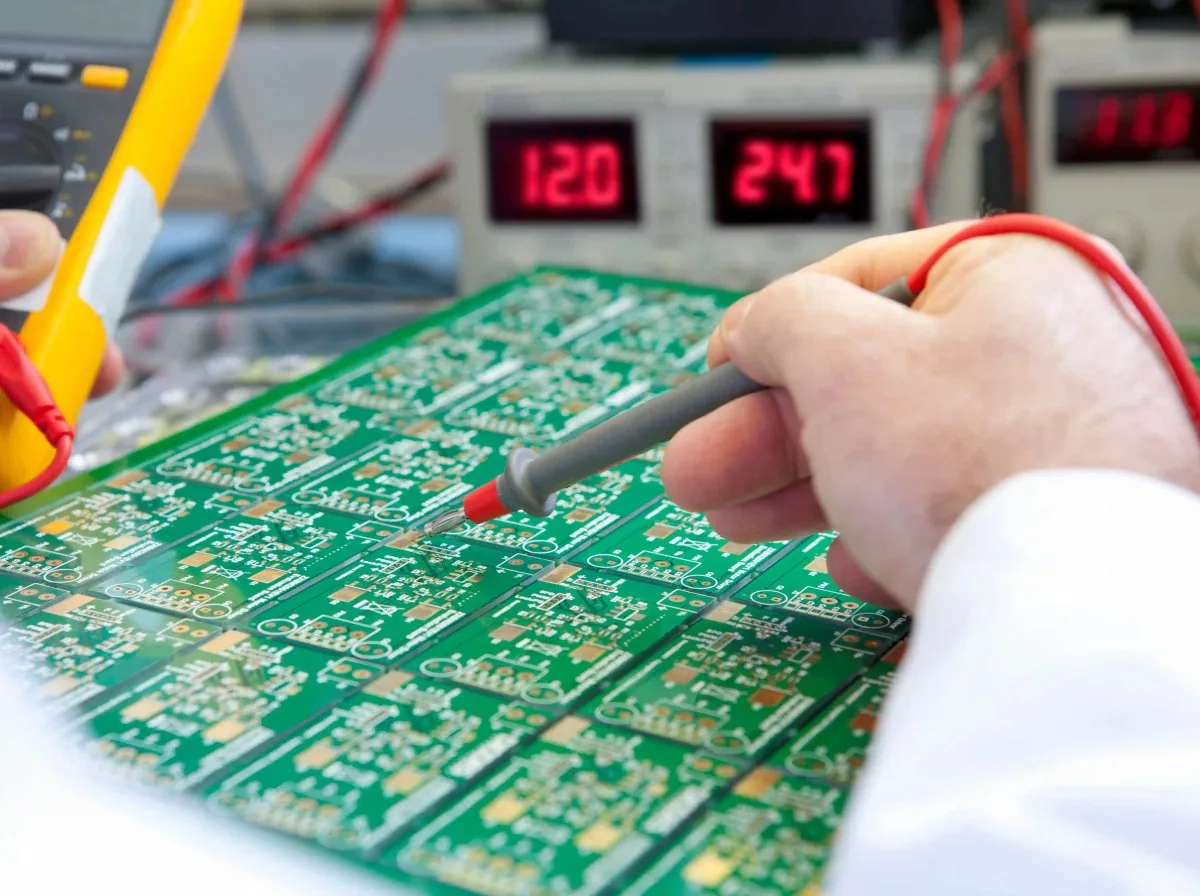
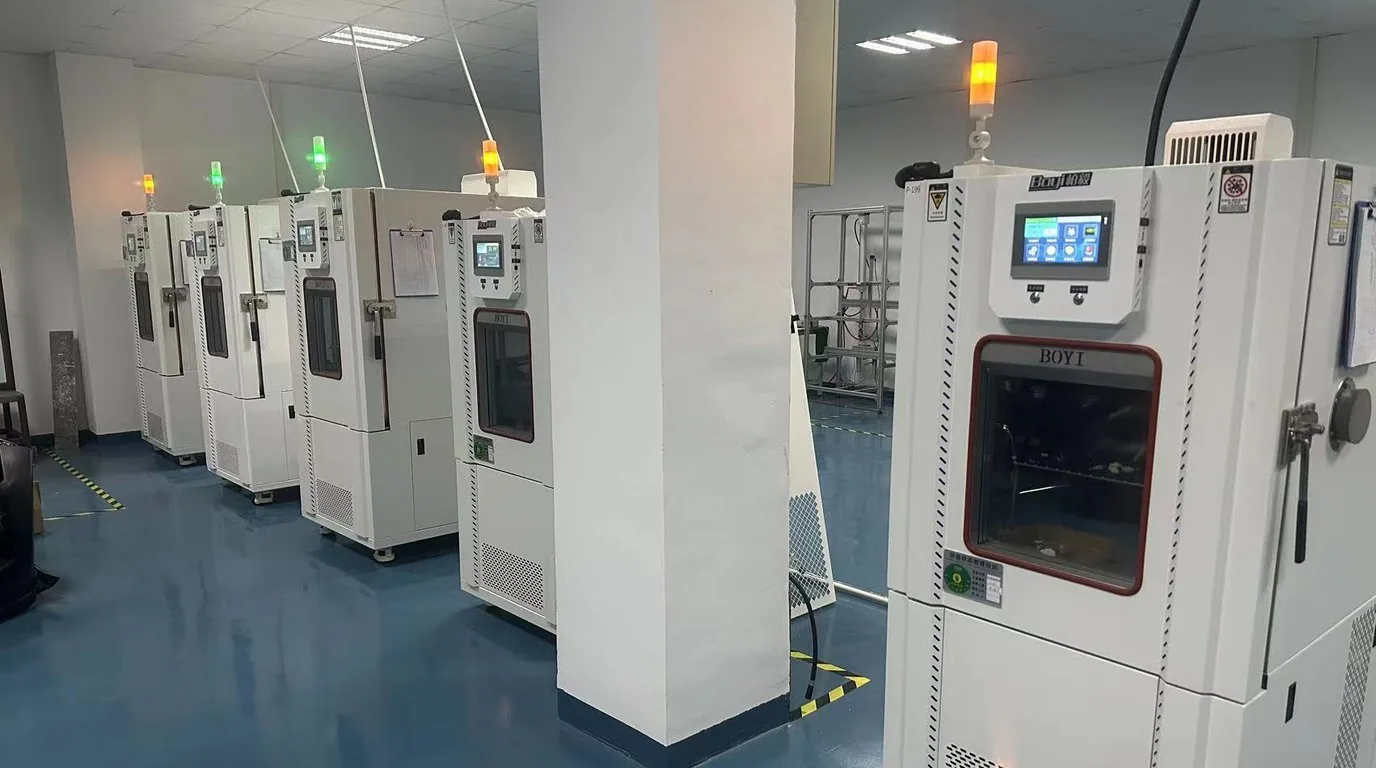
Production-line, laboratory and field photographs for this subject. Original records and third-party reports can be released for your project on request.
The six safety questions overseas buyers and fleets ask most
Long-haul sea freight, tropical sun and heavy swap duty cycles — our senior motive battery engineers answer them directly.
Container interiors can reach 60℃ at sea. Will the packs self-ignite?expand_more
A three-wheeler works under midday tropical sun — how does the BMS protect it?expand_more
Roads flood badly in the rainy season. Is there a shock or fire risk after the pack is submerged?expand_more
If one cell is struck and punctured, will it really not ignite the whole pack?expand_more
Is the optional perfluorohexanone capsule single-use, and how is it maintained after activation?expand_more
Can you supply safety test reports specific to my market at import clearance?expand_more
Request the thermal-runaway test dossier and container ex-works pricing
Tell us your vehicle application and destination port, and our engineering team will send the complete package within 24 hours on working days: high-definition destructive-test footage, certificates and a CIF quotation.
- High-definition destructive test footage: nail penetration, overcharge and 1200A short-circuit cut-off
- Certificates: UN38.3 assessment · MSDS · AIS-156 factory approval · Kenya KEBS PVoC
- Commercial pack: CIF quotation and destination market access checklist
Specification notice:The figures above are engineering reference values. They may differ with production batch, configuration and actual duty cycle, and the percentages for life, efficiency, availability and coverage are engineering estimates and bench references. Contact us for the detailed specification sheet.
We keep strictly to international commercial confidentiality and never disclose buyer purchasing information or vehicle data. A mutual NDA can be signed first.