
Can you just swap lead-acid for lithium?Yes it converts — but it is not plug-and-play
The direct answer: yes, and most vehicles need no frame work. LiFePO4 lines up with lead-acid at the voltage level — lead-acid strings 12V blocks, so three blocks map to 12S, four and five blocks both map to 16S (48V and 60V are the same 16S pack, with 60V simply the label used when replacing a 5×12V frame), and six blocks map to 24S. But plug-and-play is wrong on three counts: the charger must be replaced (a lead-acid constant-voltage unit has no CC-CV knee and no BMS handshake), the controller has to be verified for MOSFET rating and current limit, and the instrument and DC-DC must be re-specced for the new platform. On top of that, lead-acid and lithium must never share one power circuit — the three cases are set out below.
verifiedUsable-capacity figures follow this estimated pages (the voltage platform matrix and the TCO model); configuration and warranty are governed by the quotation and the spec sheet shipped with your container.
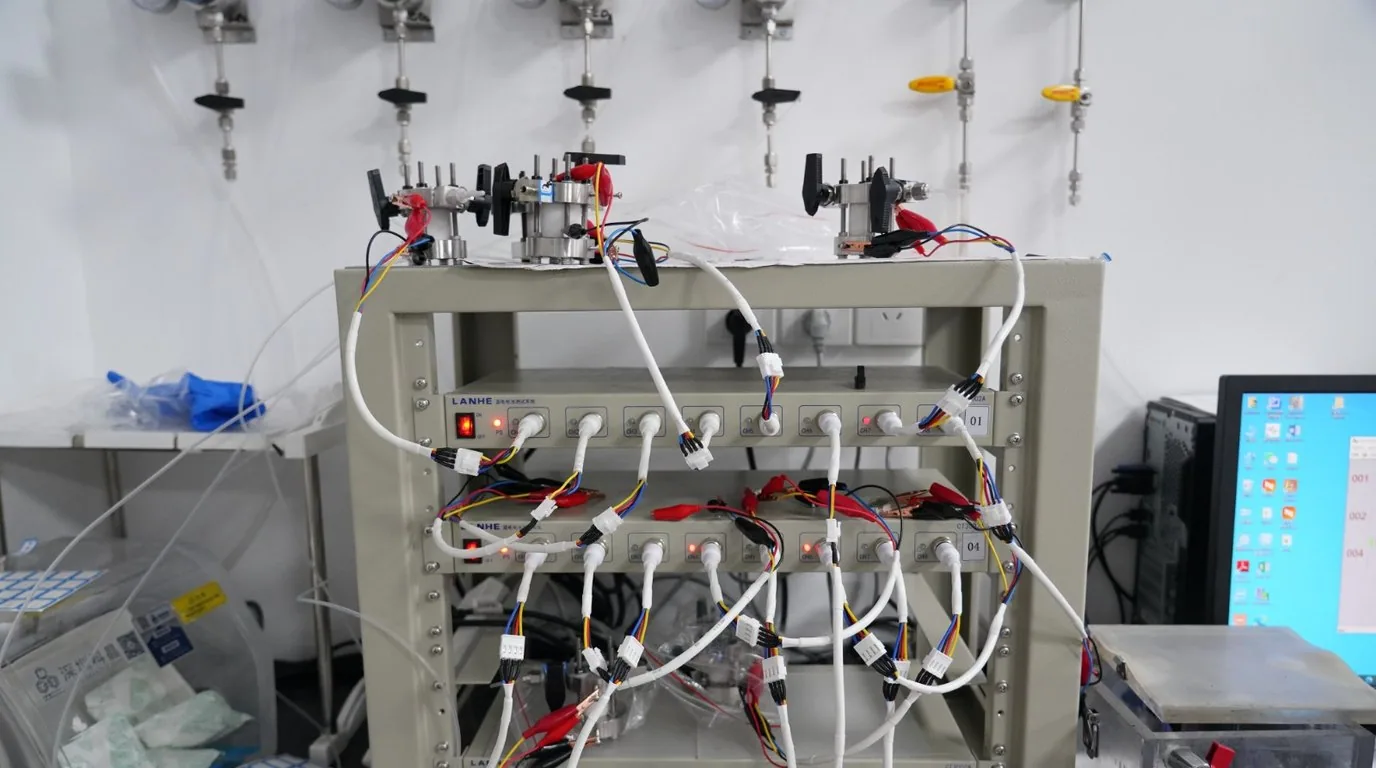
Three compatibility checks before you swap
Failed conversions almost always share one cause: only the battery was changed. Work the three items below in order — if any one fails, do not energise the vehicle.
- 01bolt
Charger: it must change — there is no compromise here
A lead-acid constant-voltage or three-stage charger has no CC-CV knee and no BMS handshake or communication, so it drives LiFePO4 straight into protection or overcharge. Fit a CC-CV charger (10–40A, with BMS handshake) at the correct series count; 48V, 60V and 72V units are not interchangeable. In heat the BMS and charger derate together, and in the cold charging is current-limited by policy.
The one part that must always change - 02memory
Controller: usually reusable, but verify rating and current limit
MOSFET rating: ≥75V on a 48V platform, 85–100V on 60V, and ≥100–120V automotive grade on 72V — a 24S pack reaches 87.6V at full charge and the back-EMF surge still has to be absorbed, so the nominal label is not enough. Current limit: it must match what the pack can deliver (150–250A continuous at platform level, with 3C peaks for short climbs); a limit above the pack rating pushes internal-resistance heating into protection. Only when both hold can the controller stay — otherwise a new controller costs far less than a burnt one and a batch of rework.
Rating + current limit: both must pass - 03dashboard
Instrument and DC-DC: re-spec or re-calibrate
A lead-acid gauge estimates charge linearly from voltage, and LiFePO4 has a very flat discharge plateau, so leaving it in place shows “drops fast when full, barely moves at the end” and shift distance cannot be managed. Fix it with a cluster that talks to the BMS, or re-calibrate the display curve against BMS SOC during commissioning. The DC-DC must be specced for the new platform — taking 12V straight off the bus burns lamps and gauges. Reset the under-voltage and over-voltage cut-offs for the new series count and run a 5km loaded road test.
Accurate SOC is what makes range manageable
36V / 48V / 60V / 72V: string counts against lithium platforms
Lead-acid strings 12V blocks, so the four common banks are three, four, five or six blocks. Match full-charge voltage to a LiFePO4 series count first, then decide which components have to move with it.
| Original lead-acid bank | Full-charge voltage | LiFePO4 series count | Nominal / full charge | What else must be changed |
|---|---|---|---|---|
| 36V · 3×12V in series | About 42 – 44V | 12S | 38.4V / 43.8V | Charger and instrument re-specced at 12S; controller under- and over-voltage cut-offs reset; DC-DC matched to the low-voltage platform |
| 48V · 4×12V in series | About 56 – 58V | 16S | 51.2V / 58.4V | Full-charge voltage overlaps 16S closely, making this the best-matched conversion; the charger must change and most controllers survive if the current limit is verified |
| 60V · 5×12V in series | About 70 – 73V | 16S | 51.2V / 58.4V | 16S charges to only 58.4V, below the original 5×12V lead-acid bank; most controllers survive (≥75V rating) but the low-voltage cut-off must be reflashed (about 52.5V on lead-acid to about 44.0V for 16S), and the charger must change |
| 72V · 6×12V in series | About 84 – 88V | 24S | 76.8V / 87.6V | Controller must be automotive grade at ≥100 – 120V (87.6V full charge plus back-EMF surge); insulation rules tighten; at 150Ah the pack drops from about 240kg to about 81kg |
Usable capacity changes too. Lead-acid is discharged to only 50–60% to protect its life, so a 150Ah label gives roughly 75–90Ah of real use; LiFePO4 at a recommended 88–90% DoD gives roughly 132–135Ah. Converting at equal nominal capacity therefore means more range — the site’s figure is about +47% to +80% of usable range — and because 24S is nominally 76.8V against 72V for 6×12V lead-acid, the same label also carries about 6% more nominal energy. The 60V row is the exception: five lead-acid blocks are nominally 60V, above the 16S LiFePO4 51.2V, so nominal energy falls slightly and the range gain is more conservative (about +25% to +54%) — which is why a 60V frame needs its controller cut-off reflashed. The full-charge column is a nominal band: measure your own charger curve before cutting anything.
Specification notice:The figures above are engineering reference values. They may differ with production batch, configuration and actual duty cycle, and the percentages for life, efficiency, availability and coverage are engineering estimates and bench references. Contact us for the detailed specification sheet.
Can lead-acid and lithium be mixed? No — three cases explained
Paralleled in one circuit — forbidden
Charge curves and internal resistance differ: on charge the lead-acid reaches absorption voltage while the lithium pack is still filling, and the lithium BMS cannot protect the lead-acid end from overcharge. On discharge the lithium pack is dragged into low-voltage protection and the two sets rob each other. Never mix them in one power circuit.
Series-stacked to raise voltage — not usable
Stringing lead-acid blocks into a lithium pack makes the lead-acid reach cut-off first, over-discharges the lithium, and removes unified per-cell protection and balancing from the whole string. Not a usable arrangement.
Separate compartments (lithium traction + lead-acid 12V) — workable, but isolated
Technically workable, but it must be electrically isolated: run the 12V rail from an independent DC-DC off the traction pack, or from its own 12V source. Never tap the middle of the traction pack — that section drifts permanently out of balance and takes capacity and life with it.
The correct order
Remove the lead-acid bank first, then fit the lithium pack. Change the charger and instrument at the same time, re-calibrate SOC display and the under/over-voltage cut-offs once, then run a 5km loaded road test.
Swapping lead-acid for lithium: the questions that decide it
Can lead-acid and lithium batteries be mixed or paralleled?expand_more
Can I just fit the lithium pack and ride?expand_more
Do I need a new controller?expand_more
How much extra range does equal capacity give?expand_more
How does each voltage convert — 36V, 48V, 60V, 72V?expand_more
The state of charge reads wrong after the swap. What now?expand_more
Send your lead-acid configuration and we will size the swap
Tell us the original voltage and lead-acid capacity, battery bay length, width and height, controller model, daily distance and destination port. We will return the matching LiFePO4 series count and capacity, the parts that must change with it, FOB / CIF pricing and the shipping document list.
- Upgrade configuration advice and pricing within 24 hours on working days
- Sample packs available to prove bay dimensions and connectors before you commit to a container
- Vehicle parameters and market-access documents are strictly confidential; NDA available first
Specification notice:The figures above are engineering reference values. They may differ with production batch, configuration and actual duty cycle, and the percentages for life, efficiency, availability and coverage are engineering estimates and bench references. Contact us for the detailed specification sheet.
The vehicle, controller and conversion details you submit are used only for this swap assessment and remain strictly confidential.