
100Ah lithium battery packs:the same Ah is two very different batteries
Ah measures current capacity, not energy. The same 100Ah pack stores 5.12 kWh on a 51.2V (16S, the 48V / 60V label) platform and 7.68 kWh on a 76.8V (24S, 72V) platform — 50% more usable energy behind an identical label. This is where buyers comparing “how far does a 100Ah battery go” most often go wrong: an Ah figure with no voltage basis cannot be compared. This page sets out the 100Ah matrix across both platforms, a reverse-check table that turns your daily distance and payload into the Ah you actually need, and the fit limits and price basis for 100Ah.
verifiedTypical values at 25°C. Nominal energy is computed as each platform’s nominal voltage × Ah; the signed specification sheet that ships with your container governs.
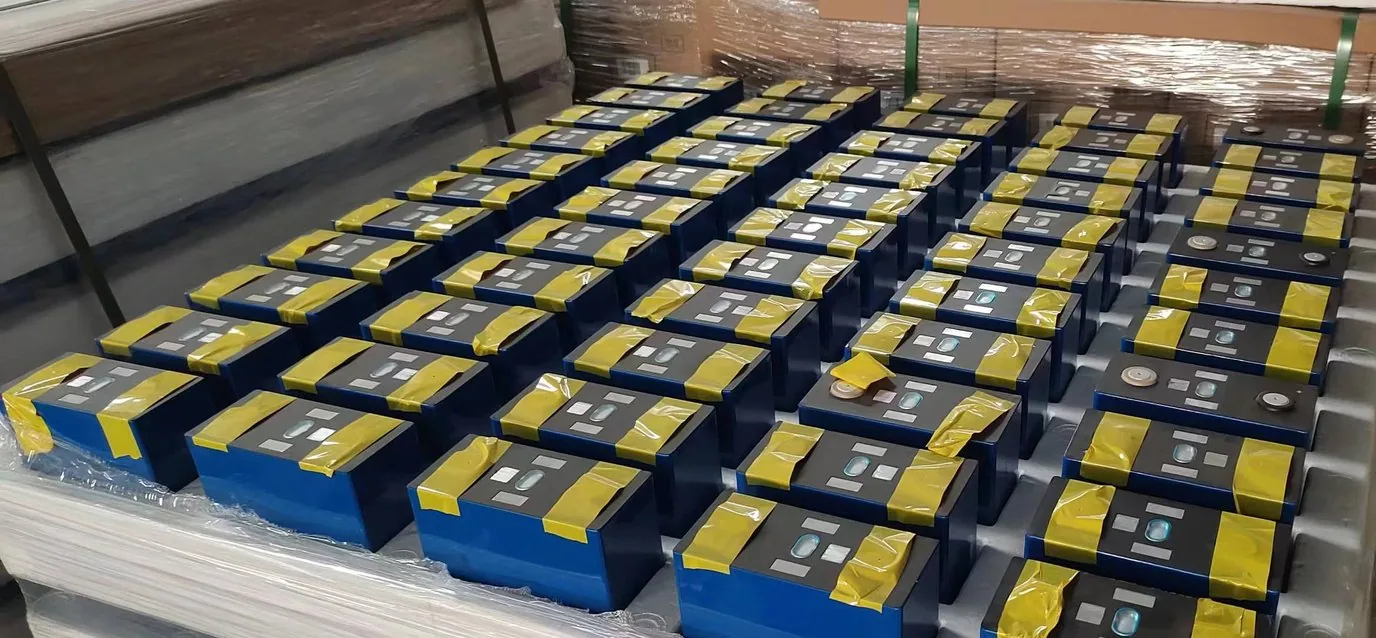
What the 100Ah capacity class delivers
Specification notice:The figures above are engineering reference values. They may differ with production batch, configuration and actual duty cycle, and the percentages for life, efficiency, availability and coverage are engineering estimates and bench references. Contact us for the detailed specification sheet.
100Ah across two voltage platforms: a 50% energy spread
Energy is computed as each platform’s nominal voltage × 100Ah rather than taken from the trade label; weight is the assembled pack including steel enclosure, BMS and harness at roughly 7 kg/kWh (±5%).
| Voltage platform (string) | Nominal voltage basis | Energy at 100Ah | Pack weight (typical) | Duty cycle | Target range | Pack model |
|---|---|---|---|---|---|---|
| 48V / 60V platform (16S LiFePO4, shared basis) | 51.2V | ≈ 5.12 kWh | ≈ 36 kg | Passenger rickshaw taxi (India / Bangladesh, 4–5 passengers), 5×12V lead-acid bay passenger rickshaw, light agricultural cargo | 100 – 130 km | VT-48100-AIS156-MAX (4×12V bay) / VT-6105-RE-COMPACT (5×12V bay) |
| 72V platform (24S LiFePO4) | 76.8V | ≈ 7.68 kWh | ≈ 54 kg | Passenger rickshaws, moderate cargo and high-speed e-motorcycles | 100 – 120 km | VT-72100-PASSENGER |
Merging 48V and 60V into one row is not an omission: both are replacement-class labels, not string counts. The same 16S pack is called 48V when it drops into a 4×12V lead-acid frame and 60V when it drops into a 5×12V frame (see the 60V platform page). What sets energy is the string and the nominal voltage: 51.2V × 100Ah = 5.12 kWh, 76.8V × 100Ah = 7.68 kWh. Range follows each platform’s ex-works basis: 55–68 Wh/km for passenger rickshaws, 28–35 Wh/km for two-wheeler delivery, 95–125 Wh/km for heavy cargo.
Specification notice:The figures above are engineering reference values. They may differ with production batch, configuration and actual duty cycle, and the percentages for life, efficiency, availability and coverage are engineering estimates and bench references. Contact us for the detailed specification sheet.
Reverse check: is 100Ah enough for your daily distance and payload?
Basis: required energy = daily distance × consumption ÷ 1000; divide by the recommended depth of discharge, 88% (range 88–90%), then divide by nominal voltage to get required Ah. Values assume typical full load, 35°C ambient and paved to lightly unpaved surfaces.
| Duty cycle and daily distance | Real consumption | Energy needed (DoD 88% included) | Ah needed at 51.2V | Ah needed at 76.8V | Is 100Ah enough? |
|---|---|---|---|---|---|
| Two-wheeler delivery, 80 km/day | 28 – 35 Wh/km | ≈ 2.5 – 3.2 kWh | 49 – 62 Ah | 33 – 41 Ah | Enough, in fact oversized (50–60Ah fits better) |
| Passenger rickshaw, flat route, 100 km/day | 55 – 68 Wh/km | ≈ 6.3 – 7.7 kWh | 122 – 151 Ah | 81 – 101 Ah | Not enough at 51.2V (needs 120–150Ah); marginal at 76.8V |
| Passenger rickshaw, 4–5 passengers, 120 km/day | 68 Wh/km | ≈ 9.3 kWh | 181 Ah | 121 Ah | Not enough on either platform (needs 130–180Ah) |
| Heavy cargo, 90 km/day | 95 – 125 Wh/km | ≈ 9.7 – 12.8 kWh | 190 – 250 Ah | 127 – 166 Ah | Not enough (160–200Ah on the 72V platform) |
| Golf cart / site shuttle, 100 km/day | 50 – 65 Wh/km | ≈ 5.7 – 7.4 kWh | 111 – 144 Ah | 74 – 96 Ah | Marginal at 51.2V; enough at 76.8V |
Required energy already excludes the safe cut-off margin below 88% DoD, but does not include steep-gradient, cold-weather or overload losses; real consumption on unpaved roads with frequent stop-start runs a further 35–50% higher. When your daily distance falls between two steps, size on the higher step, not on the average.
Specification notice:The figures above are engineering reference values. They may differ with production batch, configuration and actual duty cycle, and the percentages for life, efficiency, availability and coverage are engineering estimates and bench references. Contact us for the detailed specification sheet.
Which vehicles should take 100Ah — and which should step up
100Ah works on both platforms: at 51.2V (16S, the 48V / 60V label) it is the mainstay capacity for passenger rickshaws, at 76.8V (24S, 72V) it is the entry capacity for heavy-duty duty. The test is not whether the number looks big — it is three things: daily distance, real consumption and how large a pack the bay will accept.
- Take 100Ah for passenger rickshaws within 100 km a day on the 16S platform, two-wheeler delivery within 80 km a day, and moderate-payload 72V tricycles and high-speed e-motorcycle commuting.
- Step up (130–180Ah) where the day exceeds 120 km, the vehicle carries 4–5 passengers, or the route includes long gradients and unpaved sections — at 55–68 Wh/km a fully loaded 120 km day needs about 181Ah at 51.2V or above 121Ah at 76.8V.
- Step down (50–60Ah) for two-wheeler delivery within 80 km a day, where 100Ah is oversized and the extra cells only add weight and cost without adding shift revenue.
- Avoid 100Ah for heavy cargo duty (95–125 Wh/km) or 90 km plus loaded days, for frames whose bay height or floor loading cannot take a 36–54 kg pack, and as a way to build capacity by paralleling two 100Ah packs — that trade-off is set out on the 200Ah page.
- Fix the voltage platform before the capacity: the same 100Ah is 5.12 kWh at 51.2V and 7.68 kWh at 76.8V, a 50% energy gap
- Match controller and charger to full-charge voltage: 58.4V at 16S (the 48V / 60V basis) and 87.6V at 24S — the two are not interchangeable
- Measure the bay: length, width, height and floor load rating. The pack weighs 36–54 kg and still needs handle, cable and damper clearance
- Check BMS continuous and peak current limits against the loaded pull-away and hill-climb peaks, and confirm Tier-1 A-grade motive cells rather than salvaged stock
How a 100Ah price is built: four inputs, no guess range
Four inputs
Send destination port, payload, daily distance and motor rating and we model FOB / CIF pricing and container allocation for your duty cycle, rather than quoting a range that excludes documents and market-access items.
Same price, different energy
Align voltage and string count before comparing quotes: a 51.2V 100Ah and a 76.8V 100Ah are 5.12 kWh and 7.68 kWh packs, and unit prices cannot be compared side by side.
Documents with the container
UN38.3, MSDS and a dangerous-goods packing certificate (Class 9) ship with every container; market access is added per destination — India AIS-156 Phase 2, Nigeria SONCAP, Kenya PVoC, Egypt GOEIC / ACID.
100Ah lithium battery questions we get every week
How far will a 100Ah lithium battery take me?expand_more
How much does a 100Ah lithium battery weigh?expand_more
How much bigger is 120Ah than 100Ah, and is the step worth it?expand_more
How do I tell an inflated capacity rating from a real one?expand_more
Can I add capacity by paralleling two 100Ah packs into 200Ah?expand_more
What vehicles suit 100Ah, and what should avoid it?expand_more
How long does a 100Ah pack take to charge?expand_more
What does a 100Ah lithium battery cost?expand_more
Once 100Ah is settled, four things to check next
The 150Ah capacity class
The mainstay for heavy tricycles and long passenger shifts: cross-voltage matrix and the 6×12V 150Ah lead-acid weight comparison.
See the 150Ah classarrow_forwardThe 200Ah capacity class
What the largest capacity really costs in weight and bay volume, and the one 200Ah versus two 100Ah decision.
See the 200Ah classarrow_forwardThe 48V / 51.2V platform
Ex-works calibration for 100Ah on 16S, the 4×12V lead-acid drop-in basis and the full capacity matrix.
See the 48V platformarrow_forwardBattery spec sheet: 40Ah to 200Ah datasheets
One spec sheet across every model — 48V, 60V and 72V LiFePO4 packs from 40Ah to 200Ah, with energy, continuous discharge, weight and the matching duty cycle.
Open the spec sheetarrow_forwardGet a firm 100Ah quotation against your duty cycle
Send the destination port, payload, daily distance and motor rating. We will size the 100Ah pack on your target voltage platform and return FOB / CIF pricing, container allocation and lead time, with the shipping document list attached.
- Selection advice and pricing within 24 hours on working days
- Sample packs available to prove the duty cycle (3–5 day tooling), before committing to a container (three-wheeler motive packs: 20GP about 180 sets, 40HQ 320+)
- Vehicle parameters and market-access documents are strictly confidential; NDA available first
Specification notice:The figures above are engineering reference values. They may differ with production batch, configuration and actual duty cycle, and the percentages for life, efficiency, availability and coverage are engineering estimates and bench references. Contact us for the detailed specification sheet.