
What an e loader 3 wheeler price really asks:separate the on-road vehicle price from the pack price first
Two questions need separating. The first is terminology: an e loader is the Indian name for a load-carrying three-wheeler, called a cargo tricycle internationally, and further split in India by body style into porter (open deck), loader rickshaw (covered cab with a rear box) and fixed box-body variants — a completely different product line from the passenger e-rickshaw. The second is price intent: in Indian search behaviour “on road price” usually means the complete vehicle landed price (chassis, motor, battery, insurance and registration), while “e loader 3 wheeler price” sometimes means the vehicle and sometimes only the battery. We do not build vehicles and quote only the pack: send payload, body style, round-trip distance and motor rating and we model FOB / CIF. No amounts appear on this page.
verifiedThis page covers pack-side specification only and is not a complete-vehicle price · figures are typical at 25°C under standard conditions · the signed quotation governs
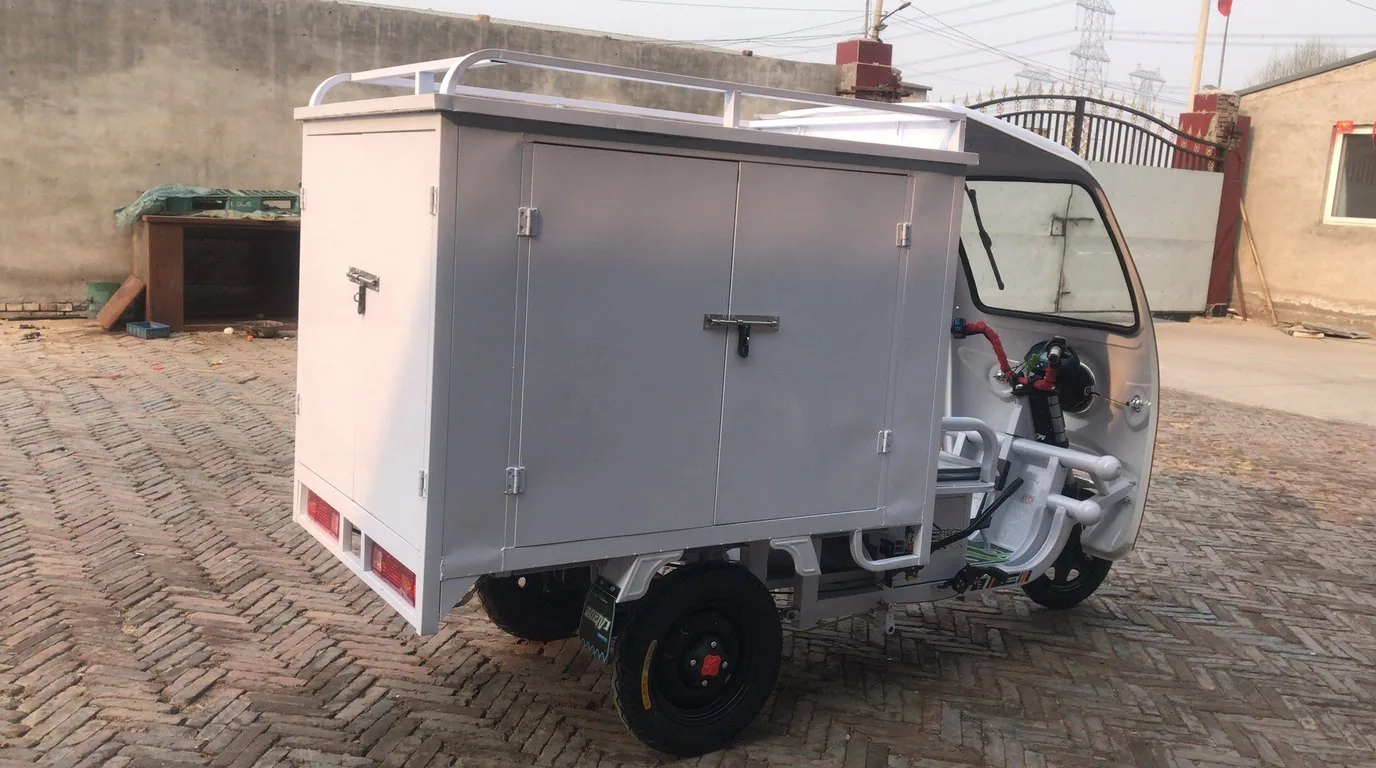
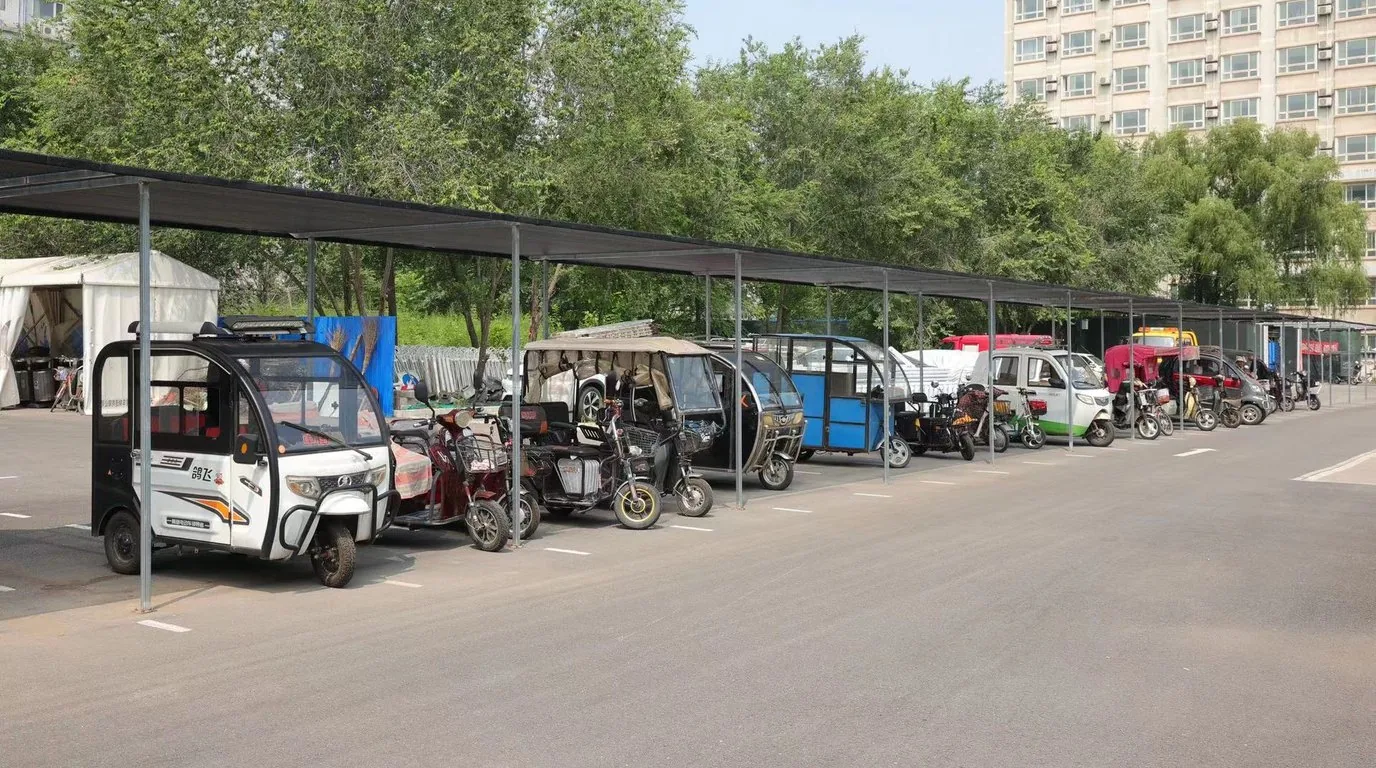
What an e loader is: the Indian name, the three body styles and the link to cargo tricycle
The same chassis family carries different names in India, South-East Asia and Africa, which is why quotations and specifications so often fail to line up. Align the terms and the body styles first; the configuration table only means something after that.
e loader is the Indian name for a cargo three-wheeler, equivalent to cargo tricycle or cargo three-wheeler elsewhere — a completely separate product line from the passenger e-rickshaw: an e-rickshaw carries people, an e loader carries goods, and they are specified on different battery bases. Chinese suppliers almost all build for the words “cargo tricycle”, which is why the local term e loader is left unserved.
Indian operators subdivide it further by body style: porter (open deck, tip-side, used for quick unloading in wholesale markets), loader rickshaw (covered cab with a rear box, the standard last-mile delivery shape), fixed box-body (enclosed box for food, pharma and courier work), and the flatbed tipper common on construction sites. The name a buyer uses does not change what we configure: state the payload and the body style and the platform follows.
- Relationship to cargo tricycle: one vehicle class under two names, treated here as one platform. Quoting an e loader is enough — we configure it on the cargo tricycle platform without the terminology getting in the way.
- Porter: an open deck with a high centre of gravity, so pull-away and potholes produce sharp shock loads. Steel enclosure and vibration-proof fixing matter more than raw capacity — but transient over-current tolerance still does not.
- Loader rickshaw and box-body: a fixed box adds frontal area and the daily trip count is higher, so continuous discharge capability and capacity both have to be right. This is the main user of the heavy band at 72V 160–200Ah.
- Not an e-rickshaw: a passenger three-wheeler carries four to five people at roughly 55–68 Wh/km; an e loader carries freight at 95–125 Wh/km, about double, so the pack must be specified as motive grade.
- Body style: porter open deck, covered loader rickshaw, fixed box, or flatbed tipper
- Rated payload and the overload ceiling actually used in service, which in India routinely exceeds the plate
- Round-trip distance per trip and trips per day, so capacity is derived rather than guessed large
- Existing motor rating and controller current limit, which set the continuous and transient discharge requirement
Configuration by payload and body style: light 60V 60Ah through heavy 72V 160–200Ah
A light delivery loader and a heavy box-body loader do not take the same pack. Four bands below cover the common Indian body styles with voltage platform, capacity, continuous and transient discharge demand, consumption basis, loaded range and matching pack model.
| Payload band and common body style | Voltage platform | Capacity (Ah) | Continuous / transient discharge | Consumption basis | Loaded target range | Matching pack model |
|---|---|---|---|---|---|---|
| ≤ 500 kg · light delivery (small box loader) | 60V (16S) | 60Ah / 80Ah | 60A continuous / 100A transient | Below heavy duty · estimated per vehicle | 65 – 80 km | Custom to the chassis battery bay |
| 500 – 800 kg · medium load (porter open deck) | 60V / 72V | 105Ah | 80A continuous / 160A transient | Below heavy duty · estimated per vehicle | 70 – 95 km | Custom to the chassis battery bay |
| 800 – 1,000 kg · heavy (fixed box loader rickshaw) | 72V (24S) | 160Ah / 180Ah | 100A continuous / 200A transient | 95 – 125 Wh/km | 90 – 110 km | VT-72180-CARGO-PRO |
| 1,000 – 1,500 kg · overloaded short-haul (flatbed aggregate) | 72V (24S) armoured | 160Ah / 200Ah | 120A continuous / 250A transient (10s) | 95 – 125 Wh/km, higher when overloaded | 60 – 85 km | VT-72200-CARGO-MAX |
The heavy band is quoted at a rated 800–1000 kg with 72V 160–200Ah (about 11.5–14.4 kWh) and a 90–110 km loaded target range; the light and medium bands run below the heavy-duty basis and are estimated per vehicle rather than inheriting 95–125 Wh/km. Range is converted at typical full load, 35°C ambient and paved to lightly unpaved surfaces, and payload, gradient, tyre pressure and riding style all move it. The capacity reverse lookup is in the real capacity and range engineering guide.
Specification notice:The figures above are engineering reference values. They may differ with production batch, configuration and actual duty cycle, and the percentages for life, efficiency, availability and coverage are engineering estimates and bench references. Contact us for the detailed specification sheet.
Indian last-mile duty as it really is, and the AIS-156 Phase 2 access threshold
The typical e loader duty is short trips, heavy loads, constant stop-start and a low average speed. That combination asks far more of continuous discharge and transient over-current capability than the same voltage on a two-wheeler — and India is one of the clearest markets on battery approval for three-wheelers.
High instantaneous current: the first two seconds are the hardest in the cycle
The highest current in the whole driving cycle appears in the first second or two of a loaded pull-away. Duty-cycle data puts a loaded three-wheeler hill start at about 20° at 160A–220A instantaneous, against a platform continuous rating of 150–250A with 3C peak for short climbs. Both conditions have to be satisfied together: meet the transient only and the vehicle feels weak off the line, meet the continuous only and it cuts out mid-climb.
Short trips, many of them: size on trips × round-trip distance
Indian city distribution commonly runs six to ten trips a day of modest round-trip length. Multiply the round-trip distance by the trip count and divide by the consumption basis: on the heavy band at 95–125 Wh/km, a 72V 180Ah pack (about 13.82 kWh) covers 90–110 km and handles most single-shift rhythms. Beyond 110 km a day, or where the route includes long gradients, size with about 20% margin or move to a parallel twin pack.
Constant stop-start: a stepped algorithm latches far less often than one static limit
Wholesale market and construction work means multiple loaded trips a day, keeping the BMS near its over-current decision boundary. A single static threshold latches on the climb current — the familiar “cuts out mid-slope and recovers a few seconds after the throttle is released”. A multi-stage stepped algorithm (for example 1.5x for 60 seconds and a 2.5x surge for 10 seconds) combined with voltage-sag control under high current is what this duty cycle actually needs. Diagnosis is covered in uphill cut-off and BMS current limit diagnosis.
India market access: AIS-156 Phase 2
Batteries for the Indian three-wheeler market are delivered against AIS-156 Phase 2, with the matching test and compliance documents shipped alongside; vehicle-type-approval requirements at the completed-vehicle level are confirmed by the OEM or integrator under the regulations in force. Transport additionally requires a UN38.3 test summary, MSDS and a dangerous-goods packing certificate (Class 9), shipped FCL or LCL with state of charge held inside the compliant window before departure.
e loader price intent and configuration questions
Do “e loader on road price” and “e loader 3 wheeler price” mean the same thing?expand_more
What exactly is an e loader — is it the same as a cargo tricycle?expand_more
What size battery should an e loader have?expand_more
Does it have enough power for a loaded climb, or will it cut out mid-slope?expand_more
How many trips can one pack cover before recharging or swapping?expand_more
What certification does India require, and can a petrol loader be converted?expand_more
Get a firm quote against your e loader payload and body style
Send destination port, body style, rated payload, round-trip distance and motor rating and we will model FOB / CIF pricing for each 60V / 72V pack band, with container allocation and lead time, plus the India access and shipping document list. Pack-side pricing only — ready to slot into your on-road price build-up.
- Selection advice and pricing within 24 hours on working days
- Pilot packs available to prove loaded climbing and range before committing to a container
- Chassis dimensions, 3D models and procurement plans stay confidential; NDA available first
Specification notice:The figures above are engineering reference values. They may differ with production batch, configuration and actual duty cycle, and the percentages for life, efficiency, availability and coverage are engineering estimates and bench references. Contact us for the detailed specification sheet.
Chassis dimensions, motor data and operating figures you submit stay strictly confidential. A mutual NDA can be signed first.