
Battery swapping solutions:packs, stations and franchise models for operators and fleets
What decides whether a swap project works is not the prettiest cell in the specification table. It is three things: what a swap station costs to build, how many swaps it does a day, and how long it takes to pay back. This page lays out the swappable pack standard (quick-release structure, communication protocol, anti-theft GPS, BMS handshake with the cabinet), the station design decisions, and the fleet and franchise models — and states up front that we work in exactly three scopes: two/three-wheelers, swap stations and franchise operations.
verifiedWe do not publish a guess range for station investment. Real capex can only be modelled once four things are fixed: station format, number of standby packs, pack capacity class and the local power connection.
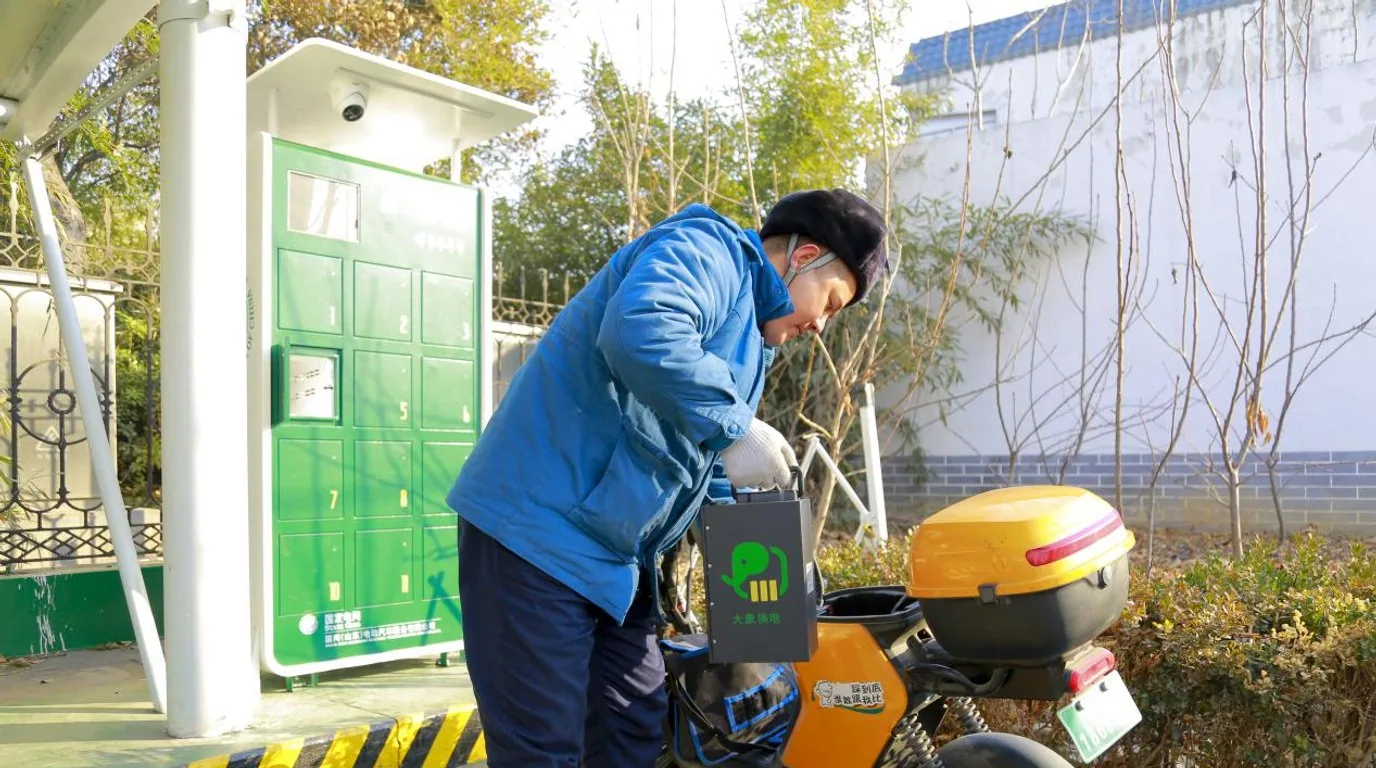
The four figures a swap business is built on
A station’s economics run in three layers: what it costs to build, how many swaps it does per day, and how long it takes to pay back. Any claim that skips the first two layers and jumps straight to “paid back in X months” does not hold in any market.
Specification notice:The figures above are engineering reference values. They may differ with production batch, configuration and actual duty cycle, and the percentages for life, efficiency, availability and coverage are engineering estimates and bench references. Contact us for the detailed specification sheet.
How payback is actually calculated: cost stack → daily swaps → payback
These three steps have to run in order. Talk unit price before step one, or payback before step two, and the problem only surfaces in month three of operation.
- 01construction
Start with the cost stack: a station has exactly four capital items
Cabinet and control system (cabinet, charger modules, mainboard and security hardware), number of standby packs (calculated from turnover — see step two), site works (power connection, base and canopy, fire and CCTV), and communications and O&M platform (BMS cloud, billing and maintenance back office). There should be no vague fifth line item in a proper proposal — we do not inflate a quote with items nobody can explain.
CapEx: four items, listed line by line - 02swap_horiz
Then size the daily swap count: the only real revenue variable
Daily swaps per station = vehicles served × swaps per vehicle per day × bay turnover factor. Swaps per vehicle follow daily distance against that vehicle’s pack capacity (delivery two-wheelers commonly run 1–2 swaps a day; passenger tricycles are matched against 100–150 km). The turnover factor follows recharge time — about 70 minutes to full at 1C — against your operating hours. Use your own fleet size and mileage; do not copy another operator’s station figures.
Fleet size first, station size second - 03savings
Only then talk payback: a published range plus your parameters
Payback is what remains when monthly cash flow from the first two steps is offset against capital. The defensible public figure is swap infrastructure conversion cost recovered in 6–8 months, and it holds only where daily mileage and swap counts are met. Move your local tariff, your swap fee or your fleet utilisation and the payback moves with it — so we model your parameters rather than quoting a universal number of days.
6–8 months is a qualified figure, not a promise
The swappable pack standard: 12S / 16S / 24S platforms
A swap pack differs from an ordinary traction pack in three things, none of them the cell: can a stranger exchange it in 30 seconds, can the cabinet recognise it, and can you lock it out if it is stolen.
| Swap platform | Series / nominal | Capacity class | Quick-release structure and sealing | Communication protocol | Anti-theft and location | Cabinet handshake and delivery |
|---|---|---|---|---|---|---|
| 12S light platform | 12S LFP · 36V class | Sized to bay volume and daily distance | Handle-type pack with keyed guide slot, single-hand extraction | CAN 2.0B / RS485 / UART | Optional 4G Cat.1 + GPS cloud lock-out | Register whitepaper + C/C++ SDK |
| 16S two-wheeler platform | 16S LFP · 48V / 60V | 48V 24–30Ah · 60V 30–45Ah | IP67 drawn aluminium / flame-retardant ABS dual shell; the 60V 45Ah class exchanges single-handed at about 18.5 kg | CAN 2.0B / RS485 / UART | 4G Cat.1 + GPS standard, one-click cloud lock-out | Compatible with Gogoro and China Tower cabinet bus standards |
| 16S high-frequency delivery platform | 60V (16S) · 50–60Ah | VT-6050-LFP-SWAP class | Quick-release structure aligned to cabinet doors; 1C charge to full in 70 minutes | CAN 2.0B / RS485 / UART | 4G Cat.1 + GPS with operating geofencing | Protocol register whitepaper + firmware engineer commissioning |
| 24S two- / three-wheeler platform | 24S LFP · 72V (76.8V nominal) | 45–60Ah (VT-7260-SWAP class) | IP67 steel enclosure with potted BMS bay, rated for vibration and rainy-season wading | CAN 2.0B / RS485 / UART | 4G Cat.1 + GPS, cloud cut of the discharge loop | Handshake, stepped charge-current delivery and fault-code commissioning |
All three platforms use Tier-1 A-grade automotive cells; we refuse second-life and salvaged cells. Cycle life is 3,500 cycles at 1C to ≥80% SOH, with a 5-year / 3,500-cycle pack warranty. Swap packs can be built to your cabinet interface with custom BMS handshake logic, pack outline and shell marking.
Specification notice:The figures above are engineering reference values. They may differ with production batch, configuration and actual duty cycle, and the percentages for life, efficiency, availability and coverage are engineering estimates and bench references. Contact us for the detailed specification sheet.
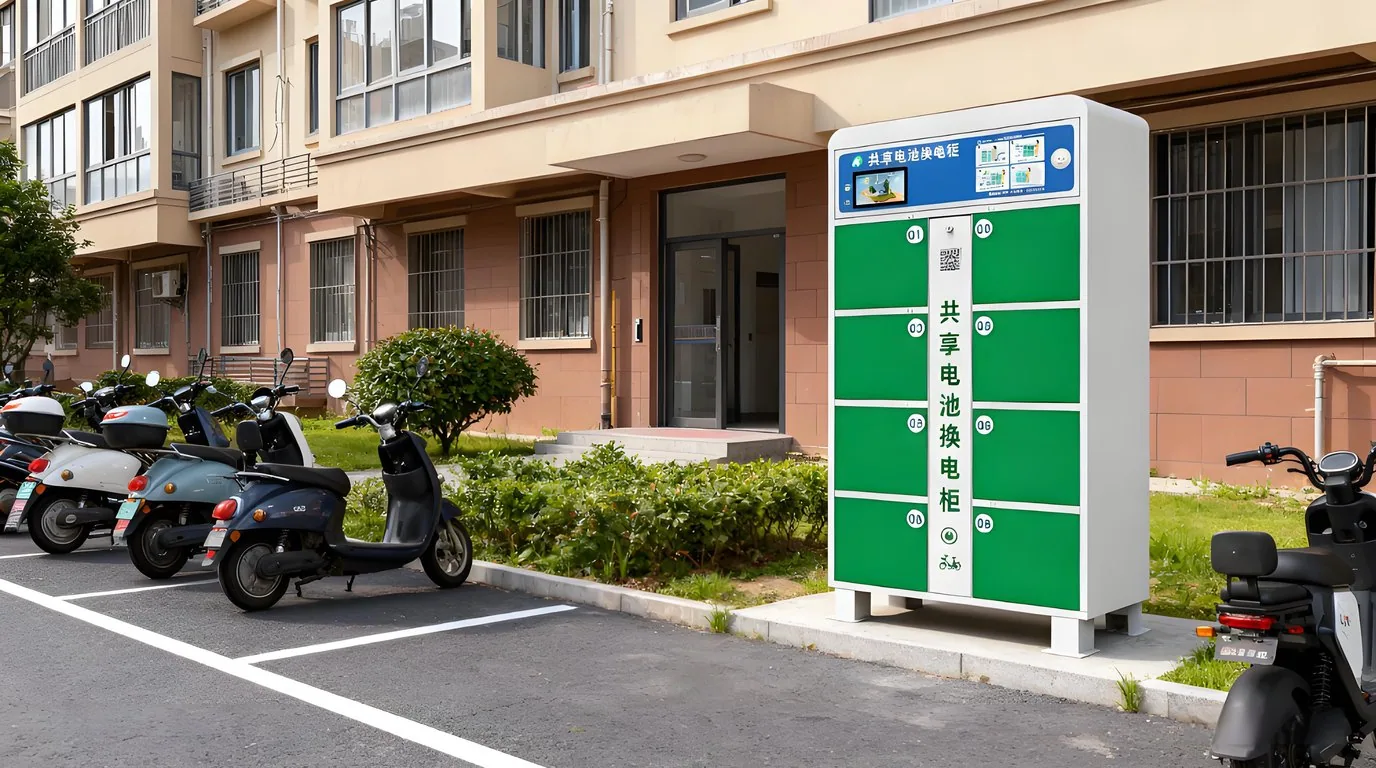
Swap station design: siting, standby packs, charge rate and queue time
People searching "battery swapping station design" are really looking for the trade-offs between these four things. They interlock: siting sets customer density, density sets daily swaps, daily swaps set the standby pack count and charge rate, and queue time is the consequence of all four — never the cause.
- Siting: sit where the fleet eats — rider muster points, delivery depots, tricycle stands, market and filling-station entrances. Get siting wrong and every later item on the cost stack becomes sunk cost.
- Standby pack count: standby packs = daily swaps per station ÷ daily turnarounds per pack. At 1C a pack reaches full in about 70 minutes, which sets the turnarounds available inside your operating hours. We size the count from your daily swap figure, not from “more is safer” — every surplus pack is capital sitting idle.
- Charge rate: 1C high-rate charging is the economic precondition of a swap station. At a lower rate, the same daily swap count needs more standby packs, and more of your money is tied up in batteries.
- Queue time: the exchange itself is a 30-second action. Real queuing comes from riders arriving to find no fully charged pack available — a symptom of too few standby packs, fixed by adding packs or raising the rate, not by adding staff.
Fleet partnership and franchise: four models, battery ownership negotiable
The heavy asset in a swap business is the battery, not the cabinet. So we build the commercial model as a choice of cash-flow structures rather than simply selling packs: lease when you need to hold down capex, buy outright when you want to own the asset.
| Model | How it is charged | Battery ownership | Operations support | Best suited to |
|---|---|---|---|---|
| Per-unit rental | Charged on the number of packs in revenue service, usually settled monthly | Negotiable: we hold / joint hold / transfer at term end | 4G-IoT cloud diagnosis · local hub replacement · warranty backing | Fleet managers with a known fleet size who want the first cash outlay low |
| Monthly rental | Charged monthly on the number of packs in operation | Negotiable, normally held by us during the term | As above, including pack rotation and a spares allocation | Swap operators who need to convert capex into opex |
| Outright purchase + service | One-off pack purchase, plus annual service and spares | Held by the customer | Cloud platform, protocol commissioning, spares and training | Long-term self-operators who want to own the asset |
| Regional franchise | Franchise fee + battery asset rental + spares and service fee | Negotiable: franchisee or head office | Brand, cabinet communication protocol, BMS commissioning, spares allocation and training | Local franchisees with fleet contacts who want to run a swap network |
Terms are agreed in one pass with no hidden lines: battery ownership, spares allocation and protocol-commissioning responsibility are confirmed in writing before the partnership starts. Every container ships with a 2% core spares kit (BMS boards, high-current connectors and fuses) dispatched from the nearest directly managed overseas hub.
Specification notice:The figures above are engineering reference values. They may differ with production batch, configuration and actual duty cycle, and the percentages for life, efficiency, availability and coverage are engineering estimates and bench references. Contact us for the detailed specification sheet.
Three limits: this is the only work we take on
The "battery swapping" root is noisy — it covers passenger-car chassis swapping and consumer-electronics battery replacement as well. Mixing them makes both sides compare specifications on the wrong product, so we draw the boundary first.
Two- and three-wheelers only
E-motorcycles, delivery e-bikes, passenger tricycles and cargo tricycles. We do not do passenger-car chassis swapping, and we do not do consumer-electronics or gadget battery replacement — the product form, communication protocol and safety framework are entirely different, and comparing them side by side is meaningless.
Swap stations (cabinets) only
Station-level packs, cabinet, protocol handshake, spares and O&M, costed as a whole station. We do not retail single packs to private owners.
Franchise and fleet partnerships only
We work with swap operators, fleet managers and local franchisees, supplying battery assets, protocol licensing, spares allocations and training — not consumer retail or personal buying agents.
What swap operators ask us before committing
What does it cost to build a battery swapping station?expand_more
How many swaps a day before it pays back?expand_more
How many packs should one station hold?expand_more
How is swap pack life calculated?expand_more
How does the franchise work?expand_more
Can we rent packs without joining a franchise?expand_more
Our swap cabinet is in-house. Will the packs talk to it?expand_more
Are swap packs reliable in hot, humid markets?expand_more
Station support, platform specifications and the quote desk
Overseas hubs and spare parts
Seven directly managed hubs, a 2% core spares kit per container, 4G-IoT cloud diagnosis and local replacement — this is what keeps a station running.
See the hub networkarrow_forward60V platform specifications
The most widely used step for two-wheeler swapping and high-frequency delivery: capacity matrix, continuous discharge and bay dimensions.
See the 60V platformarrow_forwardQuote a swap project
Send station format, vehicles to be served, pack capacity class and the local power connection, and we cost the whole station and the standby pack count.
Submit a swap enquiryarrow_forwardScope a swap programme against your station and fleet
Send the station format, the number of vehicles you intend to serve, the pack capacity class and the local power connection. We will model whole-station cost, a standby pack recommendation and FOB / CIF pricing, with the shipping document and spares list attached.
- Programme advice and pricing within 24 hours on working days
- Swap sample packs plus the protocol whitepaper can validate cabinet handshaking before you commit to a container
- Fleet size, station locations and protocol data are strictly confidential; NDA available first
Specification notice:The figures above are engineering reference values. They may differ with production batch, configuration and actual duty cycle, and the percentages for life, efficiency, availability and coverage are engineering estimates and bench references. Contact us for the detailed specification sheet.