
Cargo tricycle truck battery:the 800–1000kg payload band, and how it is tested
A light delivery three-wheeler and a heavy cargo three-wheeler look like the same class of vehicle, but the packs are not comparable. This page covers no passenger or light-duty duty at all. It answers the questions that belong to the rated 800–1000kg band: how much current a loaded climb really draws, how many Ah a given box length needs, how a pack fits between the box and the frame, and how far sustained high-current discharge pushes the 3,500-cycle figure down.
verifiedTest figures are given as ranges with their conditions, never as point measurements for an individual vehicle; the signed quotation governs.
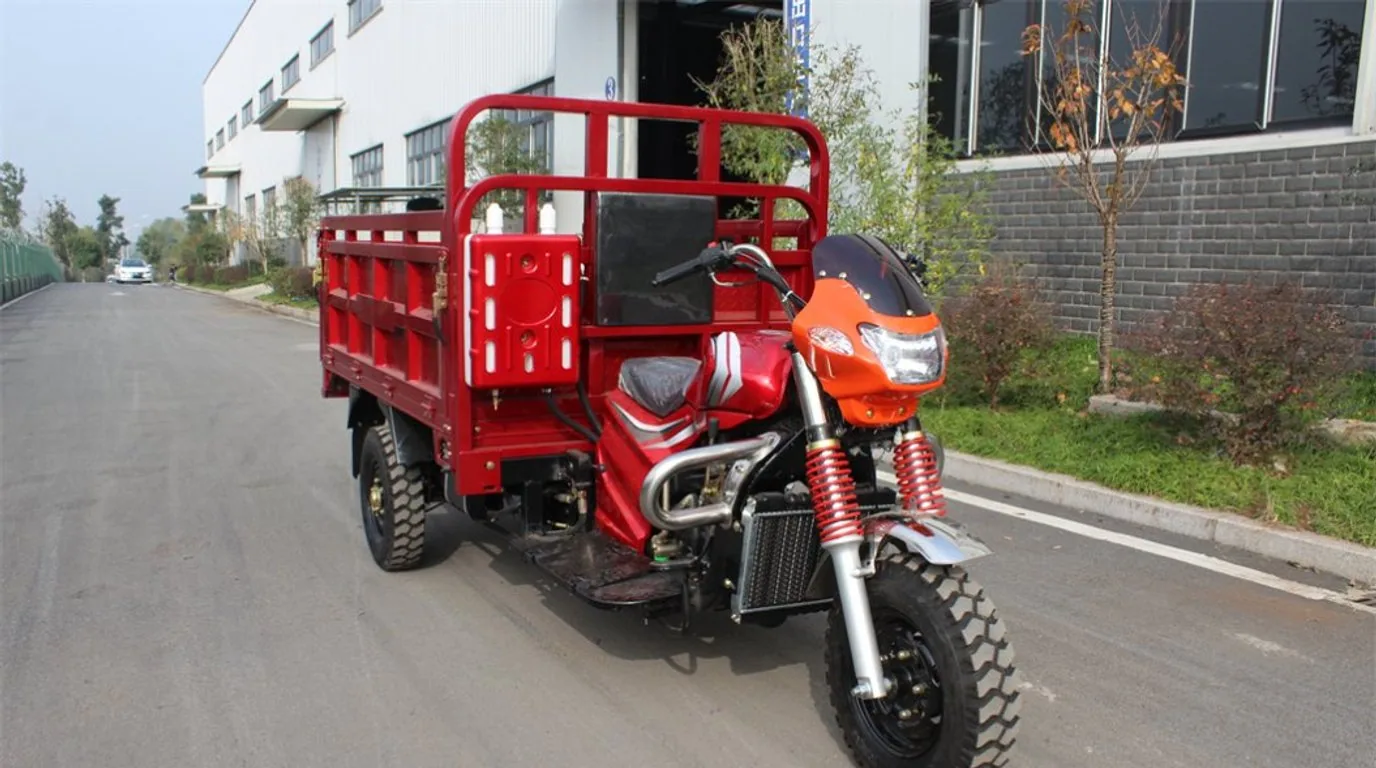
Four hard constraints in the heavy-load band
Heavy three-wheelers fail on the current line far more often than on capacity. These four figures decide whether a vehicle finishes a loaded climb without tripping.
Specification notice:The figures above are engineering reference values. They may differ with production batch, configuration and actual duty cycle, and the percentages for life, efficiency, availability and coverage are engineering estimates and bench references. Contact us for the detailed specification sheet.
Loaded climbing test basis: payload × gradient × speed × discharge current
This table answers “if my vehicle climbs this ramp fully loaded, how much current must the pack deliver”. The current column gives ranges mapped to the platform continuous and transient bands, and the conditions column states what those ranges assume.
| Rated payload | Gradient setting | Steady climb speed | Required bus discharge current (range) | Test conditions |
|---|---|---|---|---|
| 300 – 500 kg (half load delivery) | ≤ 8° gentle slope | 15 – 20 km/h | 60 – 100A (60A continuous) | Paved surface · 35°C ambient · 10 minutes of continuous climbing |
| 500 – 800 kg (medium load) | ≤ 12° ramp | 12 – 18 km/h | 80 – 160A (80A continuous) | Paved to lightly unpaved · 30 minutes of continuous climbing |
| 800 – 1,000 kg (rated heavy load) | ≤ 15° steep ramp | 10 – 15 km/h | 100 – 200A (100A continuous) | Unpaved earth road · 45°C ambient · ramp start plus continuous climb |
| 1,000 – 1,500 kg (overloaded short-haul) | ≤ 18° extreme gradient | 8 – 12 km/h | 120 – 250A (10s peak) | Site and aggregate yard · mud-pit stall start · 3C peak short term |
These are bench and vehicle road-test settings with typical ranges, used to compare selection options — not a precise guarantee for an individual vehicle. Real current moves with the controller current limit, gear reduction, tyre pressure, surface grip and driving style. If the gradient exceeds the setting above, step the continuous discharge band up or move to a twin-pack parallel configuration.
Specification notice:The figures above are engineering reference values. They may differ with production batch, configuration and actual duty cycle, and the percentages for life, efficiency, availability and coverage are engineering estimates and bench references. Contact us for the detailed specification sheet.
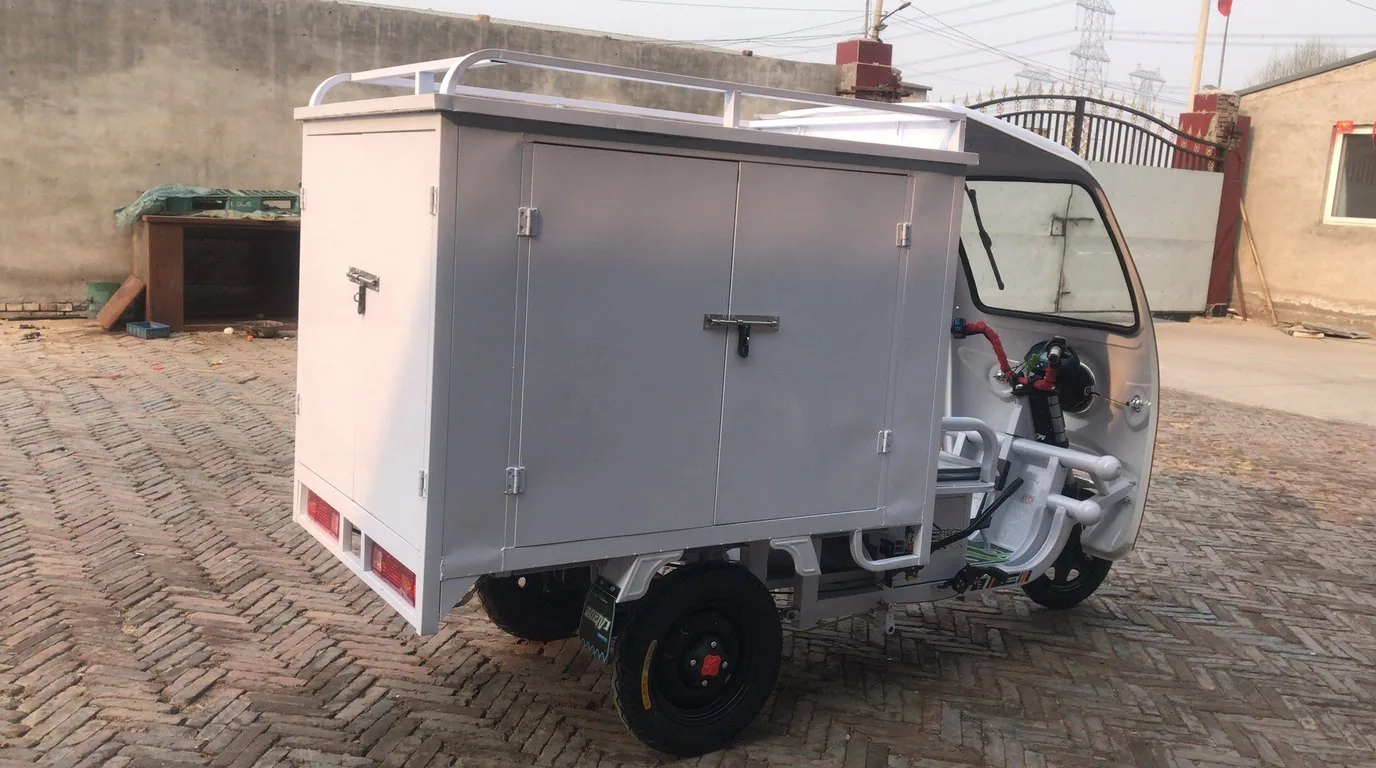
Box dimensions and battery bay conversion advice
The step that fails most heavy-load conversions is not the cells — it is the fit. Measure clearance first and choose capacity second; the other order guarantees rework.
A heavy cargo three-wheeler has only three practical battery locations: under the seat, between the front box panel and the frame, and side-mounted on the frame. On a box-body vehicle the box length directly sets the clearance available, so the capacity band has to be derived from the chassis opening, not the other way round — never commit to 200Ah and then start cutting the frame.
At equal nameplate capacity a 72V lithium pack is far lighter than six 12V lead-acid blocks (about 81kg against about 240kg at 72V 150Ah), but a 24S pack is not small, and it still needs cooling clearance and cable routing room. That is the point heavy-load conversions underestimate most often.
- Step 1 — measure clearance. Give the bay opening (L × W × H) including extra allowance for handles and cable exit, plus the chassis opening dimensions; a 3D STEP model is ideal.
- Step 2 — choose the mounting form. An under-seat bay takes a flat-mounted module; behind the front box panel a vertical mount with lateral stops works; an open flatbed can take a side-mount locking frame with silver-plated Anderson SB175 / SB350 terminals.
- Step 3 — leave cooling and service access. A steel-shell module needs airflow clearance around it, and an enclosed box needs a service opening, otherwise BMS derating becomes obvious in hot climates.
- Step 4 — check centre of gravity and load path. On a loaded vehicle the pack should sit near the rear axle and the frame load points, so a full box does not raise the centre of gravity; the base plate must be designed for the full pack weight.
- Step 5 — lock the cable exit and mounting holes. Send chassis dimensions or a 3D model and we issue a shell design render with cable exit direction and mounting ear holes within five working days.
Capacity reverse lookup by payload and daily distance (72V 24S)
Derived from the 95–125 Wh/km heavy-duty basis: daily distance first, then capacity, then a model. Energy is computed at 76.8V nominal and weight is the assembled pack including steel case, BMS and harness.
| Target daily distance | Payload band | Derived capacity | Nominal energy | Pack weight (typical) | Matching pack model |
|---|---|---|---|---|---|
| ≤ 60 km | 600 – 800 kg | 72V 105 – 130Ah | ≈ 8.06 – 9.98 kWh | ≈ 57 – 70 kg | Custom to the chassis battery bay |
| 60 – 80 km | 800 – 1,000 kg | 72V 150 – 160Ah | ≈ 11.52 – 12.29 kWh | ≈ 81 – 89 kg | VT-72150-CARGO |
| 90 – 110 km | 800 – 1,000 kg | 72V 180Ah | ≈ 13.82 kWh | ≈ 97 kg | VT-72180-CARGO-PRO |
| Above 110 km | 1,000 – 1,500 kg overloaded | 72V 200Ah (twin-pack parallel to 20kWh+) | ≈ 15.36 kWh | ≈ 107 kg | VT-72200-CARGO-MAX |
Capacity is reverse-derived from the heavy-duty consumption basis with roughly 20% margin added before rounding into a band; pack weight is estimated at about 7 kg/kWh (±5%). Where the route includes long gradients, unpaved surfaces or routine overload, step up one capacity band — or add a parallel twin pack rather than pushing a single pack further.
Specification notice:The figures above are engineering reference values. They may differ with production batch, configuration and actual duty cycle, and the percentages for life, efficiency, availability and coverage are engineering estimates and bench references. Contact us for the detailed specification sheet.
Cycle life under heavy load: why motive-grade cells are mandatory
The 3,500-cycle figure comes with conditions attached. Heavy three-wheelers discharge above 1C for long stretches, and the loss of life comes from internal-resistance heating and polarisation rather than from distance travelled.
Start with the conditions behind the cycle figure
3,500 cycles at 1C charge/discharge to ≥80% SOH is a bench figure tested under 1C deep cycling. Climbing and pull-away currents on a loaded cargo three-wheeler are well above 1C, and sustained high-rate discharge accelerates both capacity fade and internal-resistance rise, so real usable cycles land below that bench number. Size against a heavy-load-adjusted life expectation rather than the bench figure alone.
Why high current damages cells
Resistive heating follows P = I²R: double the current and the heat becomes four times greater. The sustained current of a loaded climb raises cell temperature and polarisation sag together, and the heat in turn accelerates SEI film and electrolyte side reactions. That is the root reason a heavy-load vehicle fades faster than a light one in the same year — and why an enclosed tropical battery bay must be given cooling room.
Hence motive-grade cells, not storage grade
Stationary energy-storage (ESS) cells are built for 0.2C operation in a temperature-controlled room: high internal resistance and weak heat paths. Fitted to a loaded three-wheeler they collapse in voltage at pull-away and climbing, latch the protection board, and show obvious fade within months. The heavy-load band uses motive-grade cells rated for 3C peak short-term climbing, with a 2.0mm cold-rolled steel shell, thermal silicone pads and a potted BMS bay, so the pack can carry 150–250A continuously at IP67 and −20°C to 65°C.
Heavy-load cargo tricycle battery questions
Procurement and engineering questions from vehicle builders, regional converters and freight fleets.
Will it pull a full load uphill, or cut out mid-slope?expand_more
At what payload does range start to fall noticeably?expand_more
How many trips can one pack cover in a day?expand_more
How does the battery bay conversion work — can you build to my chassis?expand_more
Will a 24S pack physically fit, and how does the footprint compare with lead-acid?expand_more
What does a heavy-load cargo tricycle battery cost?expand_more
Why insist on motive-grade cells when storage-grade cells are cheaper?expand_more
How many years will a pack really last under heavy load?expand_more
Get a firm quotation against your heavy-load duty cycle
Send the destination port, rated payload, daily distance and motor rating. We will model FOB / CIF pricing for each heavy-load capacity band, with container allocation and the shipping document list.
- Selection advice and pricing within 24 hours on working days
- Pilot packs available to prove loaded climbing and range before committing to a container
- Chassis dimensions, 3D models and procurement plans stay confidential; NDA available first
Specification notice:The figures above are engineering reference values. They may differ with production batch, configuration and actual duty cycle, and the percentages for life, efficiency, availability and coverage are engineering estimates and bench references. Contact us for the detailed specification sheet.
Chassis dimensions, motor data and operating figures you submit stay strictly confidential. A mutual NDA can be signed first.