
Motive-grade LiFePO4 packs for passenger three-wheelers(48V / 60V series)
Fourteen hours a day, four to six passengers on board — so why do ordinary storage packs strand the vehicle inside three months? Passenger three-wheelers start and stop constantly and climb overloaded, which is exactly why TIANQIU builds 3C continuous-discharge cells with anti-trip dynamic logic for export fleets.
verifiedUN38.3 · ISO9001 · IEC 62619 · AIS-156 factory certification · point-to-point DG container service from Shekou, Nansha and Ningbo
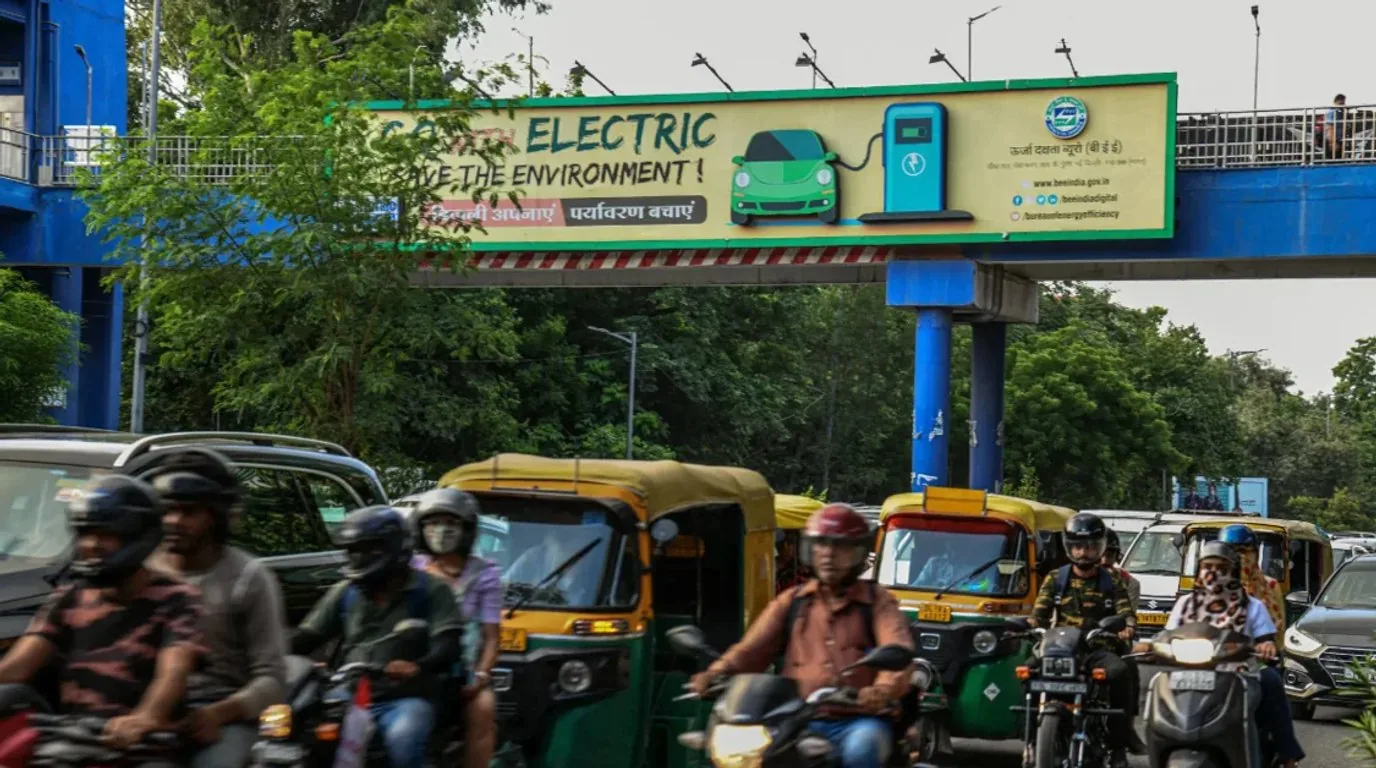
Delhi and Lagos daytime passenger duty profiles
Carrying four to six passengers with more than 280 stop-starts a day, typical cell temperature rise stayed inside a stable ≤8°C band.
Specification notice:The figures above are engineering reference values. They may differ with production batch, configuration and actual duty cycle, and the percentages for life, efficiency, availability and coverage are engineering estimates and bench references. Contact us for the detailed specification sheet.
Why you must never fit bargain "storage-grade (ESS)" cells to a passenger three-wheeler
Some opportunistic suppliers assemble rickshaw batteries from cheap home-storage or solar-backup (ESS) cells. Those cells have high internal resistance (>1.5mΩ) and are designed for 0.5C, or even 0.2C, gentle trickle discharge. When a rickshaw pulls four to six passengers away, or the driver presses hard on a flyover ramp, current spikes to 60–100A. Ohmic polarisation inside the storage cell intensifies sharply, terminal voltage drops through the BMS protection floor and the vehicle dies mid-route. Run that duty cycle for long and gas generation swells the casing, while cycle life collapses by more than 60% inside three months — a genuine safety hazard.
Plate structure
Motive cells use double-sided, dimple-coated ultra-thin tabs, holding internal resistance to ≤0.5mΩ and tolerating 2C–3C continuously.
BMS anti-trip delay
TIANQIU proprietary dynamic over-current discrimination separates a genuine climb-current peak from a real external short circuit.
Mechanical shock design
Automotive honeycomb cell holders and flame-retardant epoxy potting prevent the micro-cracking of busbars that rough earth roads cause.
Vehicle fit table: the five core passenger markets
Every country builds its passenger three-wheeler to a different body architecture, battery bay and motor specification. TIANQIU supplies standardised drop-in replacement dimensions that seat precisely into each mainstream original chassis.
| Country / region | Local market name | Mainstream motor power | Standard working voltage | Original battery bay (L×W×H mm) | Recommended TIANQIU solution |
|---|---|---|---|---|---|
| India | E-Rickshaw / Toto — mainstream Mayuri and Yatri passenger models | 900W - 1200W BLDC | 48V (16S) | 480 × 330 × 260 | VT-48105 (48V 105Ah) |
| Nigeria | Keke Napep / Marwa — high-load Lagos and Kano retrofit vehicles | 1200W - 1500W PMSM | 60V (16S) | 520 × 360 × 290 | VT-60120 (60V 120Ah) |
| Kenya & East Africa | Tuk Tuk — Mombasa and Nairobi hill duty and swap operations | 1000W - 1200W differential motor | 48V / 60V | 490 × 340 × 270 | VT-48100-Dual (twin-bay parallel) |
| Sri Lanka / SEA | Three-Wheeler / Bajaj RE — in-place, lossless conversion of the classic two-stroke | 1200W - 1500W mid-drive integrated | 60V / 72V | 540 × 380 × 280 | VT-60140-RE (retrofit specific) |
| Philippines | Electric Tricycle / E-Trike — long-wheelbase heavy shuttles, Manila and Boracay | 1500W heavy-duty high torque | 60V (16S) | 560 × 400 × 310 | VT-60160 salt-spray reinforced |
The pack ships as a standardised drop-in replacement, with mounting anchors and cable exit direction preset to the original battery bay — no re-welding of the vehicle load-bearing crossmember.
Specification notice:The figures above are engineering reference values. They may differ with production batch, configuration and actual duty cycle, and the percentages for life, efficiency, availability and coverage are engineering estimates and bench references. Contact us for the detailed specification sheet.
Passenger three-wheeler pack: full technical specification
Complete engineering figures across voltage, capacity, discharge rate, enclosure, operating temperature and cycle life, supplied with third-party verification documents on request.
| Engineering metric | Specification / parameter | Engineering note |
|---|---|---|
| Rated voltage platforms | 48V (16S) · 60V (16S) | Covers the mainstream passenger chassis of India, Nigeria, Kenya, Sri Lanka and the Philippines |
| Nominal capacity | 105Ah / 120Ah / 140Ah / 160Ah | Mapped to the VT-48105, VT-60120, VT-60140-RE and VT-60160 standard models |
| Continuous discharge rate | 3C automotive-grade continuous | Built for export fleet duty, not the 0.5C gentle trickle of storage-grade designs |
| Transient discharge pulse | 3C / 10s (200A+) | Absorbs the full inrush of a loaded gradient start, eliminating blank dashboards and throttle cut-outs |
| Enclosure and sealing | 2.0mm cold-rolled steel shell + rust-proof electrophoretic coating + IP67 seal | Supplied with high-current flame-retardant Anderson SB50/SB120 keyed connectors and a digital voltage/SOC display |
| Operating temperature | Validated at 38°C–44°C ambient with cell temperature rise ≤8°C | Asphalt heat radiation exceeds 55°C at equatorial noon, yet the sealed under-seat bay holds thermal consistency |
| Charging | 0.5C fast charge (2.5–3.5 hours) · 25A–30A CC/CV overnight | A midday break recovers 40% of charge, enabling a double-shift pattern of 40–50 extra passenger kilometres a day |
| Cycle life | 3,500 deep cycles (amortised over five years) | Complete unit warranted for five years or 3,500 cycles of commercial operation |
| Communication and balancing | CAN / RS485 / Bluetooth · 2A active dynamic balancing | Bidirectional hardware MOS short-circuit cut-off responds in under 100 microseconds |
Original scans and third-party verification are available per project. OEM/ODM orders from 50 units can customise enclosure dimensions, cable exit direction and laser nameplates.
Specification notice:The figures above are engineering reference values. They may differ with production batch, configuration and actual duty cycle, and the percentages for life, efficiency, availability and coverage are engineering estimates and bench references. Contact us for the detailed specification sheet.
A 14-hour operating day, decomposed
A passenger three-wheeler is not a private scooter. From the first high-frequency pull-away at dawn to the extreme heat of noon, the pack must deliver both continuous and instantaneous current while absorbing thermal shock.
- 06:30commute
Morning peak, back-to-back runs
Fully loaded at metro and bus interchanges (4–6 passengers) with repeated 0–30km/h acceleration cycles, braking and pulling away roughly every two minutes.
Discharge: 35A–50A continuous, 85A pulse - 11:30thermostat
Equatorial noon thermal shock
Ambient reaches 38°C–44°C and asphalt heat radiation exceeds 55°C. The sealed under-seat bay puts heat conduction under real pressure.
Discharge: rising natural-convection resistance tests cell thermal consistency - 17:30groups
Evening peak, overloaded flyover climbs
Workers and students head home, often overloaded or carrying goods. Continuous 8°–12° flyover gradients hold high current for two to three minutes.
Discharge: 65A continuous load tests over-temperature voltage-drop protection - 21:30battery_charging_full
Regenerative recovery and overnight charge
Frequent daytime descents push regenerative surge back into the pack, followed by a high-efficiency 25A–30A constant-current/constant-voltage overnight charge.
Charge: 0.3C–0.5C stable fast charge, back to full in 3.5 hours
Tubular lead-acid vs TIANQIU motive lithium: the core comparison
What an overseas rickshaw fleet owner cares about is not a specification headline — it is net profit carried home each day. These four hard metrics set the fleet break-even line.
| Comparison | Tubular lead-acid (12V × 4) | TIANQIU fleet-grade LiFePO4 | Direct fleet economics |
|---|---|---|---|
| Vehicle pack weight | 130–150 kg (four lead-acid blocks) | 38–44 kg (lightweight integrated pack) | Nearly 100kg of dead weight removed, one extra adult passenger carried, and 40% less tyre and suspension wear |
| Depth of discharge (DoD) | 50%–60% (deeper discharge causes rapid sulphation) | 90%–95% (flat discharge plateau, no end-of-day power fade) | More than 65% more usable operating range at the same nominal capacity, with no afternoon shrinkage |
| Charging time | 8–10 hours (low current to prevent electrolyte boiling) | 2.5–3.5 hours (0.5C fast charge supported) | A midday break recovers 40%, enabling a double shift and 40–50 extra passenger kilometres a day |
| Daily cost per vehicle | About $3.40/day (battery replacement amortised over eight months, plus high energy consumption) | About $1.15/day (3,500-cycle life amortised over five years, plus superior efficiency) | Roughly $820 of net cash profit per vehicle, every year |
Per-kilometre energy and battery depreciation model: C_total = [ (E_grid × R_kWh) / Eff_chg / 100 ] + [ P_pack / (L_cycles × D_daily) ], where E_grid is grid consumption per 100km (about 4.8 kWh for LiFePO4, 7.9 kWh for lead-acid), Eff_chg is rectifier efficiency (93% for a TIANQIU lithium charger vs 75% for lead-acid) and L_cycles is the real usable operating cycle count (≥3,500 for TIANQIU, modelled conservatively at 2,500, vs about 400 for lead-acid).
Converted at Lagos power tariffs (about $0.15/kWh) and Delhi commercial tariffs (about ₹8.5/kWh): after fitting TIANQIU motive lithium, combined cost per kilometre falls from ₹1.82 to ₹0.68 — a 62.6% reduction.
Specification notice:The figures above are engineering reference values. They may differ with production batch, configuration and actual duty cycle, and the percentages for life, efficiency, availability and coverage are engineering estimates and bench references. Contact us for the detailed specification sheet.
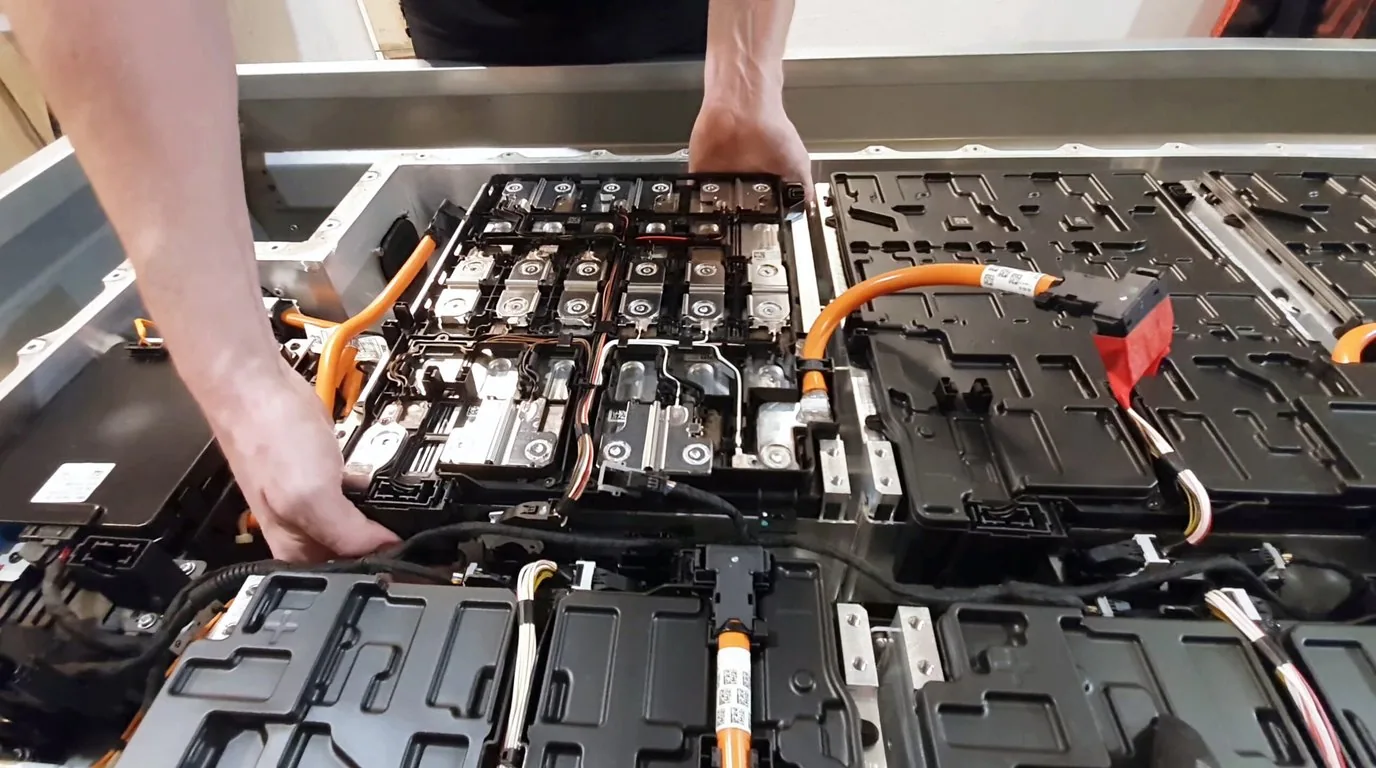
Industrial-grade structure and an automotive smart BMS
For tropical, vibration-heavy duty we cover the full chain: laser cold-welded sealing, high-current flame-retardant Anderson connectors and ten-thousand-cycle ageing inspection in the lab.
- High-strength cold-rolled steel shell (2.0mm pressed-steel housing): a 2.0mm cold-rolled steel explosion-proof shell with rust-proof electrophoretic coating and an IP67 independent seal ring. High-current flame-retardant Anderson SB50/SB120 keyed connectors and a digital voltage/SOC display come as standard for simple chassis assembly.
- 20-minute drop-in retrofit (lossless in-place replacement): no re-welding of the vehicle load-bearing crossmember and no replacement of the original dashboard or hall-throttle harness. Independent strap anchors let one technician complete the install on the line.
- 48V/60V automotive smart BMS (active balancing diagnostics): CAN, RS485 and Bluetooth connectivity, bidirectional hardware MOS short-circuit cut-off responding in under 100 microseconds, and a 2A active dynamic balancing module onboard.
Passenger three-wheeler retrofit and container purchase FAQ
The engineering questions importers and fleet technical directors in India, Nigeria, Kenya and Sri Lanka ask most often.
The vehicle has four 12V lead-acid batteries. Do we need to modify the original wiring or controller to fit your 48V lithium pack?expand_more
Can we charge the lithium pack with the original lead-acid charger?expand_more
How does the pack handle water and wading during the tropical monsoon?expand_more
Why does your pack not trip the BMS and blank the dashboard on a steep climb, as other brands do?expand_more
What is the warranty, and how is after-sales handled overseas?expand_more
Do you hold full Class 9 dangerous-goods qualifications and UN38.3 certification for sea export?expand_more
Upgrade your passenger three-wheeler fleet and open a higher-margin export channel
Whether you need a single evaluation unit to bench-test against a fleet of 50-plus vehicles, or port-direct stepped container wholesale pricing, a senior TIANQIU lithium powertrain engineer will support you directly.
- Fleet operator sample evaluation: licensed three-wheeler fleets, mobility operators and retrofit workshops are prioritised for a single engineering test pack including custom connectors and a dedicated charger.
- Bulk purchase / 20GP & 40HQ container enquiry: FOB Shekou or Ningbo, or CIF to Chennai, Lagos, Mombasa or Karachi — stepped dangerous-goods container pricing, with dedicated OEM livery and local-language manuals.
Specification notice:The figures above are engineering reference values. They may differ with production batch, configuration and actual duty cycle, and the percentages for life, efficiency, availability and coverage are engineering estimates and bench references. Contact us for the detailed specification sheet.
Fleet size, market-access documentation and commercial terms you submit stay strictly confidential. A mutual NDA can be signed first.