verifiedAIS-156 | UN38.3 | CE | IEC 62619 | 12-market export certification system
EN
TIANQIULi-ion Export
CHROMA 17020 PRECISION CELL BENCH · 1,800+ COMMERCIAL TRICYCLE DATASETSAligned to national, ECE and AIS-156 duty cyclesTypical range shortfall 35% ~ 45%

Real battery capacity (Ah) andrange engineering measurement guide

Why do overseas buyers and OEM engineers derive capacity by multiplying motor power by hours, only to see delivered range fall 35% ~ 45% short once the vehicle is in service? This paper breaks down multi-axis dynamic consumption, the safe depth-of-discharge window, 45°C–50°C tropical derating and high-rate climbing retention — and removes the inflated-rating trap entirely.

battery_full
Enom nominal energyAh × Vmid
battery_saver
DoD usable depth88% ~ 90%
speed
ηc loaded retention94.5% ~ 96.0%
thermostat
Kt heat derating factor0.91 ~ 0.94
route
Ekm real consumptionWh/km, load-corrected
trending_down
Typical range shortfall35% ~ 45%

verifiedAlgorithm library synced to BMS V4.2 · model excludes gearbox mechanical transmission loss (about 6%)

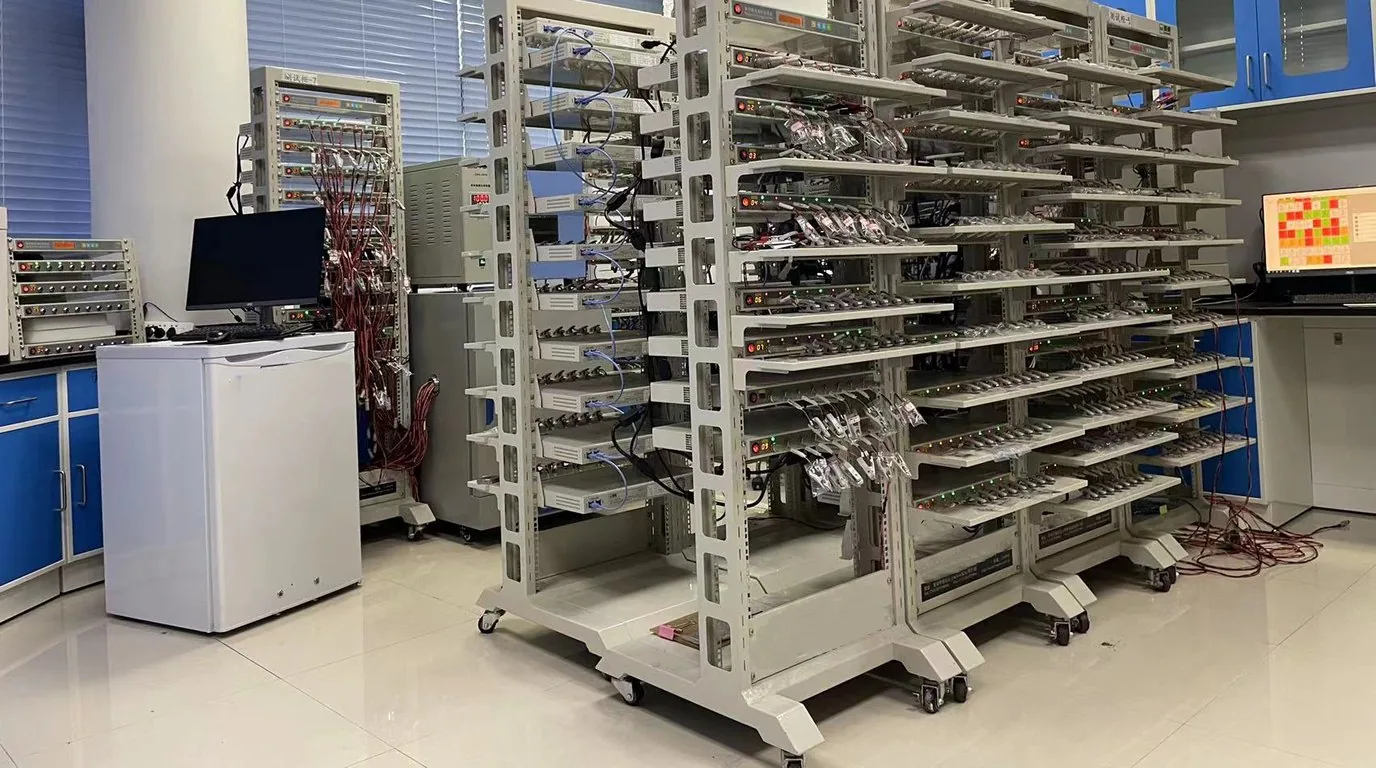
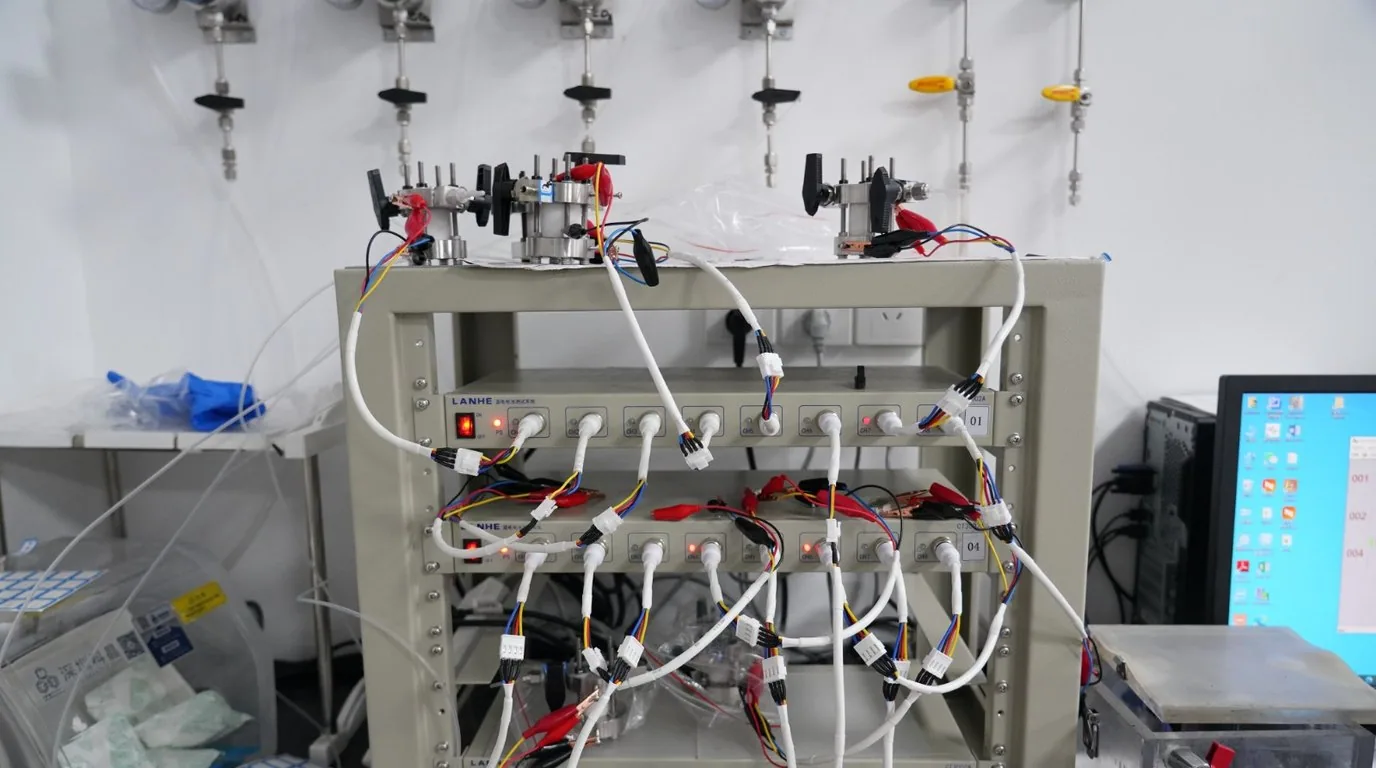
Battery capacity-cycling test bench
trending_up1,800+ commercial fleet duty profiles125~150 km/vehicle
biotechRigorous Lab Benchmarking

Real duty-cycle bench calibration and global road validation

We do not extrapolate from static nameplate data. The TIANQIU cell laboratory runs sustained high-current charge and discharge cycling on both cells and complete packs, capturing full-period energy retention under New Delhi tricycle and Lagos heavy-load duty.

battery_charging_full96.8%Retention at 1C dischargeHigh-rate ageing reference
bolt180A / 10sPeak transient verified without overheating800kg payload chassis duty
developer_board≤ 2.8%SOC estimation error (full cycle)Kalman filter (EKF) SOC calibration
route125 ~ 150 kmAverage daily distance per vehicleIndia / West Africa, 1,800+ fleet profiles

Specification notice:The figures above are engineering reference values. They may differ with production batch, configuration and actual duty cycle, and the percentages for life, efficiency, availability and coverage are engineering estimates and bench references. Contact us for the detailed specification sheet.

scienceBench Data & Road Comparison

Four data sources cross-calibrated into one capacity basis

From cell-level high-rate ageing to vehicle-level dynamic load and twelve-market duty cycles, four data sets converge on a capacity figure you can quote against.

tune

High-rate charge/discharge ageing reference

Transient pulse temperature rise tested from 0.2C to 3C: polarisation voltage drop is quantified under high-frequency acceleration and braking plus 1.5C continuous discharge, establishing the true deviation between usable Ah and nameplate Ah at high rate.

Reference retention 96.8% at 1C discharge
speed

Full-condition dynamic vehicle drive load testing

An 800kg payload duty cycle reproduces 12° climbing and loaded pull-away transient demand from controller and motor, to calibrate the real Wh/km waveform.

Peak transient 180A / 10s without overheat
developer_board

BMS dynamic balancing and precision SOC algorithm

Kalman filter (EKF) SOC calibration removes coulomb-counting drift over long low-speed operation, holding the dashboard SOC estimate within ±3% and eliminating sudden range collapse.

SOC error ≤ 2.8% across the full cycle
cloud_sync

Overseas fleet duty data

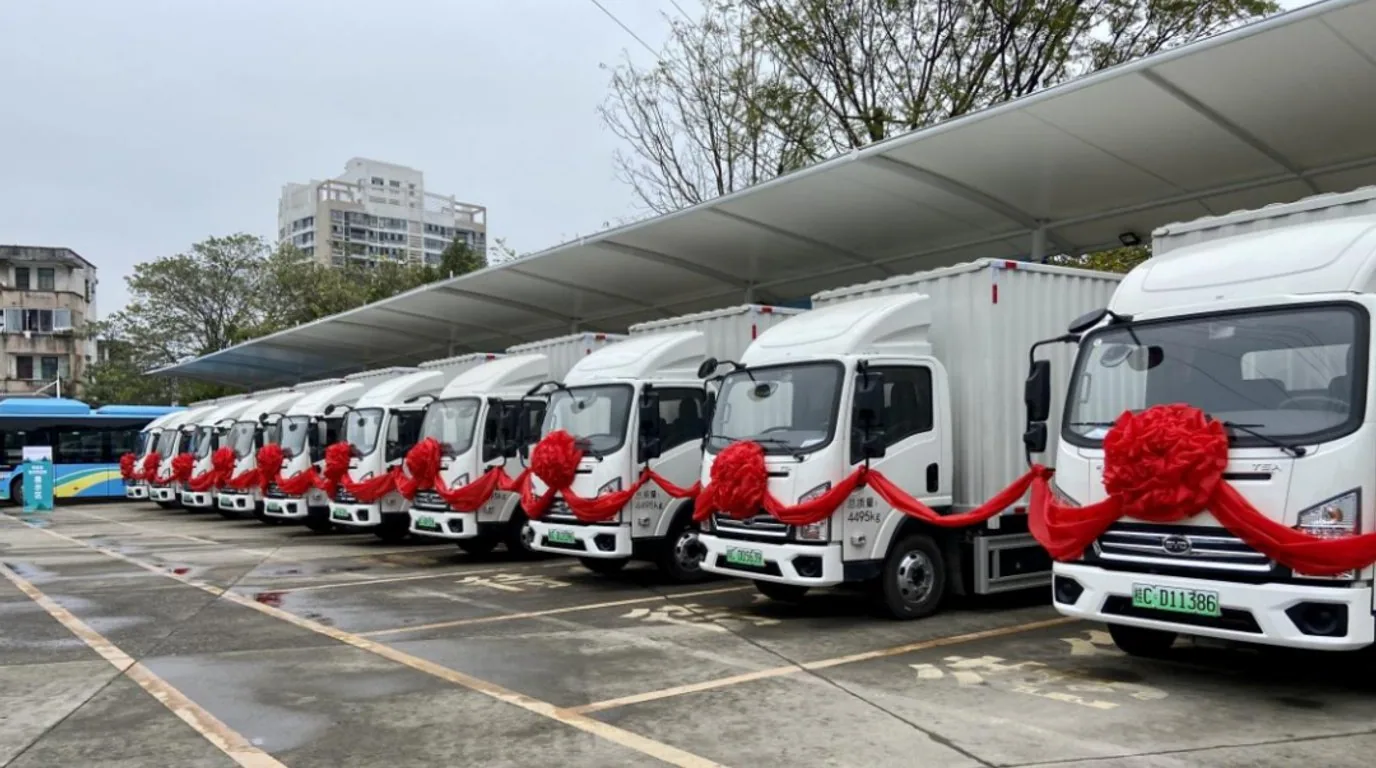
Duty data from 1,800+ commercial fleets in India and West Africa captures hard braking, high rolling resistance on unpaved roads and 48°C surface temperatures, feeding back into export pack selection parameters.

Live database 04 · 125 ~ 150 km per vehicle per day
functionsTrue Range Model

The true theoretical range model for a real vehicle

Range (km) = [ Enom × DoD × ηc × Kt ] ÷ Ekm. Only once the safe cut-off window, loaded retention and tropical derating are all included does the capacity figure match what the vehicle actually does.

Algorithm library synced to BMS V4.2
Model variableEngineering meaningTest / calibrated value
EnomNominal stored energy (Ah × Vmid)Rated standard capacity
DoDUsable depth of discharge (safe threshold)88% ~ 90% (over-discharge protection)
ηcRetention at 1C~1.5C transient heavy load94.5% ~ 96.0%
KtTropical road-surface derating factor (45°C ambient)0.91 ~ 0.94
EkmReal vehicle consumption per 100kmWh/km, calculated dynamically from payload

The model excludes gearbox mechanical transmission loss (about 6%). Calibrated SOC and consumption data can be streamed to a fleet platform over CAN bus for per-vehicle consumption accounting.

Specification notice:The figures above are engineering reference values. They may differ with production batch, configuration and actual duty cycle, and the percentages for life, efficiency, availability and coverage are engineering estimates and bench references. Contact us for the detailed specification sheet.

warningProcurement Warning

The four hidden energy thieves behind real range loss

Many export-focused vehicle builders chase the cheapest high-Ah pack, then watch delivered range halve. These four physical and engineering losses are the core reason capacity estimates miss.

battery_alert

01 Inflated ratings and B-grade cells

Some low-cost workshops pass off salvaged storage cells as high-rate motive cells. Storage cells have high internal resistance, so polarisation voltage collapses during pull-away and climbing, tripping BMS under-voltage early and destroying a quarter of usable energy.
TIANQIU response: A-grade, tier-one motive cells only, supplied with factory internal-resistance (≤0.5mΩ) and capacity-consistency certificates.

Loss 20% ~ 25%
battery_saver

02 Depth of discharge and BMS protection

A lithium pack cannot be discharged to zero. To protect the crystal lattice and secure 2,500 cycles, a commercial BMS sets a minimum cut-off line (10%~12% reserve is recommended). A 100Ah nameplate pack therefore delivers only 88~90Ah.
TIANQIU response: proposals are submitted to vehicle builders on a net usable capacity basis from the outset.

Loss 10% ~ 15%
thermostat

03 45°C ~ 50°C tropical heat derating

Through the hot season in India, the Middle East and West Africa, radiated surface heat inside the bay routinely exceeds 50°C. Side reactions accelerate inside the cells, while the electronics reduce output to protect themselves and parasitic fan or cooling load rises — range falls measurably.
TIANQIU response: thermally conductive potting and directed airflow hold pack temperature spread within 3°C for stable high-temperature discharge.

Derating 8% ~ 12%
route

04 Unpaved roads and heavy-load rolling resistance

Theoretical consumption assumes smooth laboratory rollers. Target markets are muddy, potholed, dense with speed humps and frequently overloaded with 4~6 passengers. The rolling resistance coefficient (an engineering assumption, not a measurement) rises from 0.015 to 0.035 and real consumption per kilometre increases by nearly half.
TIANQIU response: a calibrated dynamic road-resistance compensation coefficient (Cr correction model) is applied from a twelve-market duty-cycle model.

Consumption +35% ~ 50%
grid_viewVehicle Specification & Consumption Matrix

Real consumption per kilometre and recommended distribution matrix

Look up voltage platform, safe capacity and the matching ex-works pack model directly by vehicle platform and operating scenario — moving the capacity basis from nameplate Ah to net usable Ah.

Recommended basis: net usable capacity plus export duty-cycle road-resistance correction
Vehicle platform and scenarioRecommended voltage platformReal combined consumptionStandard target rangeRecommended safe capacityMatching TIANQIU pack model
High-frequency light two-wheeler (E-Scooter / Delivery): riders, couriers, high-turnover swap cabinets60V (16S LFP)28 ~ 35 Wh/km80 ~ 100 km60V 50Ah ~ 60AhVT-6050-LFP-SWAP
Passenger three-wheeler taxi (E-Rickshaw, India / Bangladesh): 4-5 passengers, frequent stops, 120km per day48V / 51.2V (16S)55 ~ 68 Wh/km100 ~ 120 km51.2V 100Ah ~ 120AhVT-48100-AIS156-MAX
African passenger tricycle (Keke Napep, typical West African duty): rough roads, 45°C heat, high-speed cruising60V / 72V platform65 ~ 80 Wh/km110 ~ 130 km60V / 72V 120Ah ~ 140AhVT-72130-TROPICAL-HD
Heavy commercial cargo tricycle (Cargo 3-Wheeler): 800kg~1000kg rated payload, high torque, steep climbs72V (24S LFP)95 ~ 125 Wh/km90 ~ 110 km72V 160Ah ~ 200AhVT-72180-CARGO-PRO
Resort golf cart and site shuttle (Golf Cart / Shuttle): 6-8 seats, smooth low-noise duty, long standby48V / 72V platform50 ~ 65 Wh/km80 ~ 100 km48V 105Ah ~ 150AhVT-48105-GC-CANBUS

Averages at typical full load, 35°C ambient and paved to lightly unpaved surfaces. Where payload or gradient differs from this baseline, recalculate with the dynamic road-resistance coefficient.

Specification notice:The figures above are engineering reference values. They may differ with production batch, configuration and actual duty cycle, and the percentages for life, efficiency, availability and coverage are engineering estimates and bench references. Contact us for the detailed specification sheet.

calculateEngineering Interactive Tool

Fleet capacity (Ah) and stored-energy reverse calculator

Set your operating parameters and the tool derives the nominal pack capacity (Ah), total energy (kWh) and recommended pack specification that satisfies the engineering safety margin.

analyticsResult

Calculated values already include the UN38.3 and AIS-156 Phase 2 safe cut-off margin, so they can be used directly as the capacity basis on a container ex-works quotation.

help_centerEngineering Specification FAQ

Capacity and range engineering: six standing technical questions

TIANQIU powertrain engineers answer the six capacity-loss questions overseas vehicle customers raise most often.

Q1: Why can capacity not be calculated as motor rated power (W) multiplied by hours?expand_more
A motor nameplate rating (say 1200W) describes one operating point. At pull-away, transient power typically reaches 2.5~3x that figure (3000W~3500W), while steady cruising may need only 600W. Motor efficiency is also not constant — it falls from 88% to 72% at low speed and full load. Straight multiplication ignores dynamic resistance and inverter losses entirely, so the error is large.
Q2: How do LiFePO4 (LFP) and NMC differ in capacity retention?expand_more
NMC has higher specific energy and is lighter, but carries higher self-discharge and thermal-runaway risk above 45°C. LiFePO4 offers excellent high-temperature stability and more than 2,500 deep cycles. It is about 25% heavier, yet for commercial three-wheelers and high-frequency delivery two-wheelers, LFP is globally recognised as the lowest lifetime cost per kilometre and the most heat-stable choice.
Q3: How much does the BMS discharge cut-off voltage constrain usable Ah?expand_more
Taking a 16S LFP pack as an example, cell upper limit is 3.65V and the lower protection point is usually set at 2.5V or 2.65V. Setting the cut-off too low in pursuit of the last 5% of energy means that under heavy uphill current the cell voltage drops straight into the over-discharge protection zone and the vehicle shuts down. Industrial packs must therefore reserve 8%~10% of underlying safe margin to preserve lattice life. Threshold troubleshooting is covered in uphill cut-off and BMS current limit diagnosis.
Q4: How do I stop a tricycle fleet losing range abruptly after a year?expand_more
The decisive factors are initial cell consistency in voltage delta and internal resistance, and the BMS passive or active balancing capability. On poor packs, uneven ageing after six months produces a severe delta (>80mV); the weakest cell hits protection first and the remaining healthy cells cannot release their energy. TIANQIU matches cells to ≤15mV at the factory and integrates an adaptive active balancing algorithm.
Q5: Why do tropical markets such as India and West Africa need a dedicated Kt heat factor?expand_more
A 50°C surface temperature plus the tightly packed metal battery bay under a tricycle pushes local internal temperature to 58°C~62°C. SEI film decomposition accelerates, electrolyte activity rises while polarisation resistance becomes unstable, and both electronics and motor efficiency suffer 5%~8% thermal degradation. The Kt factor is the engineering coefficient that corrects for this combined thermal load.
Q6: How is capacity protected during a full-container sea shipment?expand_more
UN38.3 dangerous-goods shipping rules are followed strictly: packs are charged precisely to 30%~35% SOC before dispatch, the mandatory compliant shipping window. At that state of charge the cells are thermodynamically most stable, and over a 35-45 day equatorial voyage with high humidity and salt spray the monthly self-discharge loss is only 0.8%~1.2%, so packs activate quickly on arrival.
verifiedCustom Range & Capacity Study

Request your vehicle-specific distribution whitepaper and container quotation

Tell us your kerb weight, motor parameters and target operating country, and the TIANQIU powertrain laboratory will issue a dedicated real-world consumption and capacity study within 24 hours on working days, together with a bench test schedule.

  • Consumption per kilometre corrected by the dynamic road-resistance factor of the target market
  • Net usable capacity basis with DoD and safety cut-off margin already deducted
  • 20GP / 40HQ container loading plan and CIF cost model
mailEngineering desk: sales@erickshawtrikebattery.com
callTechnical / WhatsApp: +86 13922702227 (English, French and Arabic spoken)
location_onEBattery Office, Room 310I, Huilange BLDG, No. 273, Huangpu Blvd W, Tianhe District, Guangzhou 510620, Guangdong, China
scheduleCapacity study issued within 24 hours on working daysbattery_charging_fullEngineering sample packs available for bench re-checklocal_shippingSamples in 48 hours · container loading plan included

Specification notice:The figures above are engineering reference values. They may differ with production batch, configuration and actual duty cycle, and the percentages for life, efficiency, availability and coverage are engineering estimates and bench references. Contact us for the detailed specification sheet.

lockProtected by NDA

Kerb weight, motor data and operating figures you submit stay strictly confidential. A mutual NDA can be signed first.