
The same tuk tuk battery,so why does it land at a different cost in Kenya and Sri Lanka?
The direct answer: the gap comes from five structural factors, not from a supplier pricing policy. Kenya runs KEBS / PVoC pre-shipment inspection and generally uses the M-Pesa PAYGO instalment asset model. Sri Lanka requires testing aligned to SLS 1656 plus Department of Motor Traffic (DMT) filing and registration change, and its grid swings between 140V and 280V, which makes a wide-voltage charging stage mandatory rather than optional. Add the voyage difference — Guangzhou / Ningbo to Mombasa in 18–22 days against 12–16 days direct to Colombo — and the same pack must land at different cost. This page quotes no amounts; pricing is calculated as FOB / CIF from destination port, payload, daily distance and motor rating.
verifiedTransit and market-access details are cited from the published Kenya and Sri Lanka market pages; no prices are quoted here and a formal quotation governs.
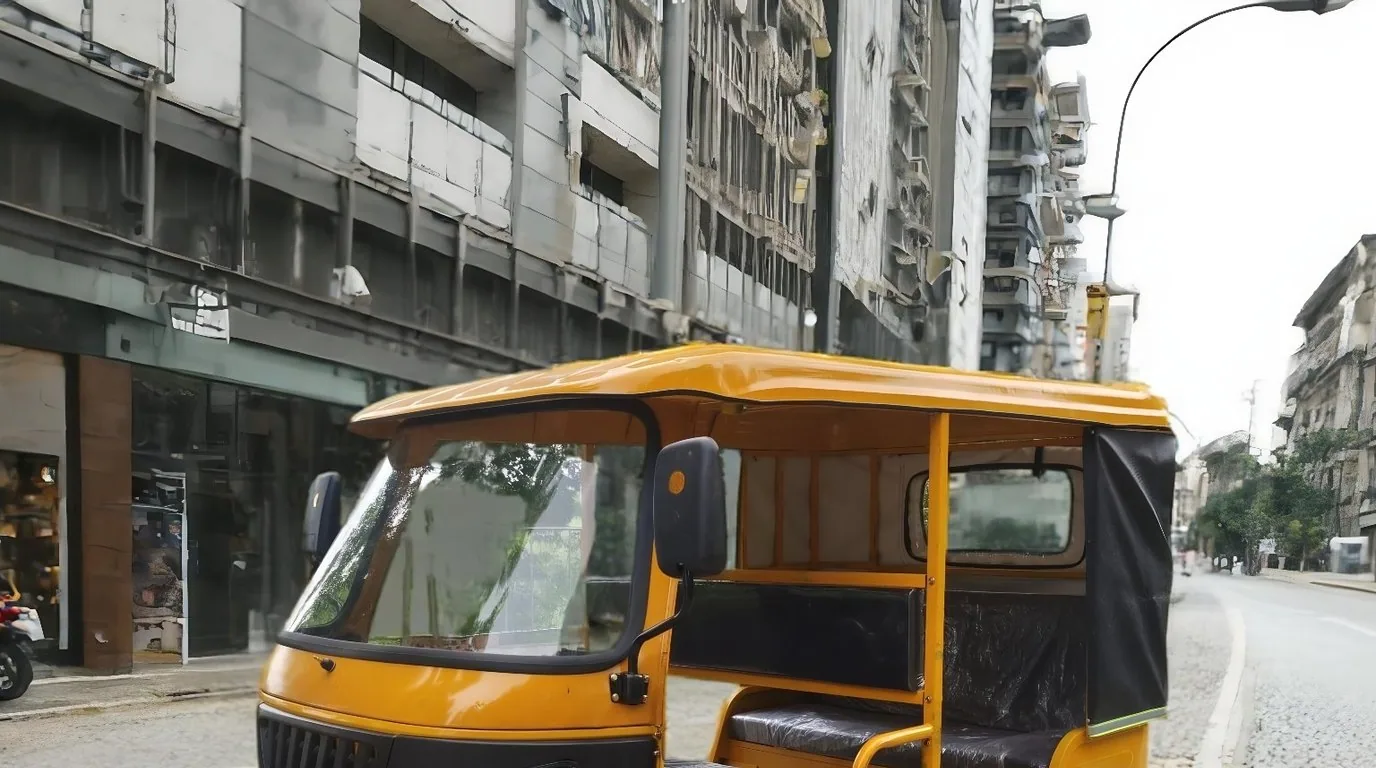
Five structural differences that move landed cost
The table compares the two markets item by item, and states which way each difference pushes cost. Both markets require compliance — what differs is where it is handled, what technical configuration it demands and how much capital sits in transit.
| Factor | Kenya | Sri Lanka | Effect on landed cost |
|---|---|---|---|
| Access and inspection point | KEBS / PVoC pre-shipment inspection with a CoC (one certificate per shipment) | Testing aligned to SLS 1656, plus DMT filing and registration change | Both markets inspect and document, but at different points: one before loading, one at registration |
| Asset and payment model | Widely uses Safaricom M-Pesa PAYGO (93% of adults), with two-stage soft limiting to 15 km/h on arrears | Predominantly outright purchase, quoted CIF Colombo / FOB | PAYGO needs a built-in 4G module and e-SIM, which is a per-pack cost line; it normally does not arise in Sri Lanka |
| Grid and charging conditions | Mains combined with generator supply is common, so the charger is configured with an 85–265V wide-input front end; the final figure is confirmed on the technical data sheet | Mains swings between 140V and 280V (around 150V at the trough, up to 270V at the peak), so a wide-range PFC stage is required | Wide-voltage capability is not an option: Sri Lanka’s swing makes it a hard threshold, and Kenya cannot economise on it either once the input conditions are confirmed |
| Road conditions and duty | Rift Valley gradients (up to 22% fully loaded), equatorial heat, red-dirt dust; a 3C peak for 30 seconds is needed | Typical Colombo duty of 90 km per day, with coastal humidity, salt spray and monsoon wading | Gradients demand higher transient discharge capability; salt and humidity demand stricter sealing and corrosion protection |
| Sea transit | Guangzhou / Ningbo to Mombasa in 18–22 days, with onward SGR rail to Nairobi in 8 hours | Direct sailing to Colombo in 12–16 days | Longer voyages tie up more capital and more in-transit inventory, which lands in the final cost |
No prices are quoted on this page. Pricing is calculated as FOB / CIF from destination port, payload, daily distance and motor rating, with a Form E certificate of origin available, and ships with UN38.3, MSDS and the dangerous-goods packing certificate (Class 9). The table explains why identical packs land at different cost — every amount is governed by the formal quotation.
Specification notice:The figures above are engineering reference values. They may differ with production batch, configuration and actual duty cycle, and the percentages for life, efficiency, availability and coverage are engineering estimates and bench references. Contact us for the detailed specification sheet.
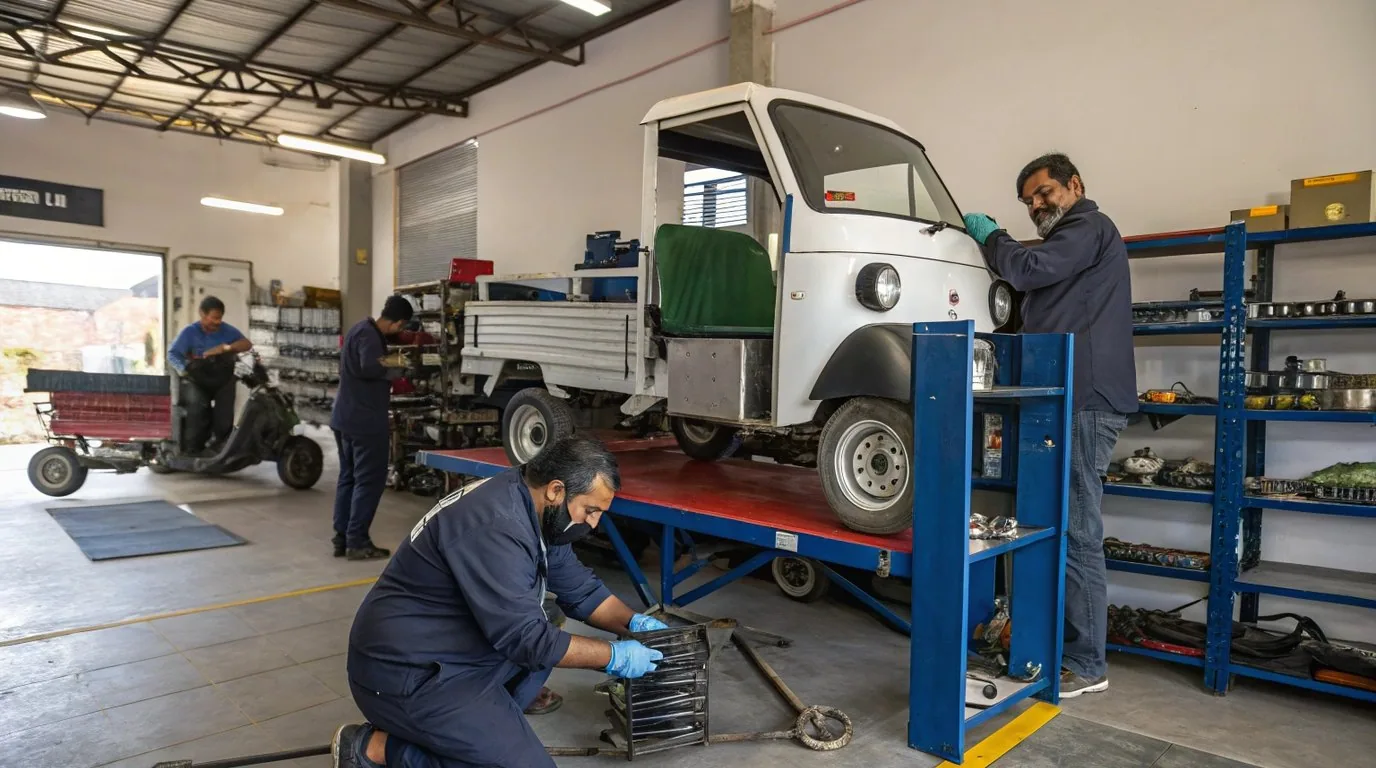
What to fit in each market, using the published passenger matrix
The basis is the published distribution matrix: passenger three-wheeler taxi duty at 55–68 Wh/km (100–120 km from 51.2V 100–120Ah), and African passenger tricycle duty at 65–80 Wh/km (110–130 km from 60V / 72V 120–140Ah). The two markets differ in which requirement comes first.
- Kenya: the 60V / 72V 120–140Ah band. Gradients of up to 22% fully loaded call for a 3C peak for 30 seconds and 150–250A continuous capability. Red-dirt dust requires a labyrinth double seal, and 88% average humidity with Indian Ocean salt spray requires anodised aluminium extrusions with a weather-resistant coating and IP67 terminals.
- Sri Lanka: the 60V 100–120Ah band, sized on typical Colombo duty of 90 km per day. The first priority is 140–280V wide-voltage charging — no undercharge at a 150V trough, no burnt board at a 270V peak. The second is an installation that passes DMT re-registration inspection: a 45-minute, fully in-frame swap using the original tank mounting bolts as the primary load path.
- Shared hard specification: 3,500 cycles at 1C to ≥80% SOH, IP67 steel enclosure with a potted BMS bay, an operating window of −20°C to 65°C, platform continuous discharge of 150–250A, and a 5-year / 3,500-cycle warranty.
- Destination port and trade terms: CIF Mombasa, or CIF Colombo / FOB
- Daily distance and passenger load: Colombo runs about 90 km per day; Kenyan hill routes must be sized on loaded climbing
- Grid and charging: confirm the 140–280V range for Sri Lanka, and the mains or generator input for Kenya
- Local access and registration: KEBS inspection documents for Kenya, DMT filing and annual inspection for Sri Lanka
Four checkpoints from ex-works to number plate
The two routes differ, but both run through these four steps. Steps one and four decide whether the vehicle can be sold, and steps two and three decide how long it takes and how much capital is tied up.
- 01fact_check
Pre-shipment inspection and documents
Kenya runs KEBS / PVoC pre-shipment inspection and issues a CoC, one certificate per shipment. Sri Lanka requires bilingual test reports aligned to SLS 1656. Both routes ship UN38.3, MSDS and the dangerous-goods packing certificate (Class 9) with the container — incomplete documents mean port delays and penalties.
Decides whether it ships cleanly - 02directions_boat
Booking and sea freight
Guangzhou / Ningbo to the Port of Mombasa takes 18–22 days; direct to Colombo takes 12–16 days. Under CIF the freight and insurance are included, loading out of Shenzhen Yantian / Shekou or Guangzhou Nansha, with a Form E certificate of origin available.
Decides the capital cycle - 03local_shipping
Destination clearance and onward transfer
After clearance at Mombasa, cargo can transfer to Nairobi on the SGR railway in about 8 hours; Colombo is a direct port call. Both 20GP / 40HQ containers and LCL are available, with the stowage plan, bill of lading, invoice and packing list issued with the shipment.
Decides the arrival rhythm - 04verified_user
Local access and registration
Kenya requires the relevant KEBS inspection and registration; Sri Lanka requires the DMT registration change and annual inspection, which is why the installation must be fully in-frame and drill-free. Local technical support and spare-parts stocking in both markets decide whether the fleet still runs full shifts in year two.
Decides whether it can earn
Kenya and Sri Lanka questions
Why does the same battery land at different cost in the two countries?expand_more
How does the Kenyan KEBS / PVoC process actually work?expand_more
How do SLS 1656 and DMT relate in Sri Lanka?expand_more
Does Sri Lanka really need 140–280V wide-voltage charging?expand_more
Does M-Pesa PAYGO in Kenya push the pack price up?expand_more
What should I fit in each market, and how long does shipping take?expand_more
Get a firm quotation for either destination
Send destination port, payload, daily distance and motor rating and we will model 60V / 72V pack pricing on an FOB / CIF basis, with container allocation and delivery scheduling, plus the KEBS / PVoC or SLS 1656 / DMT document list. Selection advice and pricing come back within 24 hours on working days.
- Sized to duty cycle and grid conditions, not to the biggest pack
- Sample packs available to prove the route before committing to a container
- Vehicle data and commercial details stay confidential; NDA available first
Specification notice:The figures above are engineering reference values. They may differ with production batch, configuration and actual duty cycle, and the percentages for life, efficiency, availability and coverage are engineering estimates and bench references. Contact us for the detailed specification sheet.