
Removable battery or fixed?it comes down to trips per day and somewhere to park for six hours
The short answer: if one pack covers the day, or there is a fixed charging point where the bike can sit for six hours, a fixed bay costs less. If daily distance exceeds one pack of range, the bike runs double shifts, or the rider has no fixed charging spot at all, a removable swap pack earns its cost. Removable does not just mean putting cells in a box — bay tolerance, connector life, anti-theft tracking and protocol handshake must all be right at the design stage. The 60V 45Ah step weighs about 18.5 kg and lifts with one hand, and the swap connector is rated for more than 10,000 insertions.
verifiedPack structure, insertion life and bay tolerance are the typical figures of the existing swap modules; the final build follows your vehicle parameters and the signed specification sheet.
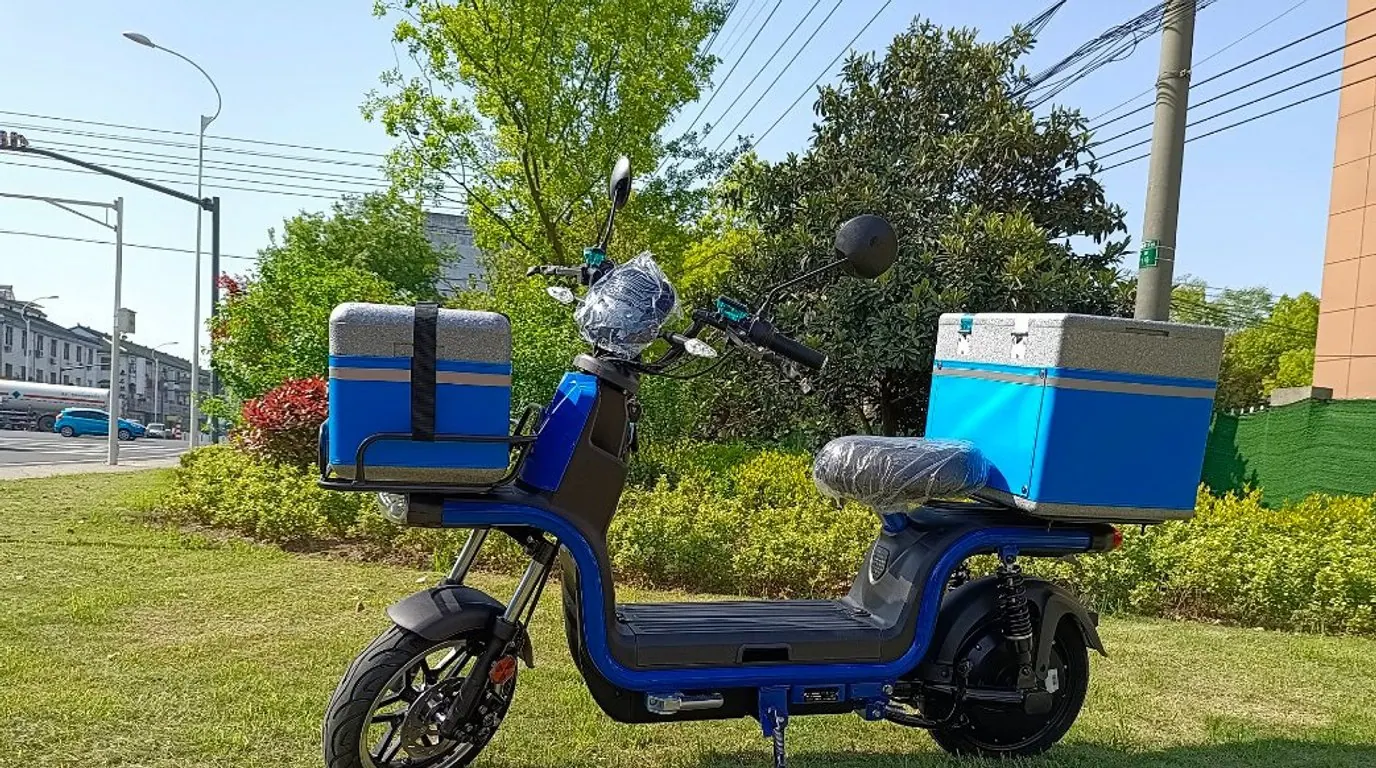
Seven points of comparison: removable pack versus fixed bay
Neither is better; only one fits. Worked through line by line, the answer usually lands clearly on one side — the refuelling method sets the operating rhythm, and the rhythm decides the choice.
| Point | Removable swap pack | Fixed battery bay |
|---|---|---|
| Weight and handling | About 18.5 kg at the 60V 45Ah step, lifted with one hand; 24S (72V) 45 – 60Ah runs about 24 – 32 kg by capacity step | Locked into the structure; a pack change means isolating power and opening the bay cover and compression bar, usually with tools |
| Connector | IP67 high-current aviation type with anti-reversal keying; the signal side runs a dual isolated CAN 2.0B / RS485 bus | Wired directly into the vehicle harness for a one-time connection, with no requirement for repeated insertion life |
| Lock | Mechanical key lock, key plus solenoid, or an electronic lock tied to the vehicle controller; lock body and bay reinforcement plate are one design | Compression bar, straps or rail stops — simple, but every pack change disturbs the harness |
| Anti-theft | One code per pack; the BMS only permits discharge after a handshake with an authorised vehicle or cabinet; optional 4G Cat.1 + GPS cloud lock-out and geofence | Depends on vehicle security and where it is parked; the pack itself has no independent remote lock-out |
| Home charging | Yes. Accepts standard CC-CV slow charging, which runs cooler and is kinder to cycle life; the charger must match the pack voltage class | Vehicle-bound charging only, so the vehicle is off the road longer and peak operations need a spare bike |
| Communication handshake | Required both in the cabinet and on the bike: the cabinet reads identity and state before deciding charge current, and whether it can step current on BMS request decides whether fast charging runs at full rate | Calibrated once; there is no "cabinet does not recognise the pack" problem to solve |
| Cost structure | First cost covers the shell, handle, lock, connector and protocol authorisation, and rises with the release structure and anti-theft configuration | Lowest first cost with no release or anti-theft hardware, but pays in vehicle downtime and spare-bike count |
A removable and a fixed pack share identical cells and BMS protection thresholds (LiFePO4, 3,500 cycles at 1C to ≥80% SOH, IP67 steel enclosure, 150 – 250A continuous). Every difference sits in the four things around the pack. The pack specification itself is on the swappable battery pack page.
Specification notice:The figures above are engineering reference values. They may differ with production batch, configuration and actual duty cycle, and the percentages for life, efficiency, availability and coverage are engineering estimates and bench references. Contact us for the detailed specification sheet.
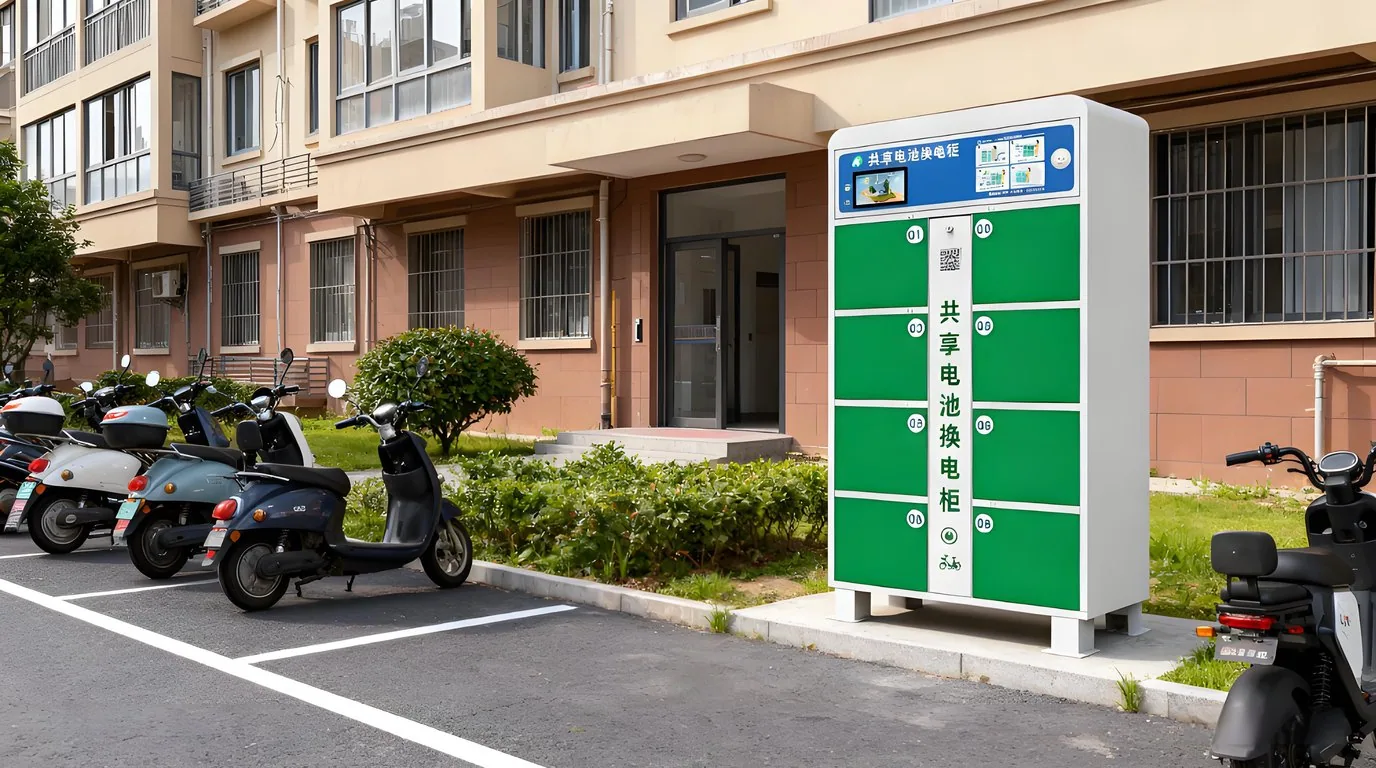
Four prerequisites for removable: miss one and it becomes an operating incident
Removable costs more because of these four things. They are not options; they are the conditions under which a removable solution works at all. Where any one is missing, the problem surfaces in a rider’s hands, in the rain or halfway up a gradient.
- Bay tolerance: leave 8 – 12mm all round and fit high-damping EVA foam. Too tight and the pack will not enter the bay (it jams outright in a cabinet), too loose and it rattles on rough roads while passing every shock into the connector.
- Connector life above 10,000 insertions: the swap connector is designed for more than 10,000 insertions with no arcing at high cycle counts and matches mainstream cabinet door standards. It must be keyed, so reversed or angled insertion cannot fret the terminals.
- Anti-theft tracking: one code per pack, with the BMS only permitting discharge after a handshake with an authorised vehicle or cabinet. A fleet build can add an independent 4G Cat.1 + GPS module with a coin-cell backup, and the cloud can lock the BMS and cut the discharge loop in one click.
- Protocol handshake: the BMS natively integrates CAN 2.0B / RS485 / UART so a cabinet can identify it. Which register table the cabinet reads, whether it can step the charge current, and how fault codes are defined all have to be settled before the vehicle enters service.
- Measure the clear bay and confirm there is room for rails and a lock body, and whether the bay carries a reinforcement plate to mount the lock
- Confirm the controller current limit and low-voltage cut-off: lead-acid cuts at about 52.5V on a 60V system while 16S LiFePO4 cuts at 44.0V, so without a reflash the gauge will dive
- Confirm the cluster or controller protocol and baud rate, and whether a swap cabinet must be integrated (which brings in the register table and charge-current ladder)
Who should not go removable
Fixed bay fits
Low daily distance, a fixed charging spot- cancelDaily distance40 – 70kmOne pack covers the whole day, so there is no charging anxiety
- cancelChargingA garage, yard or fixed parking spot allows six hours or more of overnight slow charging
- cancelOperating rhythmSingle shiftNo double shifts and no spare bike needed as cover
- cancelFirst costThe lowest upfront cost, and a fixed bay still takes a lithium pack — the upgrade is not blocked
- cancelFrame and rigidityA pack locked into the structure keeps the frame stiffer and reduces rattles on long unpaved routes
Removable fits
High-frequency operation, no fixed charging point- check_circleDaily distanceBeyond one pack of rangeOr double-shift operation with several packs per bike
- check_circleChargingThe rider has no fixed spot and needs to take the pack to a dormitory or garage overnight
- check_circleAsset structureBattery managed separatelySuits renting or financing the battery as its own asset
- check_circleIntegrationNeeds swap-cabinet and fleet-platform integration, SOC streaming and remote lock-out
- check_circleReal benefitThe vehicle is never off the road, the pack can be exchanged under cover in the rain, and a cabinet lets a high-turnover vehicle run all day
The five questions we are asked most about removable batteries
Why does a removable battery cost more than a fixed one?expand_more
Will a removable battery be stolen?expand_more
Is a removable battery safe?expand_more
What is needed to charge the pack at home?expand_more
Can my bike be converted to removable?expand_more
Once the refuelling method is decided, check these three
Swappable battery pack specification
12S / 16S / 24S platforms, slide / handle / side-draw releases, cabinet handshake and anti-theft figures.
See the pack specificationarrow_forwardE-motorcycle battery selection hub
A 48V / 60V / 72V decision table from motor power, daily distance and payload, with a 28 – 35 Wh/km matrix.
See e-motorcycle selectionarrow_forwardReplacement batteries by bay size
Work back from your existing bay to a matching pack model, including whether a fixed bay can be converted.
See replacement optionsarrow_forwardSend your vehicle and bay dimensions and we will assess a removable build
Give us the target vehicle, bay length × width × height, daily distance, daily exchange count and destination port. We will advise fixed or removable, then return FOB / CIF pricing, spare-pack quantities and the shipping document list.
- Refuelling-method advice and pricing within 24 hours on working days
- A sample pack plus protocol whitepaper can prove the cabinet handshake before a container order
- Vehicle parameters, cabinet interfaces and protocol documents are strictly confidential; NDA available first
Specification notice:The figures above are engineering reference values. They may differ with production batch, configuration and actual duty cycle, and the percentages for life, efficiency, availability and coverage are engineering estimates and bench references. Contact us for the detailed specification sheet.