
Electric scooter batteries:set the voltage and capacity from daily distance and payload
A step-through scooter sits between an e-bike and an e-motorcycle in voltage terms: a step-through frame, direct electric drive, higher speed and payload than an assisted bicycle but usually below a straddle-framed e-moto. Only three variables drive the selection — daily distance, payload and charging conditions — and the voltage platform and capacity band follow from them. This page gives the 48V / 60V / 72V × 20–60Ah capacity matrix, the boundary against e-motorcycles and e-bikes, swap module options and the sizing route for a replacement pack.
verifiedEnergy is quoted at platform nominal voltage (16S 48V / 60V = 51.2V, 24S 72V = 76.8V), the same basis as the site's 48V and 72V specification pages; the signed specification sheet governs.
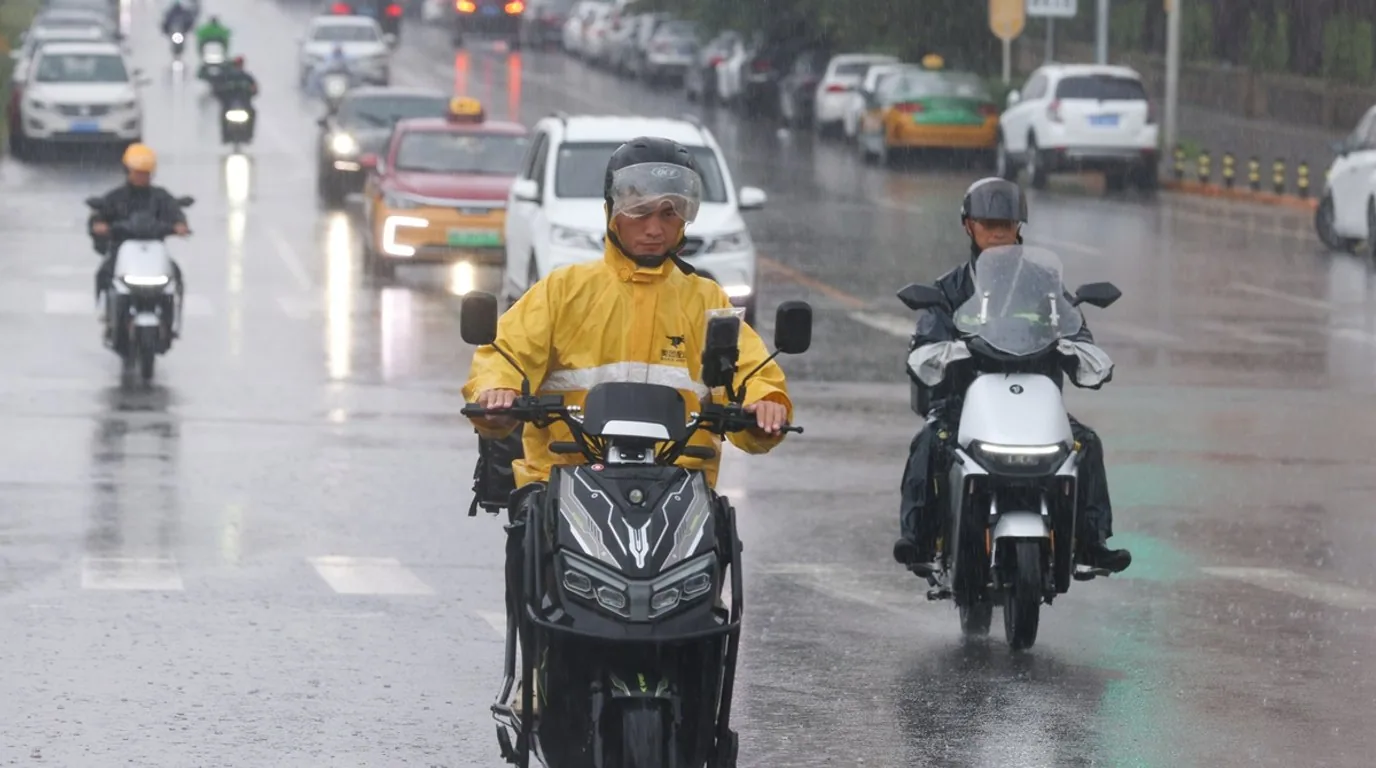
What the scooter platform delivers
Specification notice:The figures above are engineering reference values. They may differ with production batch, configuration and actual duty cycle, and the percentages for life, efficiency, availability and coverage are engineering estimates and bench references. Contact us for the detailed specification sheet.
Scooter and delivery vehicle voltage and capacity matrix
Choose the voltage platform from daily distance and payload, then the capacity band from charging conditions and fleet size. Energy is computed at platform nominal voltage; range already includes the 88–90% DoD, 94.5–96.0% loaded retention and 0.91–0.94 tropical derating factor.
| Voltage platform | Capacity band | Nominal energy | Duty cycle | Target range | Reference pack model |
|---|---|---|---|---|---|
| 48V (51.2V) | 20 – 30Ah | 1.02 – 1.54 kWh | Light commuter scooter, short community runs | 25 – 55 km | VT-4820-SCOOTER · VT-4830-SCOOTER |
| 48V (51.2V) | 40Ah | ≈ 2.05 kWh | Light delivery scooter, high-frequency site shuttles | 50 – 70 km | VT-4840-SCOOTER |
| 60V (51.2V) | 30Ah | ≈ 1.54 kWh | High-frequency light courier duty | 40 – 55 km | VT-6030-DELIVERY |
| 60V (51.2V) | 45Ah | ≈ 2.30 kWh | Single-shift delivery, hand-carried swap (≈ 16 kg) | 60 – 80 km | VT-6045-SWAP |
| 60V (51.2V) | 50 – 60Ah | 2.56 – 3.07 kWh | High-turnover courier duty and swap cabinets | 70 – 105 km | VT-6050-LFP-SWAP · VT-6060-SWAP |
| 72V (76.8V) | 30Ah | ≈ 2.30 kWh | High-speed scooter commuting, short shuttles | 50 – 65 km | VT-7230-SCOOTER |
| 72V (76.8V) | 40Ah | ≈ 3.07 kWh | High-speed e-moto commuting, longer delivery runs | 64 – 84 km | VT-7240-EMOTO |
| 72V (76.8V) | 50 – 60Ah | 3.84 – 4.61 kWh | High-speed long-shift delivery, double-shift short routes | 70 – 100 km | VT-7250-DELIVERY · VT-7260-SWAP |
Range is converted on two typical consumption bands: about 22–30 Wh/km for light low-speed scooters, and 28–42 Wh/km for delivery and high-speed duty (the site measures 28–35 Wh/km for 60V high-frequency light two-wheeler delivery, and 32–42 Wh/km for 72V high-speed e-motorcycles, matching the 72V platform page). Payload, gradient, tyre pressure and tyre width all move the result; the full model is in the real capacity and range guide.
Specification notice:The figures above are engineering reference values. They may differ with production batch, configuration and actual duty cycle, and the percentages for life, efficiency, availability and coverage are engineering estimates and bench references. Contact us for the detailed specification sheet.
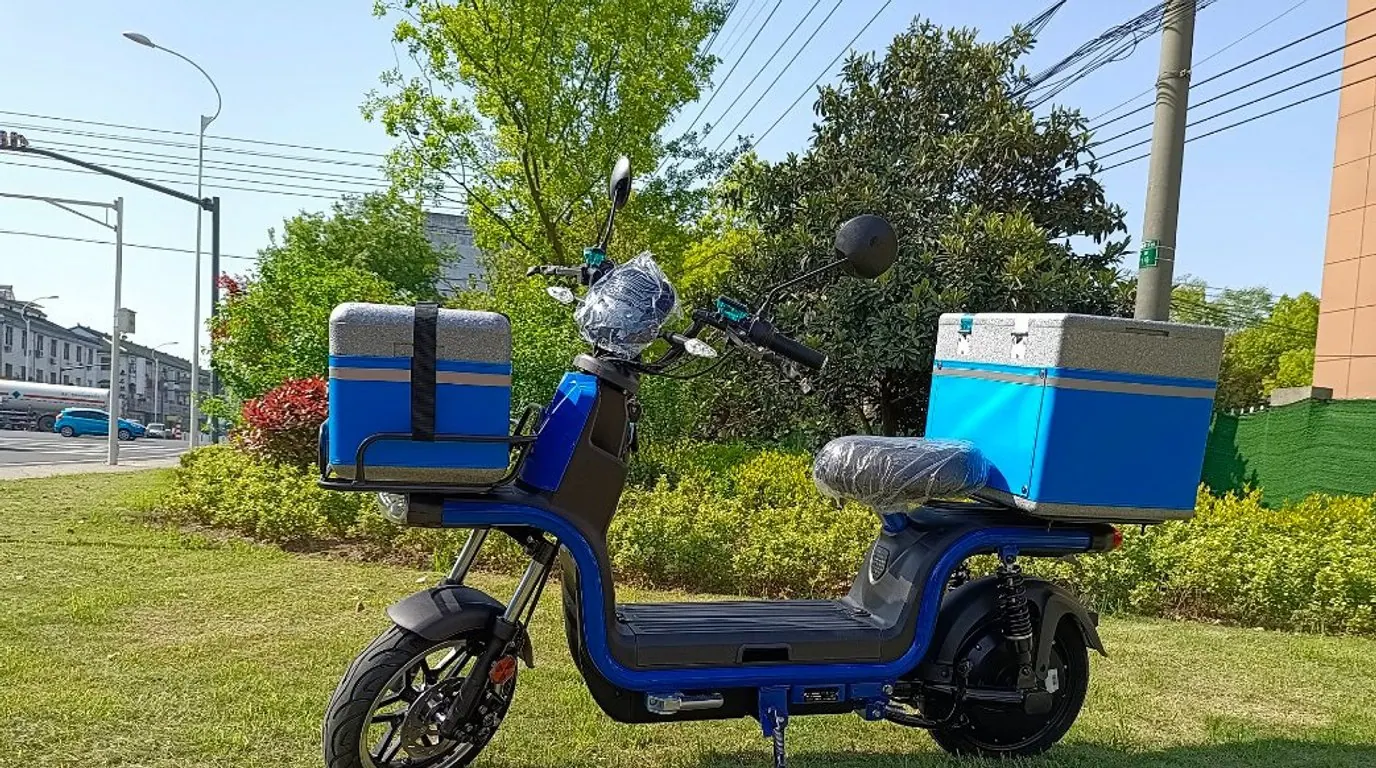
Scooter, e-motorcycle or e-bike: the frame and the motor decide
The same word rarely means the same vehicle across markets. Two facts settle which page you need: the frame type (step-through or straddle) and the motor rating. Voltage, capacity, BMS and harness requirements all follow from those two, and a different label will not change the electrical requirement.
- E-bike (see the e-bike battery page): pedal-assist dominant, 24V / 36V / 48V, 10–40Ah, 250–750W motors, speed limited by regulation; the selection drivers are mounting form (down tube, rack, seat post, in-frame) and the vehicle handshake.
- Electric scooter (this page): step-through frame, direct drive, 48V / 60V / 72V, 20–60Ah, 500–2000W motors, typically 25–55 km/h; the drivers are daily distance, payload and charging conditions, with recharging on board or at a swap cabinet.
- E-motorcycle (see the e-motorcycle battery page): straddle frame and high power, mainly 60V / 72V, 40–200Ah, 2000–5000W and above, 50–75 km/h plus; the drivers are continuous high-speed discharge and thermal management.
- What getting it wrong costs: sizing a scooter like an e-motorcycle means carrying more than ten extra kilograms and paying a high-voltage hardware premium; sizing an e-motorcycle like a scooter brings thermal protection on sustained high-speed discharge and can mismatch the controller and motor voltage and current limits.
Fixed on-board pack or swap module: fleet size and charging decide
Fixed on-board pack
One pack per vehicle, charged back at base- cancelRechargingVehicle-bound charging; at the standard 10–20A charger a pack takes 6–8 hours, so a daytime top-up means the vehicle is off the road
- cancelFleet sizingVehicles and charging bays are configured 1:1, so land and electrical supply costs climb with the fleet
- cancelBattery assetsPacks age with the vehicle, cycle counts differ across the fleet and replacements cannot be scheduled together
- cancelWhen it fitsSingle-shift operation, stable daily distance, small fleet
Swap module
Vehicle and battery decoupled- check_circleRechargingCharge off the vehicleA 30-second exchange, and about 70 minutes to full at 1C, so the vehicle stays in service
- check_circleFleet sizingSpare groups = daily swaps ÷ daily turnover per packSized from turnover rather than by stacking up extra packs "to be safe"
- check_circleBattery assetsPer unit or monthly rentalOwnership negotiable, with 4G Cat.1 plus GPS and cloud immobilisation
- check_circleInsertion and identity10,000+ insertion cyclesOne code per pack: the BMS permits discharge only after a cabinet handshake, over CAN 2.0B / RS485 / UART
Sizing a replacement pack: four checks
A replacement scooter pack bought on the wrong dimensions has to be shipped back — get the size wrong and no specification will fit. Finish these four steps before ordering and save a return; the full bay lookup is on the replacement battery page.
- 01straighten
Step 1 — Measure the clear bay
Measure the clear internal length × width × height and add the footprint of the power connector, handle, lock body and harness bend radius. Scooter bays fall into two common ranges: delivery / swap two-wheelers about 320–380 × 230–290 × 200–250 mm, and high-speed or long-range commuter scooters about 330–400 × 220–280 × 200–260 mm. Your measured dimensions govern.
L × W × H including connectors, handle and lock - 02bolt
Step 2 — Check the voltage platform and controller
Confirm the vehicle voltage platform and the controller rated and peak current limits. The controller limit must cover the BMS continuous discharge capability (150–250A at platform level, 3C peak for short climbs), otherwise the controller thermally trips on a climb while the pack still has margin. Changing voltage step (48V to 60V, for example) additionally requires the controller MOSFET rating, cluster and DC-DC input range to be checked together.
Current limit must cover BMS continuous and peak - 03route
Step 3 — Set the capacity band from distance and payload
Multiply daily distance by consumption to get usable energy, convert that to nominal capacity and leave about 20% margin. High-frequency delivery is the reference case: 100–140 km a shift with a rider and case around 120 kg works out at 28–35 Wh/km, so roughly 3.2–3.8 kWh of usable energy — the 60V 50–60Ah band. Do not estimate from motor power multiplied by hours.
Work back from 28–42 Wh/km delivery consumption - 04cable
Step 4 — Confirm connectors, protocol and charger
Check power terminal polarity and signal definitions pin by pin — lithium and factory looms frequently differ, and reverse connection destroys both BMS and controller. Confirm whether the cluster reads SOC frames from the BMS and, if so, the protocol and baud rate. The charger must be a CC-CV unit for the correct series count; a lead-acid constant-voltage charger must never be reused.
Polarity · frames · baud rate · CC-CV
Electric scooter battery questions we get every week
Should my scooter run 48V or 60V?expand_more
How much capacity does a delivery rider need in a day?expand_more
Can the pack be built for swapping?expand_more
How do I size a replacement battery?expand_more
Do I need a new charger or controller?expand_more
How much range and life do I gain from lithium?expand_more
What does it cost?expand_more
What documents does an export order need?expand_more
Once the platform is fixed, check these three pages
E-motorcycle battery platform
Straddle-frame high-speed duty on 60V and 72V: sustained discharge, thermal management and the 40–200Ah range.
See the e-moto platformarrow_forwardE-bike battery
Assisted bicycles on 24V / 36V / 48V: four mounting forms and the vehicle handshake path.
See the e-bike platformarrow_forwardBattery bay size lookup
Work back from bay length, width and height to a voltage and capacity combination, with the pre-replacement checklist.
Open the bay lookuparrow_forwardGet a scooter battery quote against your daily distance and payload
Send the destination port, daily distance, payload, motor rating and battery bay dimensions, and we will model the 48V / 60V / 72V selection, FOB / CIF pricing, container allocation and the shipping document list. Fleet swap projects can add a spare-group count and cabinet handshake study.
- Selection advice and pricing within 24 hours on working days
- Sample packs available to prove fit and range before committing to a container
- Vehicle parameters and market-access documents are strictly confidential; NDA available first
Specification notice:The figures above are engineering reference values. They may differ with production batch, configuration and actual duty cycle, and the percentages for life, efficiency, availability and coverage are engineering estimates and bench references. Contact us for the detailed specification sheet.