
Conversion kit with battery: where the money goesthe pack is usually the largest line, and the fastest to jump a tier
The direct answer: inside a kit with battery, the LiFePO4 pack is usually the single largest share of the total, because it sets both range (energy) and loaded gradient capability (current). It is the only item carrying a 3,500-cycle service life and a whole-pack warranty term, and the only dangerous-goods item that ships with UN38.3, MSDS and a Class 9 packing certificate. The motor and controller follow, while DC-DC, cluster, harness and brackets are low-value but non-optional. Labour and calibration depend on who does the build. This page covers the cost structure and the tier steps only — no monetary figure is quoted here; the formal quotation governs.
verifiedCost structure and build tiers follow the published kit list; the final price moves with capacity, cell grade and the document set, and the formal quotation governs.
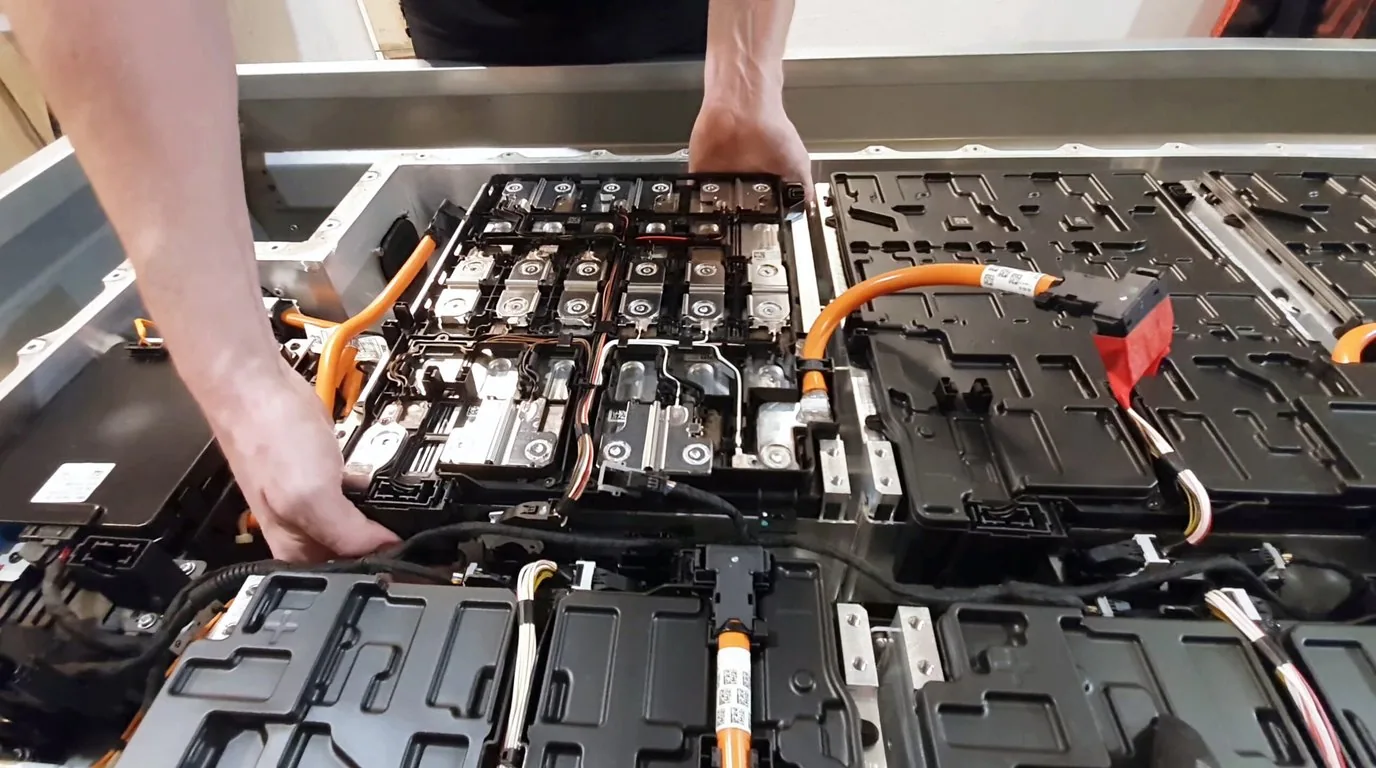
Eight components and the role each one plays in the cost
Inside one crate some money buys drive, some buys service life and some buys build speed. Once each part role is clear, it becomes obvious what can be trimmed and what cannot. No monetary figure appears here — only structure and relative weight.
boltDrive motor
memoryVector FOC controller
battery_charging_fullMotive battery pack (usually the largest line)
electrical_servicesDC-DC step-down module
speedInstrument cluster / LCD
cablePlug-and-play harness
hardwareAdapter bracket / stamped mount
engineeringLabour and calibration
What is included and what is not, item by item
Included rows state what happens if the part is missing. Excluded rows are not oversights: they must be sourced locally or added to the order, so confirm every line before you place it.
| Item | Included in the kit | Specification | What you need to know |
|---|---|---|---|
| Drive motor | Included | 2.5kW hub motor, or 3.5–5.0kW mid-drive PMSM (4.2–9.5kW peak) | Tiered by original displacement and payload; tiers cannot be mixed |
| Vector FOC controller | Included | Fully potted IP67, electronic brake energy recovery, upper-computer calibration | Current limit is aligned with pack discharge capability before dispatch |
| LiFePO4 battery pack | Included | 48V / 60V / 72V, steel case with potted BMS bay, Tier-1 A-grade cells | Capacity tiered on daily distance and payload; no second-life or salvaged cells |
| DC-DC step-down module | Included | Independent 12V supply, isolated from the main circuit by dual fuses | Feeds headlight, horn, indicators and instrument cluster |
| Instrument cluster / LCD | Included | Voltage, SOC, speed and gear display, versioned by platform voltage | Drops into the original position; SOC calibrated to the BMS before dispatch |
| Plug-and-play harness | Included | Pre-formed modular flame-retardant loom, ignition-lock relay, keyed IP67 connectors | Plugs into the factory ignition, headlight and brake light without touching the original loom |
| Adapter bracket / stamped mount | Included | 3mm galvanised bracket, grade 10.9 bolts and anti-vibration pads, verified to 3G | Locks into original chassis holes; non-standard vehicles need a scan for custom tooling |
| Dedicated CC-CV charger | Optional, by order | 10–40A, matched to the platform voltage with BMS handshake | Not included as standard — specify on the order. Never substitute a lead-acid charger |
| Quick-release / swap structure | Optional, by order | Quick-release handle or a BMS version that handshakes with swap cabinets | Recommended for double-shift fleets; must match the swap cabinet protocol |
| Tyres / brake shoes / body panels | Not included | Vehicle wear parts and body components | Sourced locally to suit the vehicle; we do not ship these with the kit |
| Conversion labour | Not included | The kit ships as a turnkey assembly crate | Your own bay can build it, or request resident engineer coaching |
| Local registration and approvals | Not included | Belongs to destination market approval | We supply the technical dossier to support your filing; destination law governs |
| Old lead-acid disposal | Not included | A local environmental recycling process | Please arrange compliant recycling in the destination country |
Excluded items can still be arranged: charger and quick-release structure can be added to the crate, and resident engineer training is quoted against fleet size. Lead-acid recycling and registration must be completed locally.
Specification notice:The figures above are engineering reference values. They may differ with production batch, configuration and actual duty cycle, and the percentages for life, efficiency, availability and coverage are engineering estimates and bench references. Contact us for the detailed specification sheet.
Three tiers: how the cost structure shifts at 1000W, 1500W and 2000W
Stepping up a tier is not a single line increase: motor, pack and controller move together. The table states where each tier concentrates its spend.
| Package | Motor rating | Battery voltage and capacity | Where the cost structure shifts | Target range | Typical duty |
|---|---|---|---|---|---|
| Light duty | 1000W (2.0kW peak) | 60V 50 – 60Ah (≈ 3.0 – 3.6 kWh) | Smallest pack and lowest controller rating; spend concentrates in the motor and harness | 70 – 90 km | Short delivery and community shuttles, 40 – 60km a day, mainly flat |
| Standard duty | 1500W (3.5kW peak) | 60V 105Ah (6.3 kWh) | Capacity nearly doubles against light duty, so the pack becomes the main line while the motor steps up with it | 110 – 130 km | Full-day passenger taxi work, 90 – 120km a day, with moderate gradients |
| Heavy duty | 2000W (4.2kW peak) | 72V 120 – 150Ah (8.64 – 10.8 kWh) | Platform voltage rises to 72V with a larger pack and a bigger motor, so pack and motor step together and controller and harness ratings rise with them | 95 – 150 km | Loaded haulage and frequent gradients, 500 – 800kg payload |
Capacity is reviewed against your real duty cycle and the ranges above are targets — add roughly 20% headroom over daily distance. Light duty converts at about 50 Wh/km; standard duty from the published 65–80 Wh/km passenger average and heavy duty from 95–125 Wh/km heavy-cargo average. Payload, gradient, tyre pressure and riding style all move the result.
Specification notice:The figures above are engineering reference values. They may differ with production batch, configuration and actual duty cycle, and the percentages for life, efficiency, availability and coverage are engineering estimates and bench references. Contact us for the detailed specification sheet.
Sourcing the pack yourself, or buying the kit complete
Kit only, battery sourced locally
Split procurement- cancelMatching riskYou must verify the controller current limit against the BMS protection point; a mismatch cuts out under loaded gradient work
- cancelResponsibilityBattery faults and kit faults sit with two suppliers, so diagnosis turns into an argument first
- cancelProtocol and displayCluster SOC and BMS data may not interoperate, leaving a visible state-of-charge error
- cancelShipping documentsUN38.3, MSDS and the packing certificate are yours to arrange; one missing document holds the container at port
- cancelLead timeTwo shipments arrive separately and the build cannot start until both land
- cancelWarrantyTwo warranty terms run in parallel and cannot be consolidated into one document
Kit with the battery included
Single responsible supplier- check_circleMatching riskMatched before dispatchController current limit, BMS protection point and keyed harness calibrated kit by kit
- check_circleResponsibilityOne responsible supplierMotor, controller, pack, harness and cluster under a single warranty term
- check_circleProtocol and displayCluster SOC and BMS data interoperate, calibrated against typical behaviour
- check_circleShipping documentsFull set with the containerUN38.3, MSDS and the dangerous-goods packing certificate (Class 9) ship together
- check_circleLead timeSamples in 3 – 5 daysAbout 180 three-wheeler packs per 20GP, 320+ per 40HQ, arriving as one container
- check_circleWarranty5 years / 3,500 cycles1C charge and discharge to ≥80% SOH
Kit with battery cost: six common questions
What exactly is included, and what is not?expand_more
Why does the battery usually dominate the total cost?expand_more
How do the three tiers step up?expand_more
Is it cheaper to source the battery myself?expand_more
Why is no price given on this page?expand_more
How long does the battery last and how is it warranted?expand_more
Three pages to check next
Kit with battery included
Item-by-item inclusion, the three build packages, the delivery schedule and the document set.
See the kit with batteryarrow_forwardElectric tricycle conversion kit
Bill of materials, displacement mapping, retrofit-versus-replace routes and road-legality notes.
See the kit pagearrow_forwardRequest a firm quotation
Send destination port, payload, daily distance and motor rating for FOB / CIF pricing and container space.
Send an enquiryarrow_forward