
Electric motorcycle battery:should my bike run 48V, 60V or 72V?
E-motorcycle battery selection answers three questions: how big is the motor, how far does the bike go in a day, and what does it normally carry. Fix those three and the voltage platform and capacity step are determined. At an equal 3000W at the axle, a 48V bus carries about 62.5A, 60V about 48.0A and 72V about 40.5A — higher voltage means lower current and less harness heating (copper loss down 55.5%), but it also raises the voltage rating, insulation and controller cost of the whole vehicle. This page gives the decision table, the capacity matrix, the fixed-versus-removable trade-off and the eight questions we are asked most.
verifiedThe voltage deltas come from one dynamometer channel at a 3000W axle load; your own vehicle parameters and the signed specification sheet govern the final build.
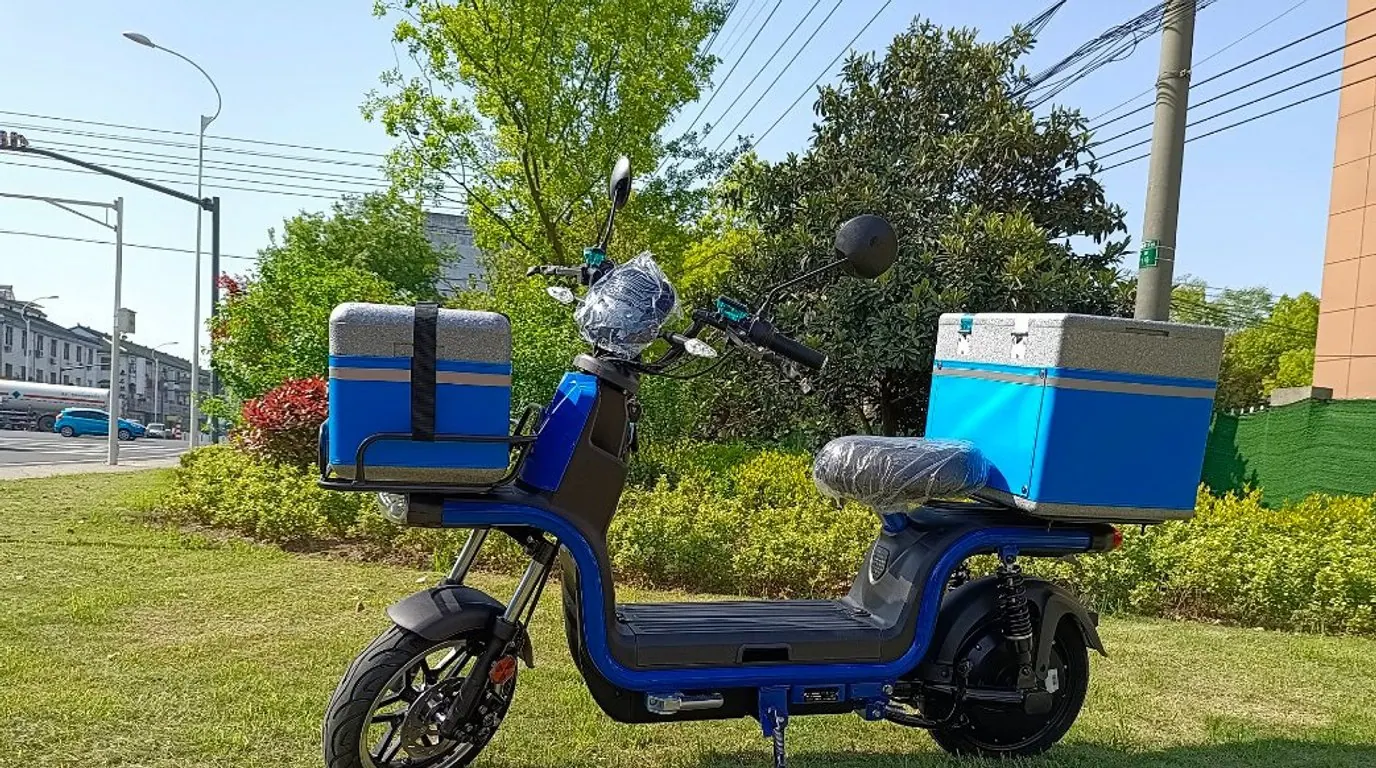
Typical difference at equal 3000W axle output
One dynamometer channel, one 3000W rated load: the gain from moving 48V to 72V follows from Joule heating, not from control-strategy tuning.
Specification notice:The figures above are engineering reference values. They may differ with production batch, configuration and actual duty cycle, and the percentages for life, efficiency, availability and coverage are engineering estimates and bench references. Contact us for the detailed specification sheet.
48V / 60V / 72V voltage decision table
Locate your bike by motor rating, daily distance and everyday payload. Choosing a voltage is not choosing a premium tier — it is keeping the loaded bus current inside what your harness and controller can actually carry.
| Motor rating | Typical daily distance | Everyday payload | Recommended platform | Economical cruise speed | Controller MOSFET rating | Recommended bay / pack model |
|---|---|---|---|---|---|---|
| 800W – 1500W | 40 – 70 km | One rider · cargo ≤ 30kg | 48V (16S LiFePO4 · 51.2V / 58.4V full charge) | 25 – 35 km/h | ≥ 75V | VT-2W4824 · bay 185×145×280 mm |
| 1500W – 2500W | 70 – 120 km | Rider plus delivery box · ≤ 100kg | 60V (16S LiFePO4 · 51.2V / 58.4V full charge) | 40 – 50 km/h | ≥ 75V | VT-2W6045 · bay 215×165×310 mm |
| 2500W – 5000W+ | 90 – 160 km | Two-up / mountain grades · ≥ 150kg | 72V (24S LiFePO4 · 76.8V / 87.6V full charge) | 55 – 75 km/h+ | Must be ≥ 100V – 120V automotive | VT-2W7260 · bay 255×190×340 mm |
MOSFET rating must cover the full-charge voltage plus the back-EMF peak: a 72V system reaches 87.6V at full charge and 98.4V transient Vpeak during downhill regeneration, so 100V-rated MOSFETs are required. Check the motor back-EMF constant (Ke) and stator enamel temperature class before raising voltage — reversing that order causes batch rework.
Specification notice:The figures above are engineering reference values. They may differ with production batch, configuration and actual duty cycle, and the percentages for life, efficiency, availability and coverage are engineering estimates and bench references. Contact us for the detailed specification sheet.
Capacity matrix: work back from daily distance and payload
Two-wheeler delivery duty sits at 28–35 Wh/km combined (frequent stops, cruising in the 45km/h class); high-speed e-motorcycles sit at the lower end on open roads. Capacity comes from daily distance × consumption ÷ usable depth of discharge, plus roughly 20% margin.
| Voltage platform | Recommended capacity | Nominal energy | Pack weight (typical) | Duty cycle | Target range | Pack model |
|---|---|---|---|---|---|---|
| 48V (16S · 51.2V) | 24Ah | ≈ 1.23 kWh | ≈ 9 kg | City commuter e-moped · solo short trips | 60 – 80 km | VT-2W4824 |
| 48V (16S · 51.2V) | 30Ah | ≈ 1.54 kWh | ≈ 11 kg | Light delivery · community shuttles | 60 – 80 km | VT-2W4824 30Ah step |
| 60V (16S · 51.2V) | 30Ah / 45Ah | ≈ 1.54 / 2.30 kWh | ≈ 11 kg / 18.5 kg (45Ah pack) | Delivery step-through · inter-district moped | 90 – 120 km | VT-2W6045 |
| 60V (16S · 51.2V) | 50Ah – 60Ah | ≈ 2.56 – 3.07 kWh | ≈ 18 – 22 kg | High-frequency light delivery (riders, couriers, swap cabinets) | 80 – 100 km | VT-6050-LFP-SWAP |
| 72V (24S · 76.8V) | 40Ah | ≈ 3.07 kWh | ≈ 22 kg | High-speed e-moto commuting · short shuttles | 64 – 84 km | VT-7240-EMOTO |
| 72V (24S · 76.8V) | 45Ah | ≈ 3.46 kWh | ≈ 24 kg | High-speed delivery moped · passenger-cargo duty | 120 – 160 km | VT-2W7260 |
| 72V (24S · 76.8V) | 60Ah | ≈ 4.61 kWh | ≈ 32 kg | Long-range high-speed e-moto · double shifts | 97 – 127 km | VT-7260-SWAP |
Energy is computed at each platform nominal voltage (48V 51.2V / 60V 16S 51.2V / 72V 76.8V); pack weight includes shell, BMS and harness at roughly 7 kg/kWh (±5%), with 18.5 kg typical for the 60V 45Ah pack. Range bands differ within one voltage because the duty cycle differs: VT-2W7260 covers 120–160 km fully loaded at 180kg uphill, while VT-7260-SWAP at 97–127 km is computed on the high-speed e-moto basis of 32–42 Wh/km (the same pack returns about 116–145 km on the 28–35 Wh/km delivery basis). Payload, gradients, tyre pressure and riding style all move the result.
Specification notice:The figures above are engineering reference values. They may differ with production batch, configuration and actual duty cycle, and the percentages for life, efficiency, availability and coverage are engineering estimates and bench references. Contact us for the detailed specification sheet.
At the same 3000W: what 48V and 72V actually compare
Put the two platforms side by side on electrical and thermal figures and the choice stops depending on sales talk.
48V platform (16S LiFePO4)
3000W at the axle- cancelContinuous bus currentAbout 62.5AThe step where line loss and connector heating show most
- cancelPull-away and climb transient (2C)120A – 160ADemanding on connector and harness specification
- cancelHarness copper lossBaselineP = I²R, proportional to the square of current
- cancelRecommended main harness≥ 16 – 25 mm²Thick cable, harder routing, heavier vehicle harness
- cancelSystem drive efficiencyBaselineA 72V platform adds a further 5.2 percentage points
72V platform (24S LiFePO4)
3000W at the axle- check_circleContinuous bus currentAbout 40.5A33.3% lower than 48V
- check_circlePull-away and climb transient (2C)75A – 95AConnector and harness stress falls with it
- check_circleHarness copper loss55.5% lowerWire temperature well below the 48V equivalent
- check_circleRecommended main harness≥ 6 – 10 mm²Easier routing, and the vehicle harness can be lighter
- check_circleSystem drive efficiency89.4%ΔT 18.2°C · max continuous climb torque 32.4 N·m
Fixed battery bay or removable swap pack?
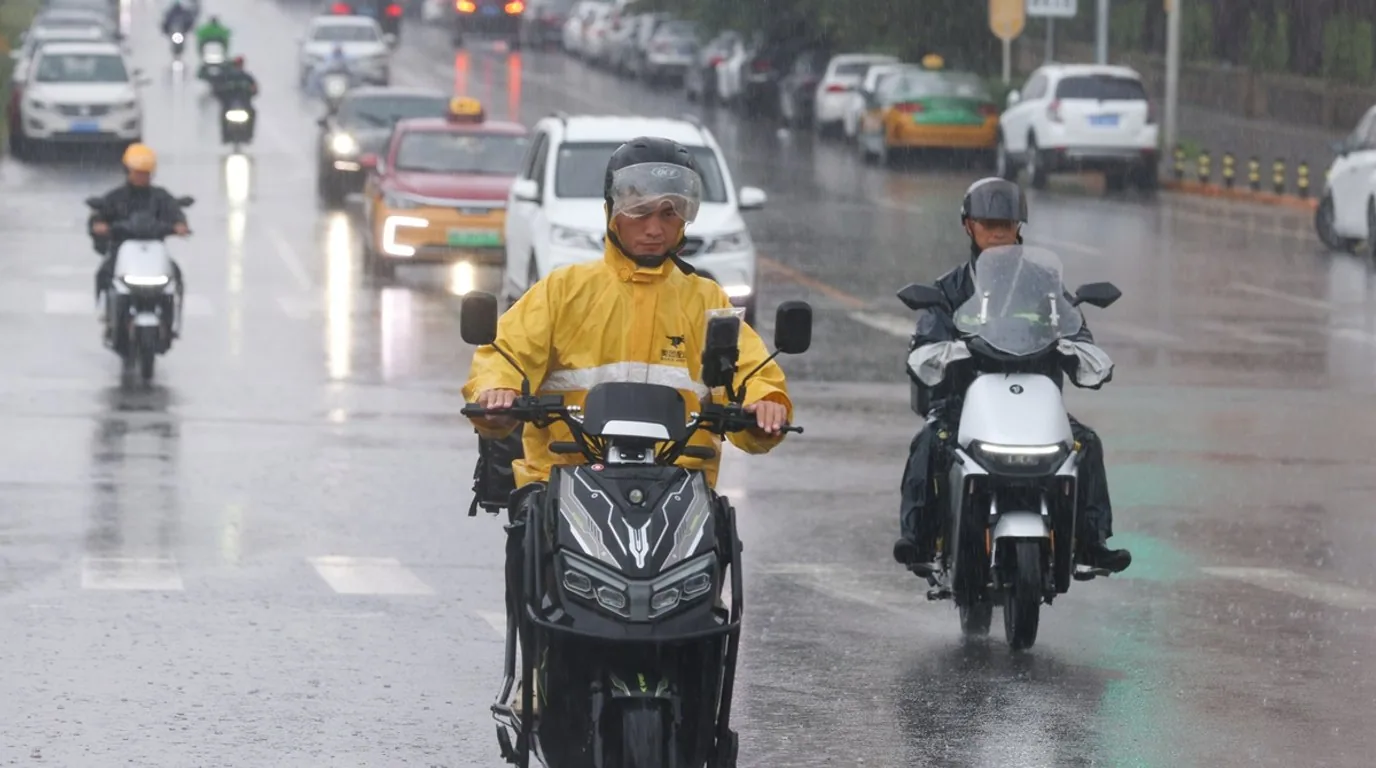
A fixed pack is locked into the structure, which buys lower cost and a stiffer frame. A removable swap pack turns recharging from waiting into exchanging a block, at the cost of the shell, handle, lock and connector. Two questions decide it: how many trips the bike makes in a day, and whether there is anywhere to leave it on charge for six hours.
- Choose removable when daily distance exceeds one pack of range, when the bike runs double shifts, when the rider has no fixed charging spot, or when the battery must be a separate asset from the vehicle.
- Choose fixed when one pack covers the shift (about 90km or less), when there is a garage for overnight slow charging, and when lowest first cost matters most.
- Real figures for a removable pack: the 60V 45Ah step weighs about 18.5 kg and lifts with one hand; the swap connector is rated for more than 10,000 insertions without arcing; 1C charging reaches full in 70 minutes, with about 70% in 30 minutes.
- Safety prerequisites: an IP67 high-current aviation connector with keyed anti-reversal, a handle placed above the pack centre of gravity, and an IP67 drawn-aluminium plus flame-retardant ABS dual shell that passes the 30G three-axis shock fatigue test.
- Bay dimensions and quick-release rail or handle clearance: leave 8–12mm all round and fit high-damping EVA foam so nothing touches hard
- Controller low-voltage cut-off: lead-acid cuts at 52.5V on a 60V system while 16S LiFePO4 cuts at 44.0V, so the threshold must be reflashed or the gauge will dive
- Charger: a lithium CC-CV charger that handshakes with the BMS is mandatory — never continue with a lead-acid constant-voltage unit
- Comms harness: CAN 2.0B / RS485 / UART single-wire dashboard protocol is what carries SOC and fault codes to the display
The e-motorcycle battery questions we answer every week
Should my e-motorcycle run 48V, 60V or 72V?expand_more
How far will one battery take me?expand_more
My original battery has faded — can I replace only the battery and keep the bike?expand_more
Is a removable battery safe?expand_more
How long does fast charging take?expand_more
How do I choose a swap module?expand_more
What does an e-motorcycle battery cost?expand_more
Can an e-motorcycle go on the highway?expand_more
Get a voltage and capacity selection plus a firm quotation
Send the motor rating, daily distance, everyday payload and destination port. We will recommend the voltage platform and capacity step, then return FOB / CIF pricing, container allocation and the shipping document list.
- Selection advice and pricing within 24 hours on working days
- Engineering sample packs available to prove the duty cycle before a container order
- Vehicle parameters and market-access documents are strictly confidential; NDA available first
Specification notice:The figures above are engineering reference values. They may differ with production batch, configuration and actual duty cycle, and the percentages for life, efficiency, availability and coverage are engineering estimates and bench references. Contact us for the detailed specification sheet.