
Technical and export questions,answered in one hub (FAQ Hub)
Everything overseas buyers ask, organised: vehicle duty-cycle matching, genuine motive cells versus lookalikes, dangerous-goods shipping compliance, BMS protocol integration and after-sales claims abroad — so a container order or a bespoke build never stalls on an unanswered question.
verifiedEvery technical parameter is backed by real bench ageing and 20GP / 40HQ shipment data, with the original records available for review
Specification notice:Reference values only — batch and duty-cycle variation applies. Contact us for detailed specifications.
Field guides to R&D, export compliance and commercial terms
Pick the domain closest to your question to jump straight to the vehicle conversion, BMS tuning, container clearance or no-return claim documentation you need.
Module A · Vehicle and duty-cycle matching
Petrol-to-electric voltage steps, anti-cutout logic for 15° loaded gradients, and dissipating heat in 55℃ tropical dust.
Browse 4 technical answersarrow_forwardModule B · Cell specification and authenticity
Spotting graded second-life cells, why ESS-grade cells are the wrong choice, and reading IR / Delta V inspection reports.
Browse 3 quality answersarrow_forwardModule C · Class 9 shipping and duty relief
Packing certificate workflow, UN3480-compliant booking, Form E zero-duty treatment and LCL/FCL economics.
Browse 4 export answersarrow_forwardModule D · Five-year warranty and overseas claims
Replace-don’t-repair with no return to China, 4G IoT liability decisions and the complimentary 2% spares list.
Browse 8 after-sales answersarrow_forwardModule E · Pricing, settlement and engineering liaison
Minimum order and 3–5 day sampling on standard models, L/C and offshore T/T terms, and CAN protocol matching for non-standard controllers.
Browse 3 commercial answersarrow_forwardMotive-grade cells (EV Grade) versus storage-grade cells (ESS Grade)
For the hardest technical questions raised in cross-border engineering reviews: full transparent parameters and waveform logic.
| Comparison item | TIANQIU motive cell (EV Grade) | Conventional storage cell (ESS Grade) |
|---|---|---|
| Discharge rate (C-Rate) | 3C continuous, 5C pulse peak (10s) | 0.5C continuous, 1C maximum (overheats) |
| AC internal resistance | ≤ 0.45 mΩ (negligible temperature rise) | ≥ 0.95 mΩ (rapid heat build-up under load) |
| Consequence on the vehicle | Strong acceleration, smooth fade over 3,500 cycles | Severe swelling and lithium plating under repeated hard acceleration |
Every TIANQIU motive pack uses EV Grade cells only. The table above also answers “what happens if ESS-grade cells are fitted to a vehicle”.
Specification notice:The figures above are engineering reference values. They may differ with production batch, configuration and actual duty cycle, and the percentages for life, efficiency, availability and coverage are engineering estimates and bench references. Contact us for the detailed specification sheet.
Module A · Vehicle and duty-cycle matching
Will upgrading an existing 48V petrol or lead-acid three-wheeler straight to a 60V or 72V lithium pack burn out the motor?expand_more
· Motor tolerance: most commercial 48V hub or mid-drive motors rated 1,000W–1,500W use enamel insulation rated above 100V, so 60V (70.8V full charge) or 72V (84V full charge) will not cause insulation breakdown.
· The controller is the real bottleneck: the MOSFETs in an original 48V controller (typically rated only 63V) and its filter capacitors (50V/63V) will fail instantly from over-voltage the moment 72V is applied.
· The TIANQIU solution: we developed a plug-and-play wide-voltage smart controller kit (48V–72V self-adapting) specifically for Southeast Asian and African markets, and ship it with flame-retardant poke-yoke adapter harnesses — delivering 35% more speed and 40% more range without overheating the motor.
Why do some three-wheelers cut out suddenly when climbing a 15° gradient fully loaded, and how does TIANQIU solve it with soft current limiting?expand_more
· Crude hardware cut-out on an ordinary BMS: transient surge trips the pack → the vehicle loses drive → it rolls back → a physical key restart is needed.
· TIANQIU three-stage step-down limiting: 2.5C peak current is allowed for 15 seconds, long enough to finish the gradient. When the temperature sensor reaches 58℃, the BMS signals the motor controller over CAN/RS485 to reduce power and steps smoothly down to 1.2C constant-current climb — never an abrupt cut-out.
How high is the thermal runaway risk when operating in 45℃ dusty heat in Africa (Egypt) and South Asia?expand_more
· A high-safety LiFePO4 base: decomposition temperature above 750℃, eliminating the inherent risk of ternary lithium igniting at 210℃.
· Nano aerogel insulation barriers: aerospace-grade aerogel between cells blocks cascading thermal propagation.
· IP67 fully sealed die-cast thermally conductive aluminium enclosure: dual-lip silicone seals keep dust out completely, while integrated cooling fins in the enclosure floor cut cell temperature rise by 8.2℃ against a plain steel shell.
Does converting a mainstream petrol three-wheeler (Bajaj RE / TVS King) to electric require cutting and welding the chassis?expand_more
Module B · Cell specification and authenticity
Some suppliers quote below raw-material cost. Where do they cut corners?expand_more
1. Refurbished second-life cells: recovered from telecom base stations or scrapped buses, the laser QR code is ground off, re-printed and wrapped in new PVC film to pass as new A-grade stock. Real capacity is only 70%–80%, and it falls off rapidly within six months.
2. Storage cells sold as motive cells: ESS cells cost 15%–20% less than motive cells, but their electrode sheets are designed very thin and support only 0.5C discharge, so they swell and overheat immediately under vehicle current.
3. Inflated Ah ratings and jumper-short capacity: a pack labelled 72V 100Ah may contain only 80Ah cells, relying on BMS software to fake the SOC display.
4. Hand soldering in small workshops and under-spec cable: no automated laser welding with impedance monitoring, so joints can crack and catch fire under vibration, and copper-clad aluminium cable replaces flame-retardant pure silicone copper.
What fundamentally separates a motive cell from a storage cell, and what happens if storage cells are fitted to a vehicle?expand_more
· Discharge rate: motive grade 3C continuous and 5C pulse peak (10s); storage grade 0.5C continuous and 1C maximum, which overheats.
· AC internal resistance: motive grade ≤ 0.45 mΩ with negligible temperature rise; storage grade ≥ 0.95 mΩ, which builds heat rapidly under high current.
· On the vehicle: motive cells accelerate strongly and fade smoothly across 3,500 cycles; storage cells swell badly under repeated hard acceleration and suffer lithium plating and short circuits.
How do we read SOH and internal-resistance spread (IR / Delta V) in a factory test report?expand_more
· Factory static voltage delta (ΔV): held within ≤ 3mV, against an industry norm of around 10mV, so no pack has a weak-link cell.
· Internal-resistance spread (ΔIR): all cells within one pack stay within ≤ 0.05mΩ, preventing localised overheating from uneven parallel current sharing.
· Cell traceability: every cell carries a unique laser-engraved QR code, and the coating batch, formation capacity and test timestamp can be traced on the cell maker’s website.
Module C · Class 9 shipping and duty relief
Lithium batteries are Class 9 dangerous goods (UN3480). Which core documents are mandatory for a sea booking?expand_more
1. Certificate of packaging use appraisal for dangerous goods export (the packing certificate): issued by the customs entry-exit inspection and quarantine authority, proving the UN carton or crate passed drop and compression testing.
2. UN38.3 test summary report: passed reports covering eight tests — altitude simulation, thermal cycling, vibration, mechanical shock, external short circuit at 55℃, impact and the remainder of the UN38.3 schedule.
3. MSDS safety data sheet: compliant with the latest 2024 GHS requirements, detailing composition, emergency spill handling and firefighting guidance.
4. Sea transport conditions appraisal for dangerous goods: issued by a state-qualified third-party chemical institute so carriers such as Maersk, CMA CGM and COSCO release the booking without delay.
Shipping to Pakistan, East Africa or Egypt — how do we use bilateral agreements to cut import duty?expand_more
· China–Pakistan FTA (CPFTA) and ASEAN Form E: the Chinese customs authority issues the official certificate of origin directly, supporting 0% preferential duty clearance at Karachi and Southeast Asian ports.
· Egypt (Nafeza / ACID coordination): our dedicated export desk files the ACID cargo number 48 hours in advance and uploads the full bill of lading and invoice to the CargoX blockchain system immediately, avoiding demurrage and detention penalties.
· East Africa, Kenya and Tanzania (PVoC/IDF): we support pre-shipment verification of conformity so the COC certificate can be exchanged smoothly on import.
How are transit time and cost calculated for LCL versus FCL (FOB/CIF, 20GP/40HQ)?expand_more
Lithium batteries are Class 9 dangerous goods — is full-container shipping difficult?expand_more
Module D · Five-year warranty and overseas claims
How exactly are the five-year warranty and the 3,500-cycle cover assessed, and how is liability determined?expand_more
1. SOH fade assessment: within the warranty period (whichever of the two limits comes first), if a discharge test under standard conditions shows usable capacity below 80% of the factory rating (below 80% SOH), free replacement is triggered.
2. 4G IoT black-box evidence: there is no need to dismantle and ship a heavy pack back for testing. The BMS automatically records the 48 hours of charge/discharge current, temperature curve and cell voltage delta before the fault, and our engineers issue a damage assessment within 24 hours on working days of reading it from the cloud.
Cross-border return freight is extremely expensive — does a customer have to ship a faulty pack back to China?expand_more
· Instant local allocation: TIANQIU holds regional bonded stock in the Egypt Alexandria free zone and in Southeast Asia, so a confirmed hardware fault triggers dispatch of a brand-new module or complete pack from local stock.
· Local disposal compensation: the customer arranges disposal through a locally licensed environmental facility, and the destruction video and certificate offset the value against the next order or ship with the following container.
What exactly is inside the complimentary 2% consumable-parts kit?expand_more
Do we need to open the pack or send it back to extract fault data?expand_more
Does the same warranty still apply at 55°C in a North African desert?expand_more
Can a volume vehicle manufacturer obtain local replacement authorisation and resident engineering support?expand_more
How is warranty defined for the muddy highland rainy season in East Africa (Kenya / Tanzania)?expand_more
Can we apply to become an authorised TIANQIU service centre (ASC) locally?expand_more
Module E · Pricing, settlement and engineering liaison
Can OEMs and fleet operators buy directly, and what is the minimum order quantity?expand_more
Which payment and settlement methods do you support?expand_more
Our vehicle controller is not a mainstream brand. Can your overseas engineers match the CAN protocol on site?expand_more
Need deeper data? Go to the dedicated page
The Q&A gives the conclusion; the dedicated pages give the full published data, document templates and decision thresholds.
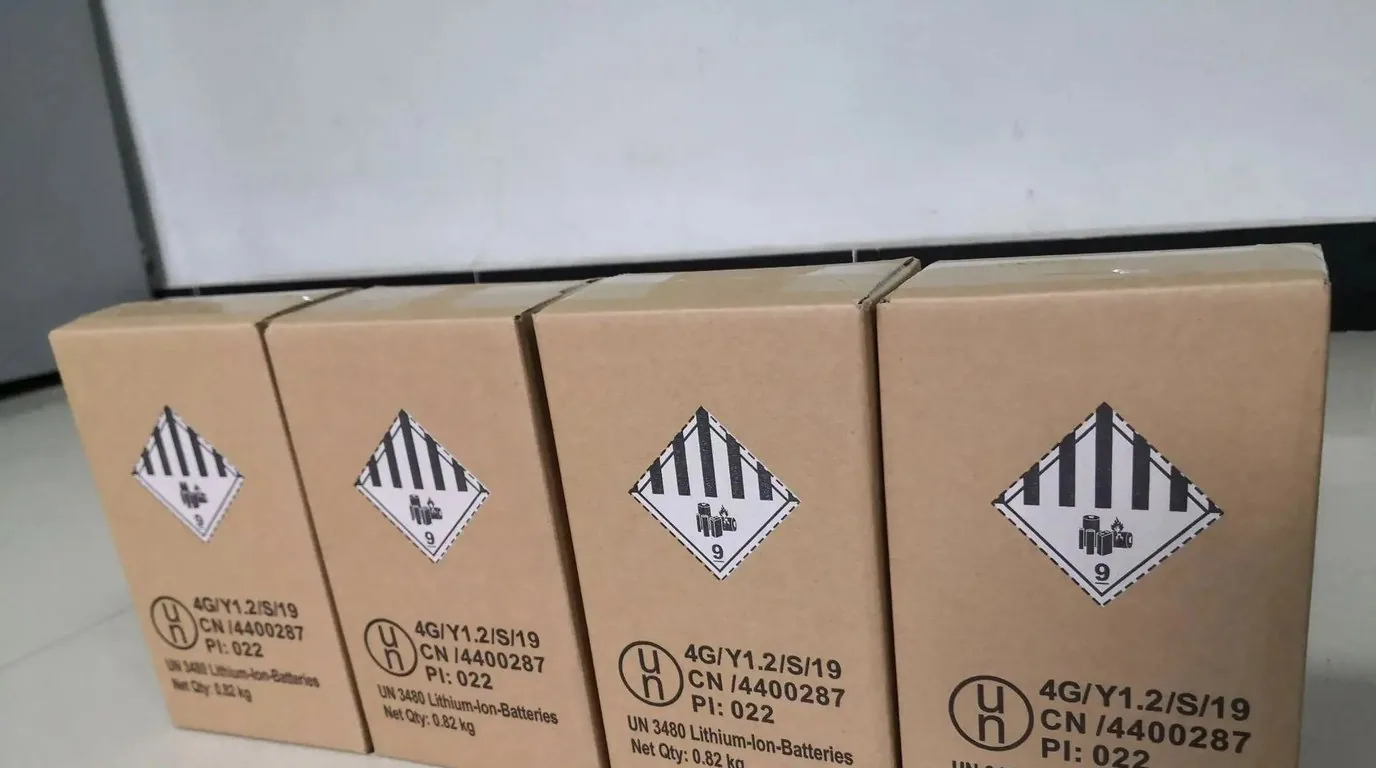
Dangerous-goods shipping and packing compliance
The UN38.3 eight-test schedule, MSDS, packing certificate application and the full DG booking document list.
Open the shipping guidearrow_forwardWarranty terms and RMA claims
The five-year / 3,500-cycle cover, SOH decision thresholds and the four-step claim workflow.
See warranty and claimsarrow_forward
Container and per-unit cost modelling
How the full cost stack is built, from cells and PACK assembly through sea freight to destination taxes.
Open the pricing guidearrow_forwardPetrol-to-electric retrofit kit
The original-bolt-hole mounting cradle, wide-voltage controller matching and 45-minute per-vehicle labour.
Open the retrofit guidearrow_forward48V / 60V / 72V voltage selection
Derive the working voltage platform from payload, gradient and daily distance, and avoid motor-controller mismatch.
Open the selection guidearrow_forward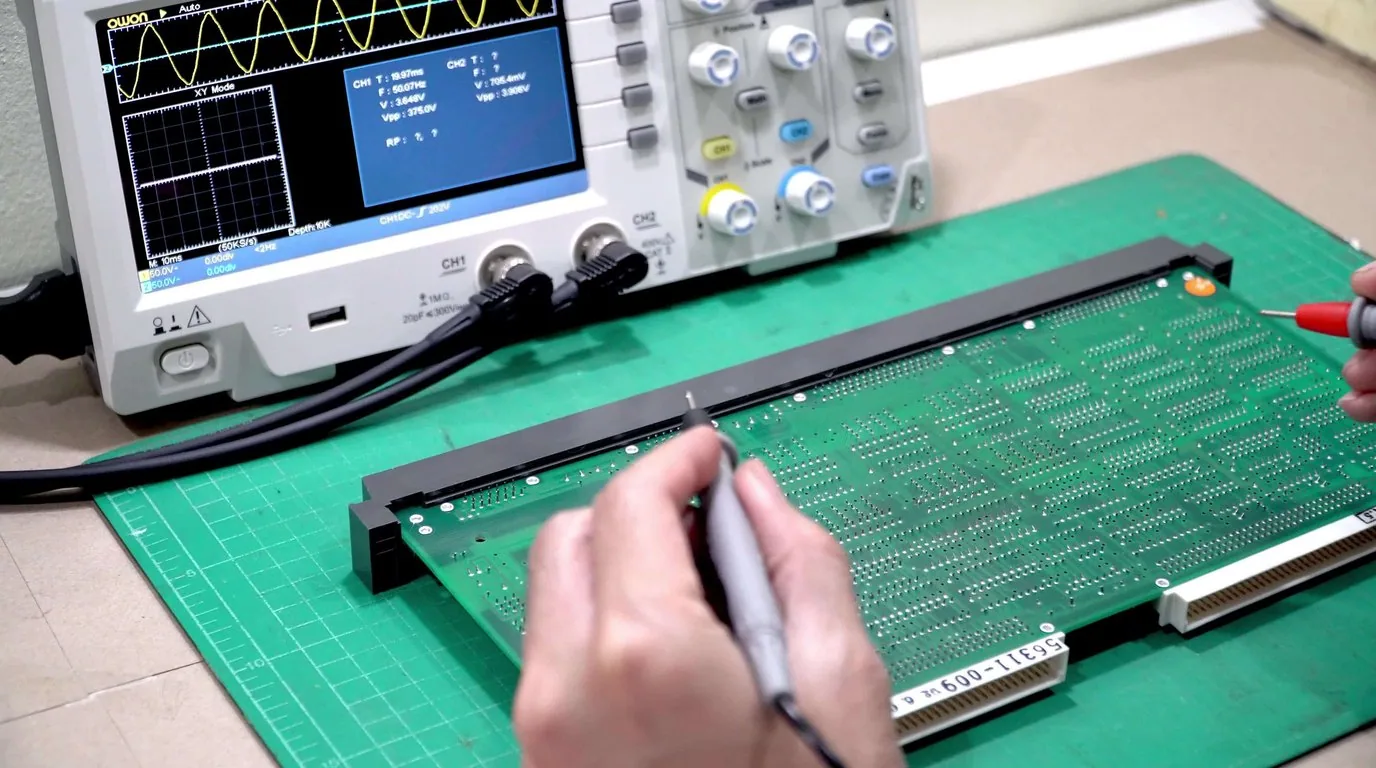
Troubleshooting and field diagnostics
Field procedure for gradient cut-outs, nuisance charger trips, SOC dive and CAN packet loss.
Enter the diagnostics centrearrow_forwardStill have a duty-cycle or duty question? Get a one-to-one answer
If you are facing an unusual chassis constraint, a high-power gradient cut-out, or a specific national clearance requirement, send us the details — a duty engineer is online now.
- A powertrain electrical engineer responds personally within 24 hours on working days
- Mutual NDA covering commercial terms and technical drawings signed up front
- Free remote decoding of CANbus frames and motor-controller topology
Specification notice:The figures above are engineering reference values. They may differ with production batch, configuration and actual duty cycle, and the percentages for life, efficiency, availability and coverage are engineering estimates and bench references. Contact us for the detailed specification sheet.
Your enquiry and duty-cycle details are protected end to end under our cross-border industrial procurement confidentiality standard and are never shared with third parties.